






Wooden Fish Sculptures
Wooden fish sculptures bring character to a room, ranging from folk art trade signs to intricate Japanese carvings.
Wooden Fish Sculptures
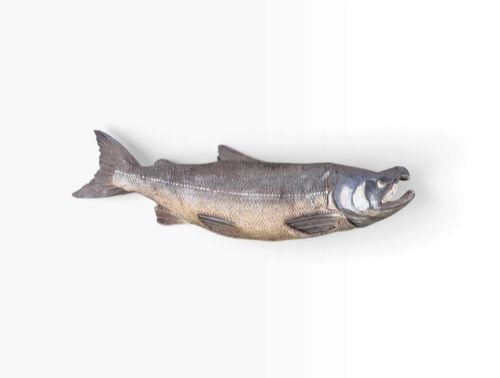
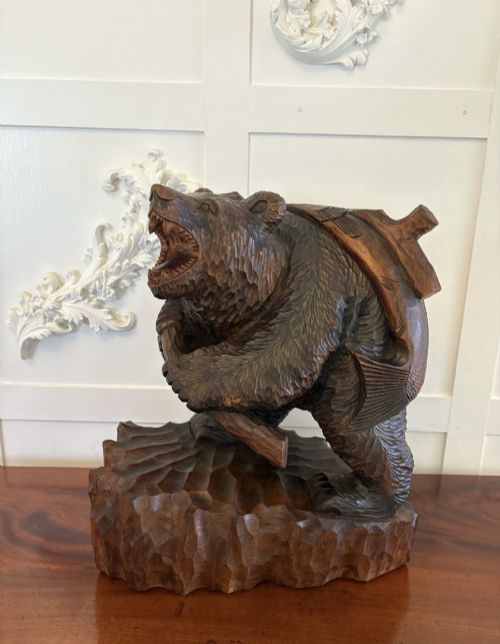
When you search for wooden fish sculptures, you encounter diverse handcrafted objects spanning the nineteenth century through the art deco period. These pieces encompass everything from folk art trade signs to intricate Japanese meiji period netsuke and okimono figures.
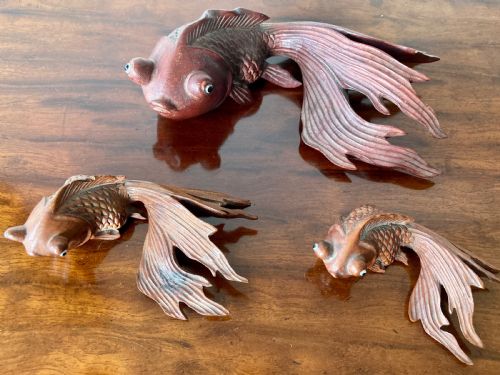
You also discover ceramic and terracotta groupings mounted on wooden bases alongside traditional wooden carvings. The forms range from goldfish and koi to flying fish and Shubunkin figures.
How they were made
Carvers utilised traditional hand tools on linden wood, pine, and various hardwoods to shape these figures. The grain of the wood often determines the texture of the finished piece, enhanced occasionally by a dark stain.
Artisans working in Japanese folk art and European traditions applied detailed chiselling to capture scales and fins. Some sculptural works combine carved wood with glazed ceramic or terracotta elements mounted securely on wooden bases.
Wooden Fish Sculptures Retail Price Guide 2026
Typical asking prices for wooden fish sculptures among the pieces listed under this phrase on Sellingantiques today, from the lower quarter to the upper quarter. They describe what is for sale here now, not the wider market.
Listings feature periods from the 19th century through the Edwardian era and 1930, utilising linden wood, pine, glass, and terracotta.
What varies in quality
The distinction between ordinary and exceptional pieces lies in the precision of the carving and the naturalism of the form. Finer examples display meticulous attention to anatomical details such as fins, gills, and scales.
Original surface patination and the integrity of the timber influence desirability. Pieces retaining their early finishes or trade sign patinas command greater attention from collectors of folk art.
Tomochika·Guido Cacciapuoti
The Wooden Fish Sculptures Glossary
- Netsuke
- A small carved toggle used in traditional Japanese dress to suspend a pouch from a sash. These miniature carvings frequently depict fish and maritime subjects.
- Okimono
- A Japanese decorative figurine designed for display on a household shelf or tokonoma. They are often carved from wood with remarkable intricacy.
- Black Forest
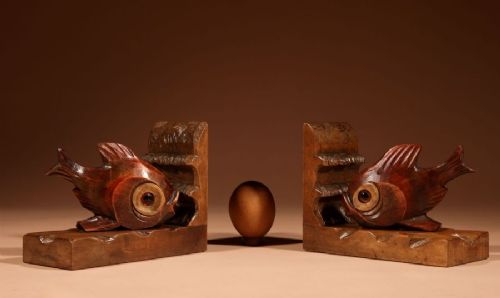
- A nineteenth-century European style of wood carving originating in Switzerland and Germany. It is known for realistic depictions of animals, including fish bookends.
- Folk art
- Utilitarian or decorative objects created by self-taught or traditional artisans. Trade signs and Pacific Island carvings fall into this expressive category.
- Linden wood
- A pale, fine-grained timber favoured by carvers for its even texture and suitability for intricate detail. It resists splitting during the carving process.
Wooden Fish Sculptures: Frequently Asked Questions
What are wooden fish sculptures?
These pieces comprise hand-carved wooden figures, trade signs, and ceramic groups mounted on wood bases. They originate from various global folk art traditions.
Craftsmen produced them across the nineteenth and early twentieth centuries using woods such as linden and pine.
How were wooden fish used?
Many served as decorative ornaments in homes, capturing natural forms with artistic skill. Others functioned as commercial trade signs outside fish shops.
Bookends and okimono figures fulfilled both decorative and practical roles within interior spaces.
How do I date these sculptures?
Dating relies on material analysis, tool marks, and stylistic indicators associated with periods like the Meiji era or Art Deco. Examining the wood patination and wear patterns offers further chronological clues.
Maker signatures on pieces like Japanese netsuke also provide precise historical reference points.
How do I care for wooden fish?
Keep carved wooden objects away from direct sunlight and extreme temperature fluctuations to prevent wood splitting. Dust gently with a dry, soft cloth rather than using liquid polishes.
Stable indoor humidity preserves the original finish and structural integrity of the timber.