
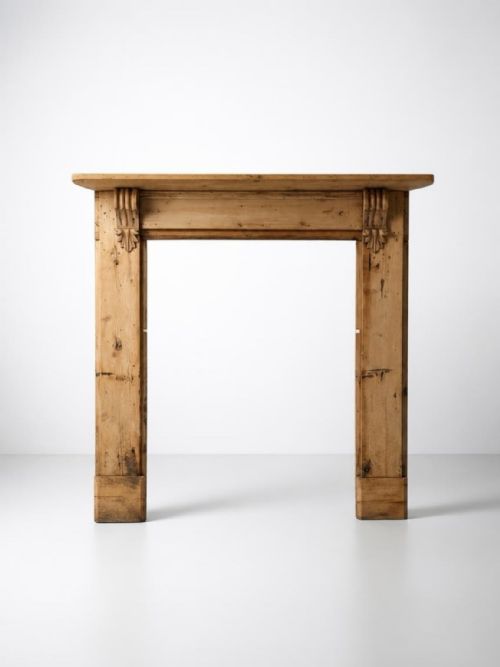
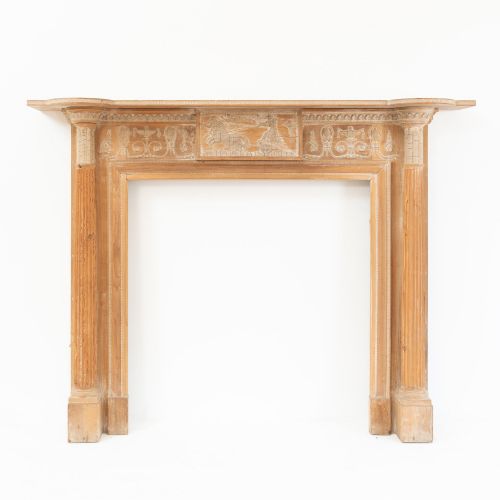
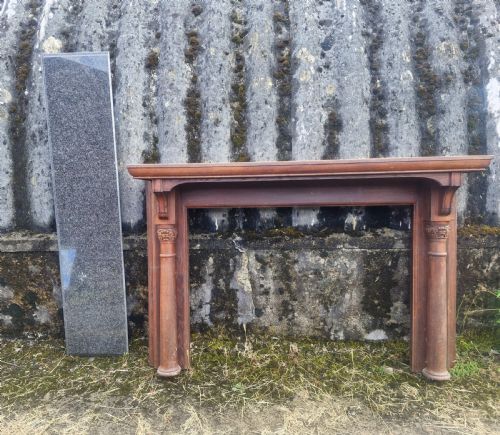
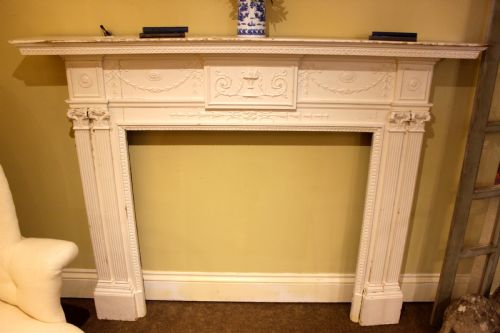
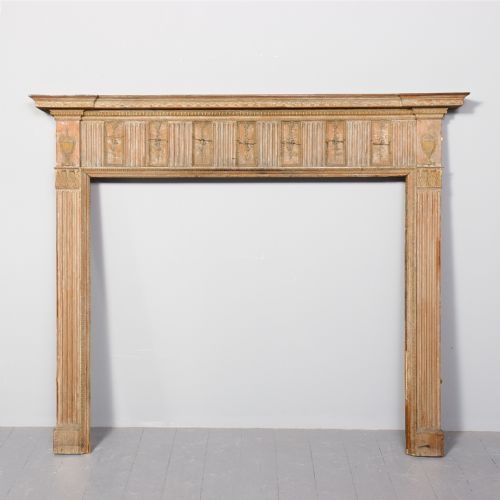
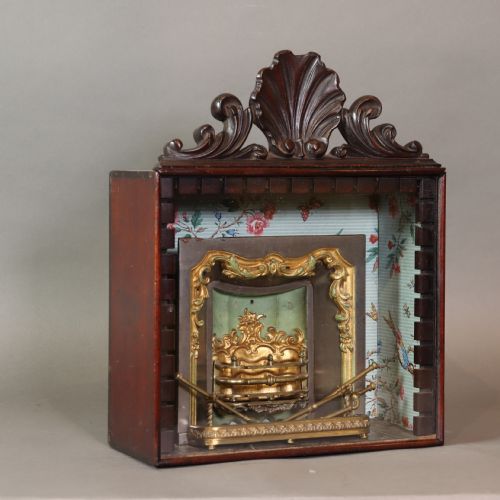
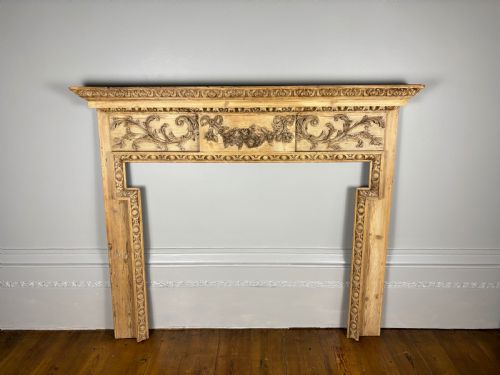


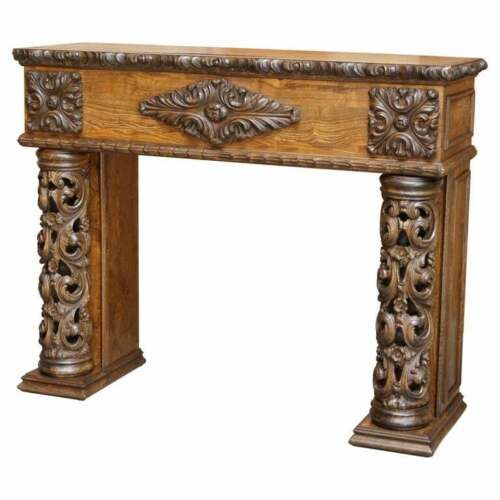
Wooden Fire Surround
These wooden fire surround options anchor a room with period character, offering everything from Georgian elegance to Art Deco geometry.
Wooden Fire Surround
A wooden fire surround frames a hearth with architectural presence, originating in periods from Georgian and Regency through to Edwardian and Art Deco. When searching for a wooden fire surround, you encounter varying proportions designed for coal grates or later inserts, spanning formats from grand chimneypieces to compact miniatures.
Examples on this page draw from Victorian, Edwardian, and Georgian eras, alongside 1930s interpretations. Surviving forms include pitch pine, oak, mahogany, and painted pine, sometimes accompanied by granite tops or club fenders.
Materials and construction
Carpenters shaped these architectural pieces using solid timbers such as pine, oak, mahogany, and pitch pine. Construction often combined structural joinery with hand-carved gesso ornament applied to timber substrates.
Surfaces received various treatments ranging from clear finishes that highlight wood grain to historic white paint and detailed fretwork columns.
Wooden Fire Surround Retail Price Guide 2026
Typical asking prices for wooden fire surround among the pieces listed under this phrase on Sellingantiques today, from the lower quarter to the upper quarter. They describe what is for sale here now, not the wider market.
Listings span Georgian, Victorian, Edwardian, and Art Deco styles, utilising pine, oak, mahogany, pitch pine, and granite.
Judging quality and period integrity
Quality rests in the depth and sharpness of hand-carved detail across mouldings and friezes. Pieces retaining original surface treatments, such as early paint layers or patinated mahogany, hold greater historical coherence.
Proportion and architectural ambition distinguish standard domestic surrounds from monumental chimneypieces designed by notable architects.
Sir Edwin Lutyens
The Wooden Fire Surround Glossary
- Chimneypiece
- An elaborate architectural frame surrounding a fireplace opening, often incorporating a mantel shelf and overmantel. This term frequently describes grander Georgian and Victorian examples.
- Mantelpiece
- The shelf and surrounding framework projecting from the wall above a fireplace. It serves as a display ledge for decorative objects.
- Gesso
- A plaster-like material applied to wood surfaces and carved or moulded into decorative reliefs before gilding or painting. It appears on Regency and later surrounds.
- Club Fender
- A low, U-shaped seat upholstered on top, placed around the hearth. These adjustable or fixed frames often feature brass and iron components combined with oak.
Wooden Fire Surround: Frequently Asked Questions
How do I measure for a wooden fire surround?
Measure the height and width of your existing fireplace opening, ensuring the internal clearance of the new surround matches those dimensions.
Account for the overall wall space available to accommodate the exterior width of the mantel shelf and legs.
Can I paint a historic wooden fire surround?
Many period surrounds were originally painted white or in imitation of stone rather than left as bare timber.
Assess the existing finish to determine if stripping back violates the historical integrity of the piece.
How do I date a wooden fire surround?
Examine the stylistic motifs, such as neoclassical urns on Georgian pieces or geometric lines on Art Deco examples.
Construction techniques, tool marks on the reverse, and the primary timber used also provide reliable chronological markers.
What is a club fender?
A club fender is a hearth-level seating structure designed to allow people to sit close to the fire.
Victorian and Edwardian versions often combine oak frames with leather upholstery and metal spindle work.