




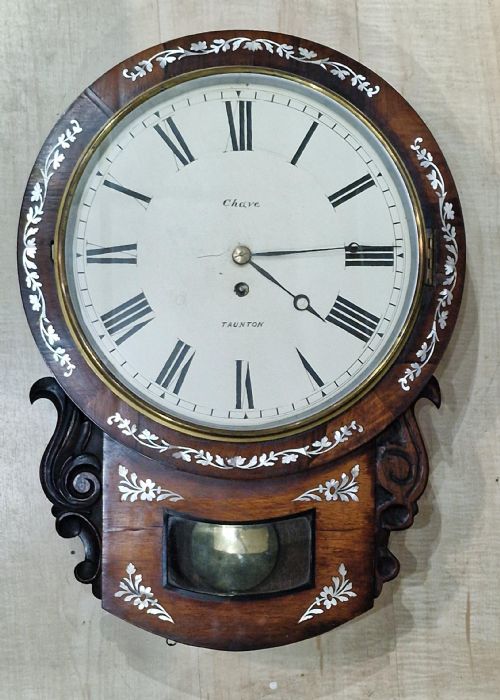
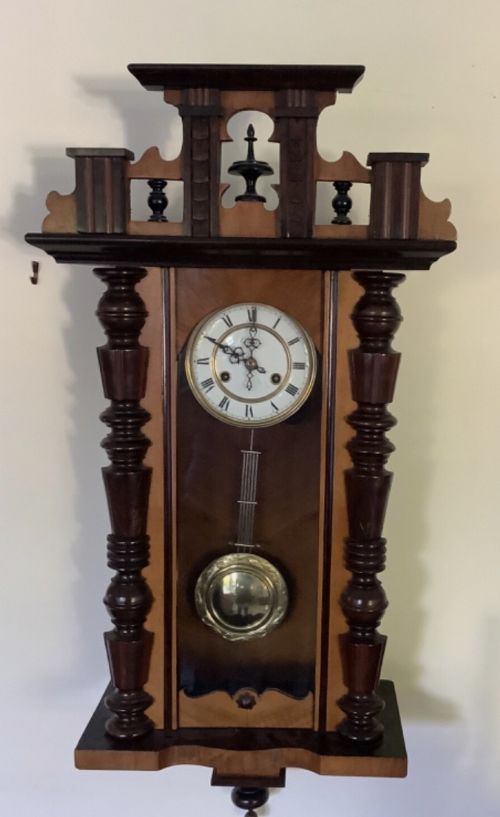

Wooden Drop Dial Clock
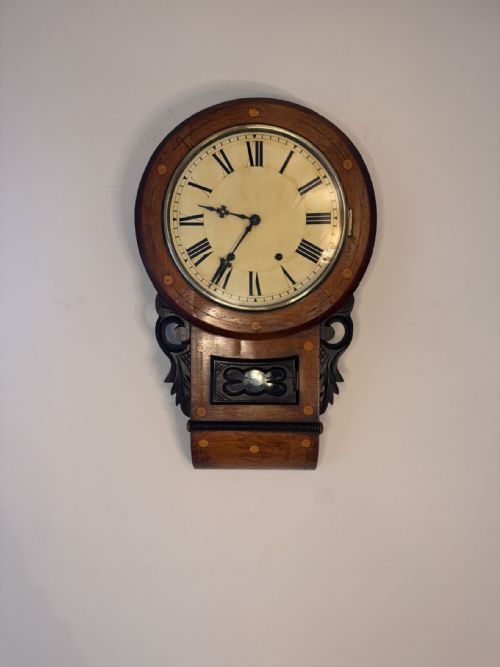
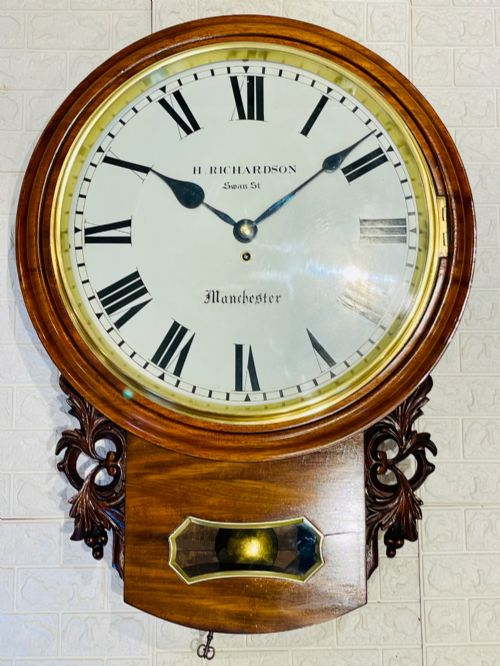
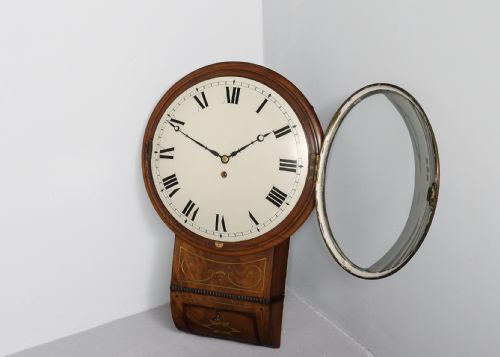
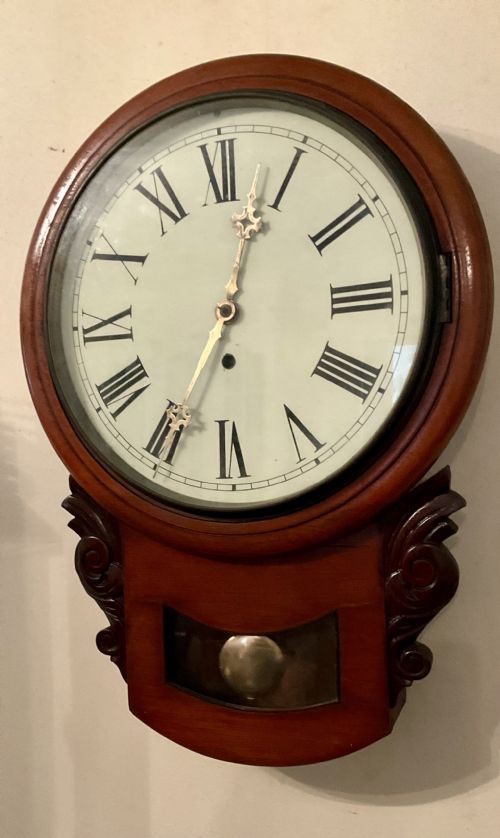
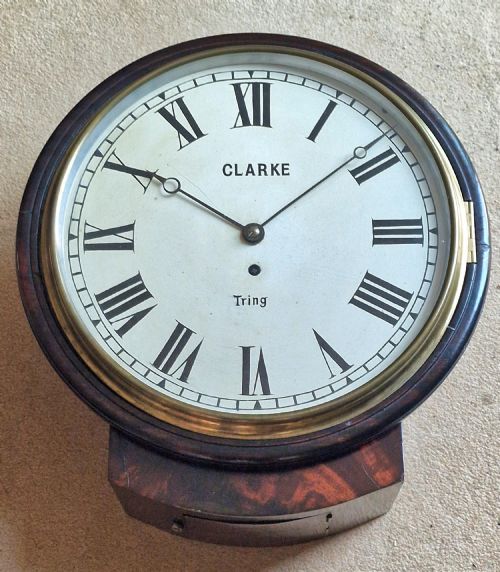
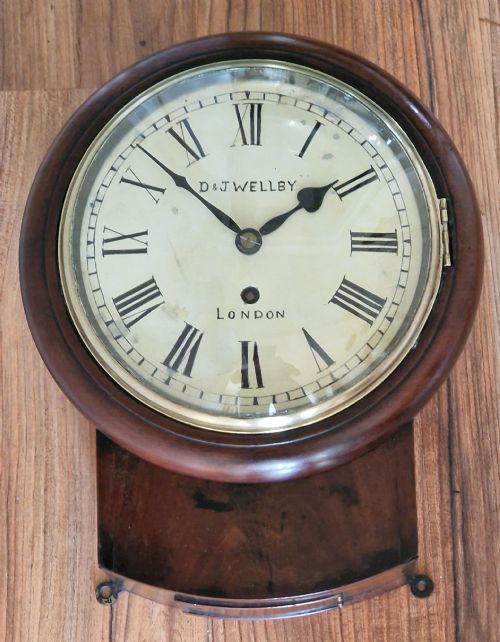
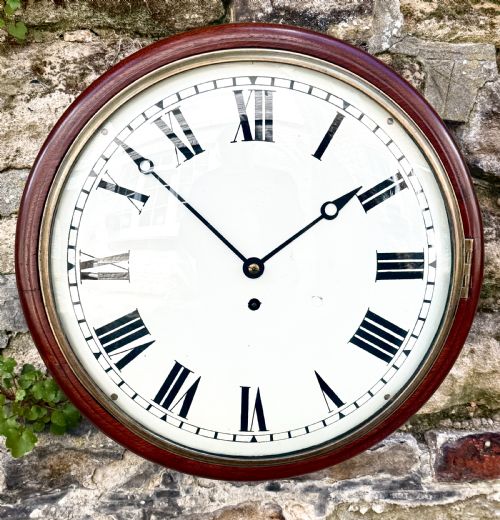
A wooden drop dial clock hangs on the wall to tell time with a heavy fusee movement housed in a wooden case.
Wooden Drop Dial Clock
A wooden drop dial clock combines a circular dial at the top with an extended lower trunk designed to house a pendulum. These pieces appear frequently from nineteenth century periods including the Regency and Victorian eras, often bearing the names of railway companies or provincial makers.
The format serves primarily as a wall timepiece rather than a striking clock, originating from public spaces, offices, and domestic halls. Examples range from compact small dial versions to large station clocks intended for distant viewing.
Materials and construction
Cabinet makers constructed the timber cases predominantly in mahogany or walnut, frequently incorporating brass bezels and glass doors to protect the dial face. Enamel or painted wooden dials display the numerals, while iron components support the internal mechanism.
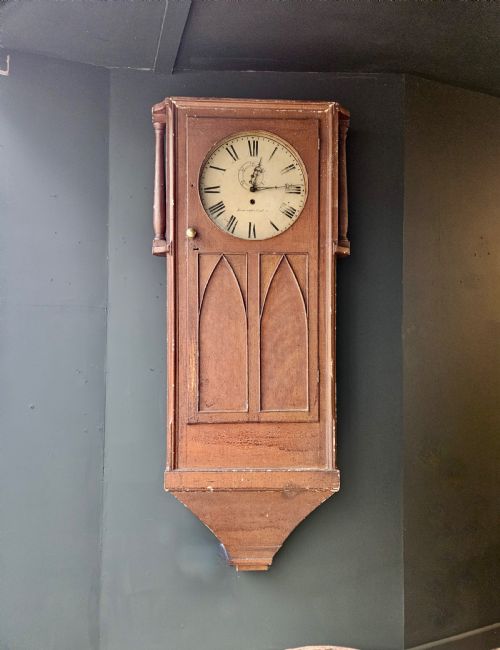
Mechanisms rely on fusee movements driven by a cord or chain connected to a conical pulley that equalises the power output as the mainspring unwinds. Regional workshops executed these builds with local timber selections, from pine in gothic tavern pieces to rosewood and mother of pearl in decorative interpretations.
Wooden Drop Dial Clock Retail Price Guide 2026
Typical asking prices for wooden drop dial clock among the pieces listed under this phrase on Sellingantiques today, from the lower quarter to the upper quarter. They describe what is for sale here now, not the wider market.
Railway examples from Swindon and Lymington sit alongside provincial workshop pieces signed by regional clockmakers across England.
Assessment of standard
Quality rests in the precision of the movement and the integrity of the timber case, where crisp carving and original painted wooden dials distinguish superior examples. Maker attribution also alters the standing of a piece, particularly when signed on the dial or movement by notable London or provincial horologists.
The presence of original brackets, side doors, and untouched painted finishes separates standard utility clocks from finer domestic and institutional commissions. Alterations to the dial or replacement fusee chains represent the kind of historical changes that influence the overall integrity of the piece.
George Clarke Tring·D and J Wellby·Samuel Chave Taunton·Rudge Swindon·Henry Lamb Windsor·Balbiani Brookley·Kleyser of London·Francis Perigal London·John Thwaites·Camerer Cuss·J Beckett of London·Thomas Harrison of London
The Wooden Drop Dial Clock Glossary
- Fusee
- A conical pulley used in spring driven clocks to maintain even tension on the gear train as the mainspring runs down.
- Drop dial
- A clock case featuring a circular dial section at the top that drops down into a lower wooden trunk for the pendulum.
- Dial
- The face of the clock where the numerals and hands indicate the time, made from wood, metal, or enamel.
- Trunk dial
- An alternative term for a wall clock with an extended lower case enclosing the pendulum.
- Regulator
- A precision timekeeper designed to keep exceptionally accurate time, often utilised as a standard for setting other clocks.
Wooden Drop Dial Clock: Frequently Asked Questions
How do I wind a fusee wall clock?
Use the designated key in the dial winding hole to turn clockwise until resistance meets the spring. Take care not to overwind older movements.
Ensure the key matches the arbor size properly to prevent damaging the brass components inside the movement.
Why does the case have a lower drop?
The extended lower box provides the necessary clearance for the pendulum to swing beneath the dial. This drop shape balanced aesthetic proportions with mechanical requirements in nineteenth century wall clocks.
Side doors on this lower section allowed watchmakers to access the pendulum bob and regulation nut easily without removing the entire clock from the wall.
Are these clocks suitable for daily hanging?
Mounting requires a secure fixing directly into a wall stud or masonry plug because the solid timber and brass movements carry considerable weight. Proper securing prevents the case from leaning forward.
Once hung level, the beat of the pendulum should sound even to ensure continuous timekeeping without stopping.
How can I tell a Regency period clock from a Victorian one?
Regency examples often feature cleaner architectural lines, finer timber veneers, and specific dial signatures dating near eighteen hundred to eighteen twenty. Victorian models frequently display heavier proportions and occasionally incorporate railway or industrial provenance.
Examining the shape of the fusee plates and the style of the wood grain helps confirm the manufacturing era.