




Wooden Drinks Cooler
A wooden drinks cooler keeps bottles at hand in the dining room, combining solid timber with metal linings for serious entertaining.
Wooden Drinks Cooler
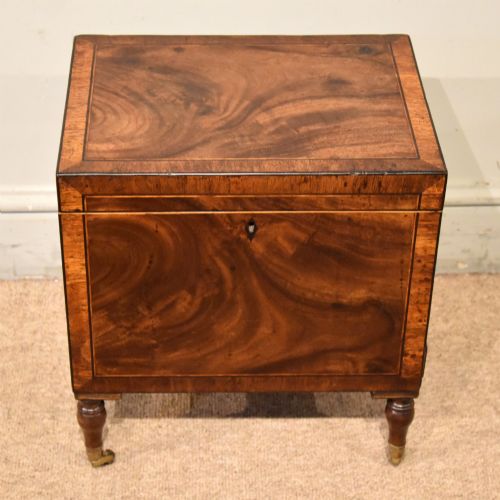
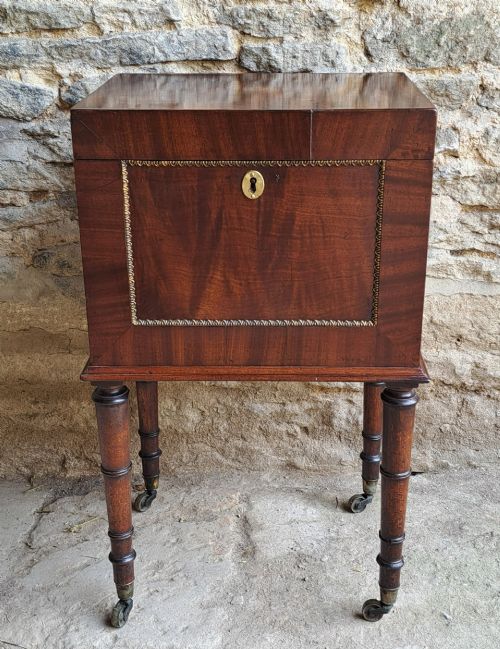
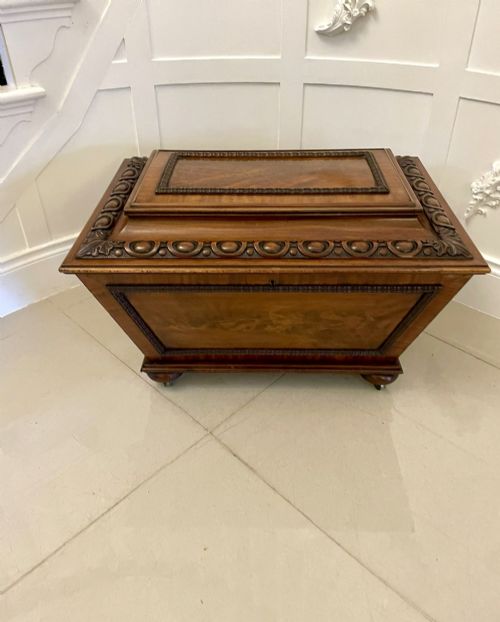
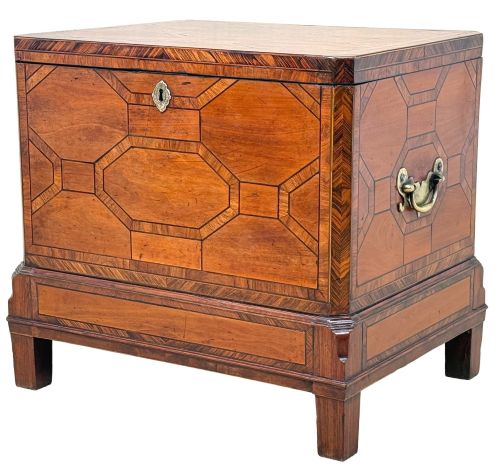
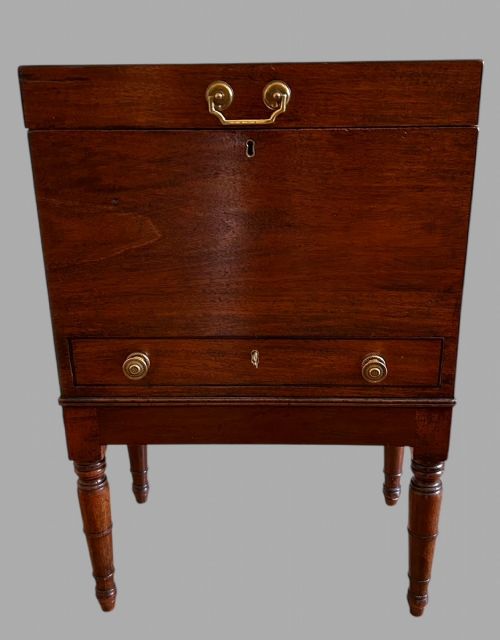
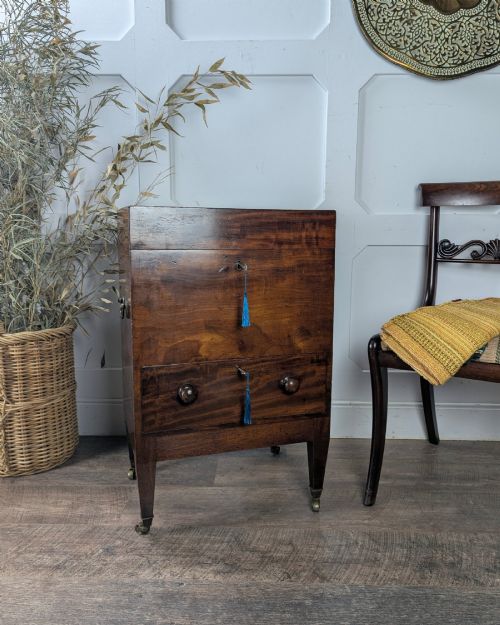
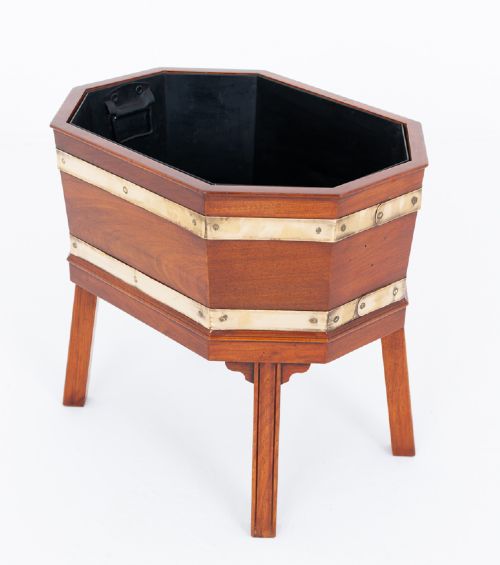
A wooden drinks cooler, often styled as a cellarette or bottle stand, serves as a vessel for chilling wine and spirits during dining. These pieces arrive in forms ranging from octagonal boxes to grand sarcophagus shapes supported on stout legs or castors.
Georgian and Regency examples dominate the selection, built from rich timbers designed to sit beneath sideboards or beside the dining table. Later Edwardian and revival interpretations continue the tradition of combining practical bottle storage with formal cabinet making.
The primary forms include standalone cellarettes with fitted interior compartments and low bottle stands designed for easy access. Most pieces utilise mahogany as the foundational timber, frequently accented with lighter woods or metal mounts.
Materials and construction
Cabinet makers relied primarily on solid and veneered mahogany, shaping the dense timber into serpentine fronts or crisp octagonal geometries. Finer pieces incorporate satinwood banding, boxwood inlay, and kingwood to define the panels and borders.
Internal temperature control required robust metal linings, typically zinc, copper, or lead, soldered to keep melting ice contained away from the timber. Brass castors, handles, and ormolu mounts provide both structural mobility and decorative contrast against the dark wood.
Wooden Drinks Cooler Retail Price Guide 2026
Typical asking prices for wooden drinks cooler among the pieces listed under this phrase on Sellingantiques today, from the lower quarter to the upper quarter. They describe what is for sale here now, not the wider market.
Some nineteenth century cellarettes double as heavy furniture designed to stay put, though they sit on castors so servants could chase the dining conversation.
Craftsmanship and proportion
Quality rests in the precision of the joinery and the selection of figured timber, particularly where mahogany exhibits strong grain patterns across large surfaces. Superior examples retain their original internal metal liners and functioning brass hardware rather than replaced components.
Proportion and carving distinguish standard utility items from exhibition grade works, such as those featuring crisp serpentine moulding or detailed parcel-gilt details. The integration of secondary woods and the tightness of dovetail joints reveal the hand of skilled workshops.
Gillows of Lancaster and London·Maples & Co·Whytock & Reid
The Wooden Drinks Cooler Glossary
- Cellarette
- A lockable cabinet or box designed to hold bottles of wine and spirits beneath the dining room sideboard. These vessels frequently incorporate internal divisions to keep bottles separated.
- Sarcophagus
- A monumental chest form with a domed lid and tapered sides, popular during the Regency period for large wine coolers. The design mimics ancient stone tombs on a domestic scale.
- Ormolu
- Gilded bronze mounted onto furniture as decorative feet, handles, or corner accents. This technique adds bright metallic contrast to dark mahogany surfaces.
- Serpentine
- A gently undulating furniture front characterised by a convex centre flanked by concave curves. This shaping requires expert woodworking to maintain structural integrity.
- Inlay
- The technique of fitting contrasting strips of wood, such as boxwood or satinwood, into recessed channels on the primary surface. It creates geometric borders and highlights structural lines.
Wooden Drinks Cooler: Frequently Asked Questions
How were these coolers used?
Servants filled the internal zinc or metal compartments with ice and water to chill wine before and during dinner. The lockable lids helped secure valuable spirits from household staff.
After dining, the cooler remained a prominent fixture beside the sideboard. Their mobility allowed staff to wheel or carry them easily across parquet floors.
How do I date a wine cooler?
Dating relies on stylistic shifts in timber choice, hardware, and overall silhouette from the Georgian era through the Edwardian period. Earlier pieces favour plain mahogany and boxwood stringing, while Regency items introduce heavy brass paw feet and sarcophagus shapes.
Examine the construction methods inside the base and inspect the metal liner for period manufacturing marks. Secondary woods like oak or pine used in internal framing also point to specific manufacturing decades.
Can I use an antique cooler today?
These pieces function well as side tables, discrete waste paper bins, or genuine ice buckets if the metal liner remains watertight. Placing a modern waterproof insert inside protects the historic timber from moisture damage.
Their substantial presence makes them practical for storing modern wine collections in a living room or study. Regular waxing keeps the polished mahogany surface protected from everyday wear.