

Wooden Double Chest
A wooden double chest brings substantial vertical storage into a room, combining fine proportions with practical division.
Wooden Double Chest
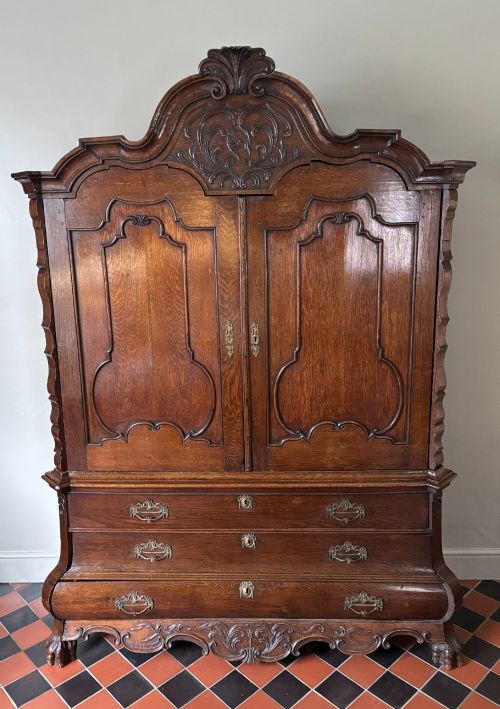
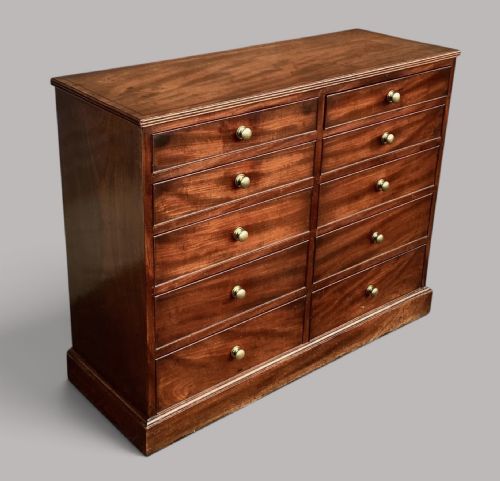
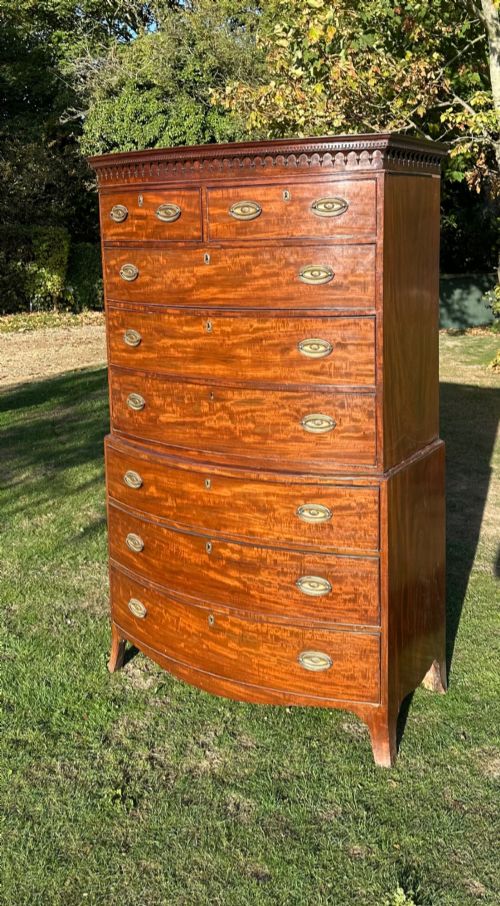
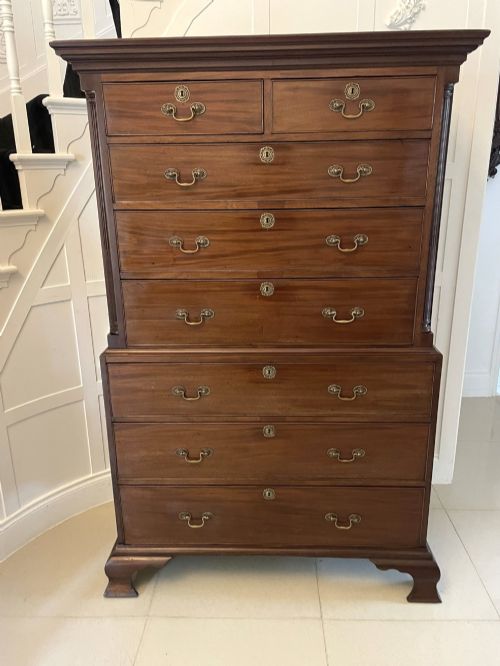
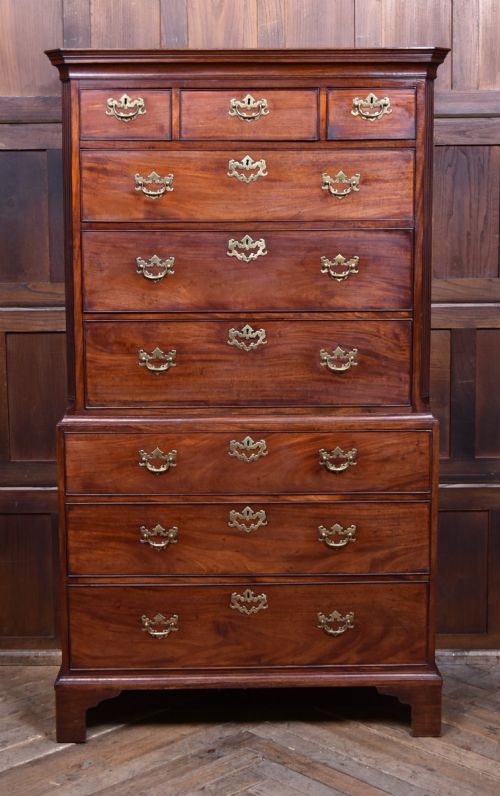
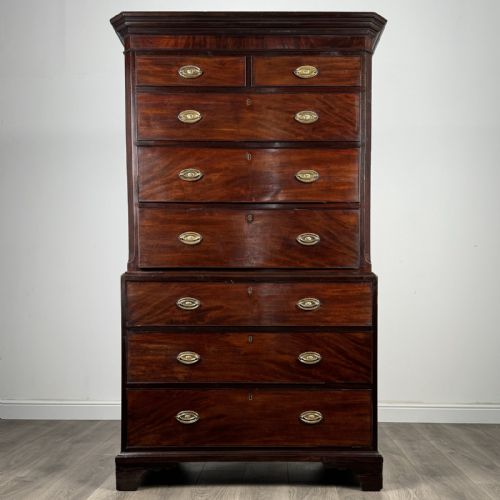
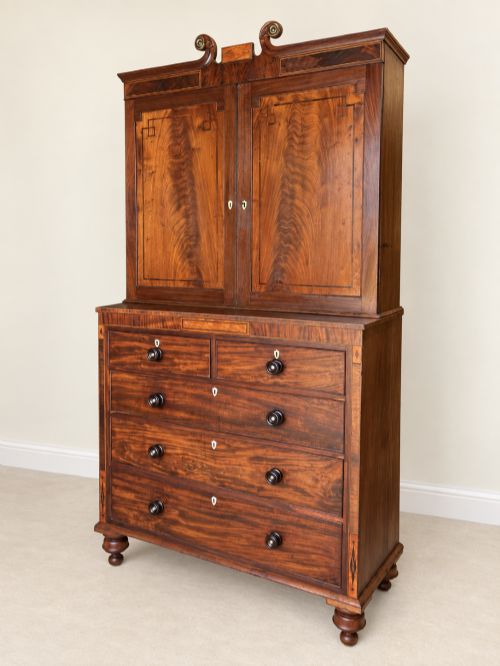
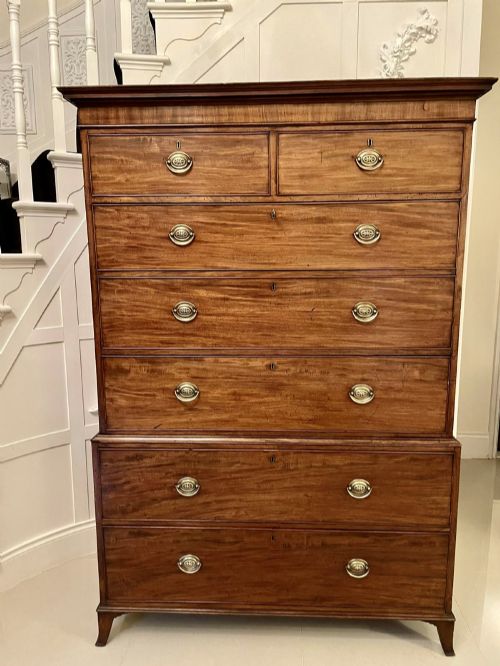
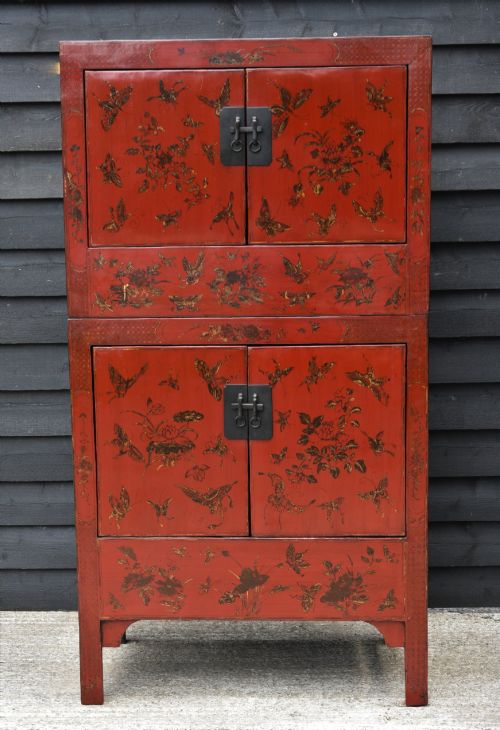
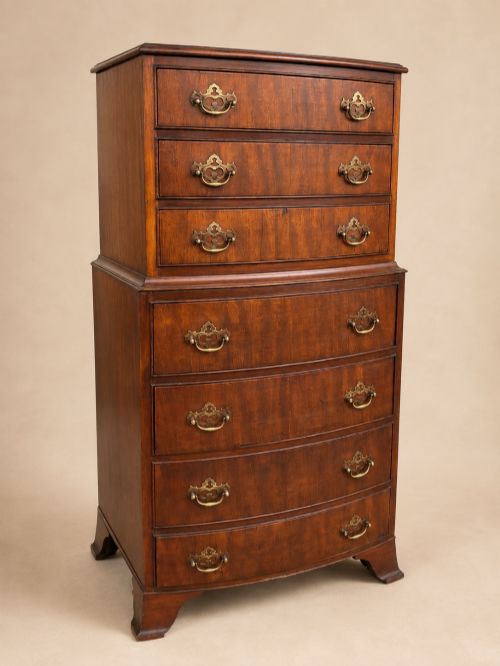
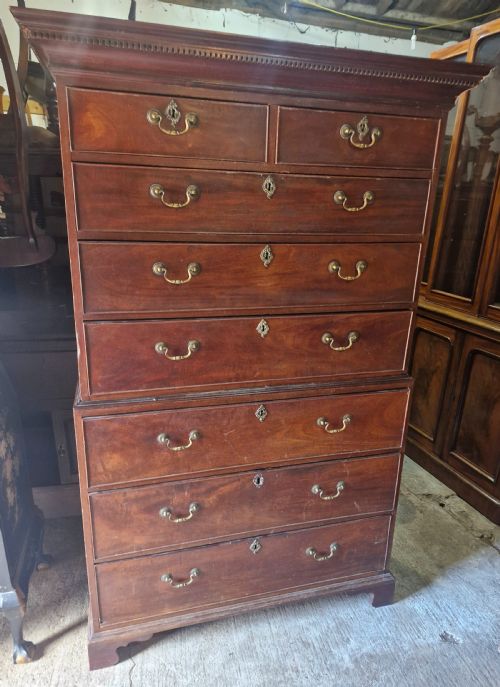
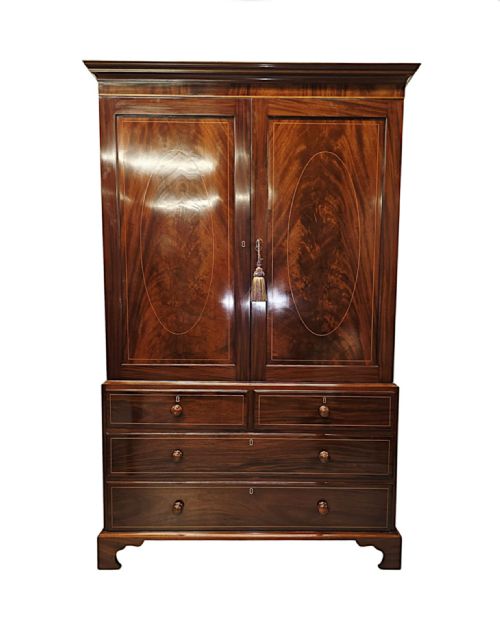
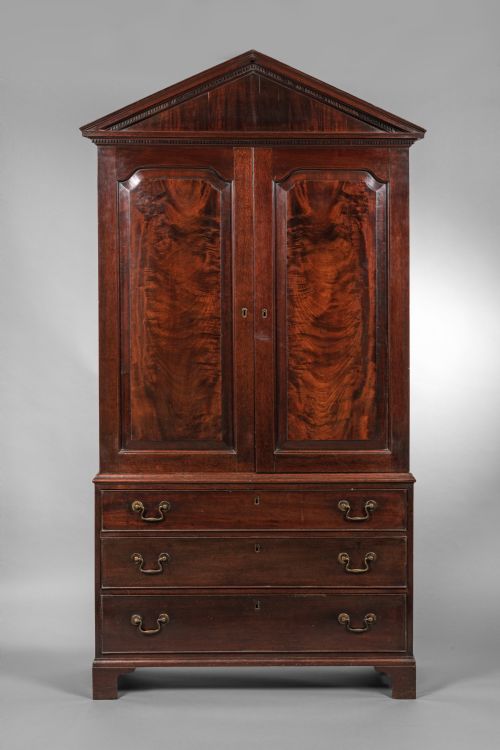
A wooden double chest primarily appears here in the form of the traditional chest on chest, also known as a tallboy, alongside linen presses and cabinets built in two distinct stacked sections. These pieces provide deep storage capacity by placing a smaller chest directly upon a wider base chest, creating a tall silhouette.
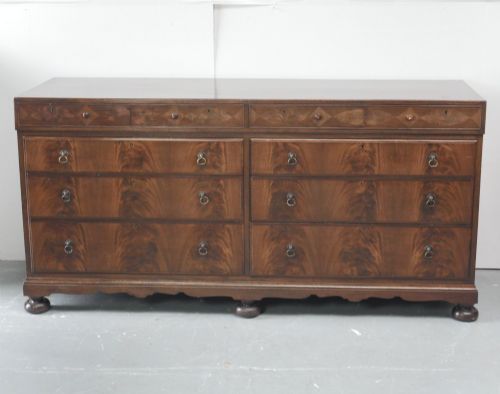
The materials span native and imported timbers, with mahogany dominating the Georgian and Victorian examples, alongside oak, walnut, pine, and flame mahogany veneers. Styles range from plain eighteenth-century oak and walnut to refined George III mahogany pieces featuring intricate stringing and brass handle hardware.
Makers and origins stretch across English workshops, Scottish cabinet makers, and Dutch ateliers, sometimes incorporating specialised interior compartments like linen slides or mixing bowls in related cabinet forms. Buyers encounter pieces spanning several centuries, from the mid-eighteenth century through to the early twentieth century.
How they were made
Cabinet makers constructed these stacked chests using solid hardwoods like mahogany and oak for structural frames, carcases, and drawer linings, frequently applying figured veneers to the primary drawer fronts. Timber selection dictated the visual character, utilising the distinct grain patterns of flame mahogany, burr walnut, and plain pine.
Joinery involved sturdy dovetail construction for drawer boxes and mortise and tenon joints for the main housing frames to support the immense weight of the upper and lower sections combined. Brass handles, escutcheons, and occasionally bone inlay or glass elements completed the hardware, secured with hand-cut iron or brass fixings.
Wooden Double Chest Retail Price Guide 2026
Typical asking prices for wooden double chest among the pieces listed under this phrase on Sellingantiques today, from the lower quarter to the upper quarter. They describe what is for sale here now, not the wider market.
Listings feature eighteenth and nineteenth century periods alongside Georgian, Victorian, and Regency styles built from mahogany, oak, and walnut.
What varies in quality
The caliber of a wooden double chest rests heavily on the choice of timber figure, such as highly figured flame mahogany or burr walnut veneers matched symmetrically across the drawer fronts. Superior examples demonstrate crisp cornices, precise stringing inlay, and original brass hardware that has aged naturally with the surrounding wood.
Internal construction reveals craftsmanship through secondary woods used in drawer linings, hand-cut dovetailing, and the smooth operation of deep drawers within both upper and lower carcases. Proportion and scale dictate the visual balance, where the transition between the narrower top section and the wider base appears harmonious rather than clumsy.
Whytock & Reid
The Wooden Double Chest Glossary
- Chest on chest
- A tall storage unit formed by stacking a smaller chest of drawers directly upon a wider base chest. This configuration maximises vertical storage capacity.
- Tallboy
- An alternative name for a chest on chest, denoting a tall piece of furniture designed for bedroom or dressing room use.
- Linen press
- A tall cabinet featuring upper doors enclosing sliding trays for textiles, positioned above a lower chest of drawers.
- Stringing
- Thin inlaid lines of contrasting timber used to outline drawer fronts and panels on refined cabinet work.
- Sarcophagus
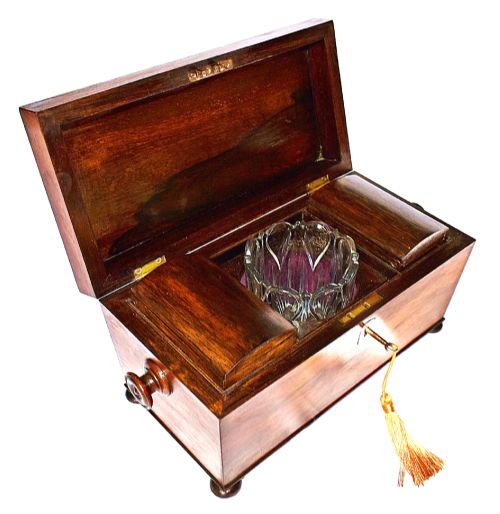
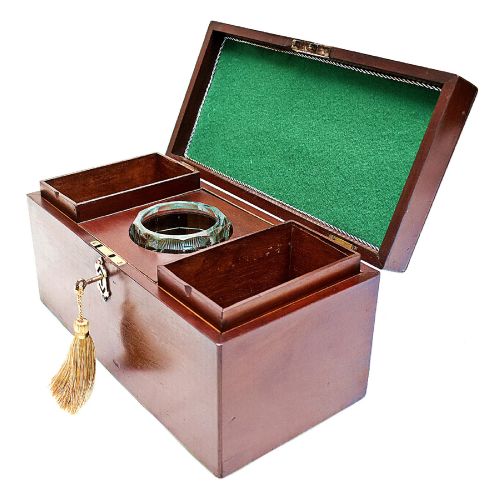
- A distinct style of cabinet or tea caddy featuring a flared, tomb-like shape resting on paw or bracket feet.
Wooden Double Chest: Frequently Asked Questions
What is a wooden double chest?
A wooden double chest is a tall storage unit made of two separate sections stacked one on top of the other. The upper portion is typically narrower than the lower base section.
These pieces were traditionally designed for bedrooms and dressing rooms to store clothing and linens while utilising vertical wall space.
How do I date a wooden double chest?
Dating relies on examining timber types, construction methods, handles, and overall style characteristics like bracket feet or cornice mouldings. Georgian pieces often feature solid mahogany with oak drawer linings, whereas later Victorian examples utilise heavier mouldings and different veneer cuts.
Secondary woods and dovetail crispness also help indicate the approximate decade of manufacture.
Where should I place a tall chest?
These tall pieces require stable wall placement and adequate ceiling height due to their imposing vertical stature. Bedrooms and dressing rooms suit them best for their original purpose of holding garments and textiles.
Ensure the room has sufficient floor space so the drawers can fully extend without obstruction.