




Wooden Document Tidy
A wooden document tidy brings order to desks with fitted slots and compartments crafted in walnut, rosewood, and oak.
Wooden Document Tidy
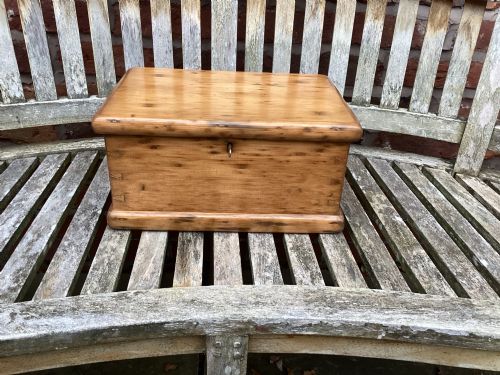
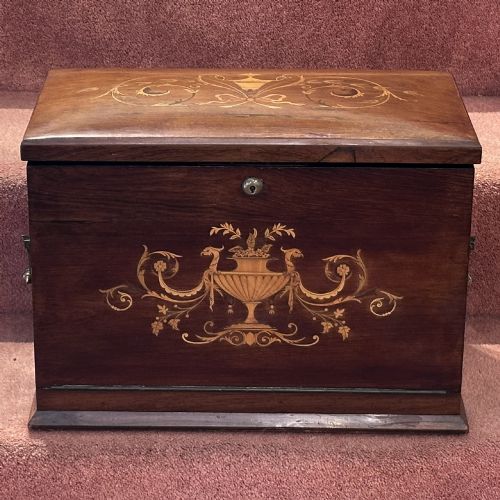
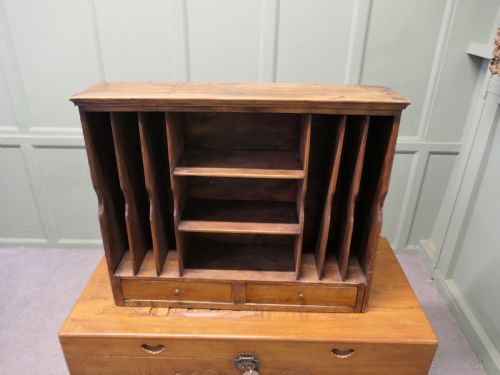
A wooden document tidy serves as a practical desk accessory designed to organise letters, papers, and stationery in a compact tabletop format. When buyers search for a wooden document tidy, they encounter stationery boxes, writing boxes, and filing shelves spanning the Victorian, Georgian, and George V eras.
The pieces on this page range from simple pine and oak boxes to elaborate Anglo-Indian carved wood and bone constructions. Victorian and 19th-century examples dominate the selection, often featuring sloping lids, tiered compartments, and internal secret drawers.
Form follows function closely in these desk organisers, which frequently combine upright letter slots with smaller drawers for stamps and nibs. Regional styles such as French Country and Anglo-Colonial introduce distinctive decorative carvings and contrasting stringing to standard desktop formats.
Materials and construction
Cabinet makers utilised dense hardwoods such as rosewood, walnut, and burr walnut for a durable and decorative exterior finish. These woods are frequently enhanced with contrasting satinwood inlay or geometric stringing to define the edges of the lid and fall-front panels.
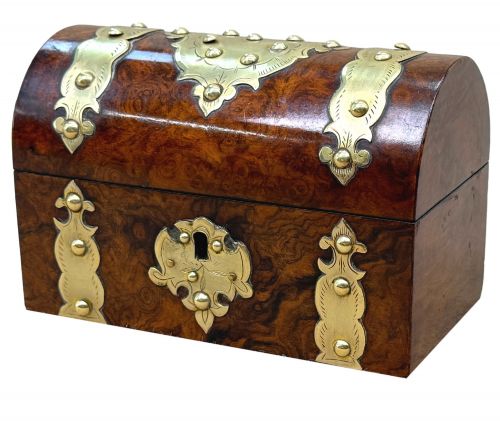
Brass mounts, hinges, and carrying handles provide structural reinforcement and visual contrast against the dark timber grains. More exotic examples incorporate bone inlays and intricate hand-carved relief work executed by regional artisans in Anglo-Indian workshops.
Internal partitions use thinner pine or cedar boards to create lightweight dividers for letters, envelopes, and blotting paper. Dovetail joints secure the main carcass of the box, ensuring stability through decades of daily desktop use.
Wooden Document Tidy Retail Price Guide 2026
Typical asking prices for wooden document tidy among the pieces listed under this phrase on Sellingantiques today, from the lower quarter to the upper quarter. They describe what is for sale here now, not the wider market.
Distinctions in quality
The grade of a wooden document tidy rests on the choice of timber veneer and the precision of its grain matching. Burr walnut and figured rosewood command greater attention than plain pine or standard oak through their rich natural patterning.
Secondary materials such as heavy brass hardware and genuine bone inlay indicate a higher standard of manufacture than stamped steel or plain wooden substitutes. The inclusion of complex mechanisms, such as working locks with original keys and concealed secret drawers, elevates a piece above basic utilitarian boxes.
The crispness of hand-carved details in Anglo-Indian and colonial pieces distinguishes skilled workshops from repetitive production work. Clean joinery and flush-fitting doors demonstrate the original cabinet maker's competency.
The Wooden Document Tidy Glossary
- Stationery box
- A desk accessory designed with upright compartments and tiered shelves to hold writing paper and envelopes.
- Burr walnut
- A decorative timber veneer harvested from growth knots on walnut trees, prized for its swirling, organic grain patterns.
- Secret drawer
- A concealed compartment built into a desk box, accessed through hidden catches or sliding panels.
- Stringing
- Thin lines of contrasting wood or light-coloured inlay used to outline panels and drawers on antique furniture.
Wooden Document Tidy: Frequently Asked Questions
What is a wooden document tidy?
A wooden document tidy is a desk accessory or box built to store letters, envelopes, and writing paper in an organised manner.
These pieces typically feature internal dividers, tiered shelves, or drop-front doors to keep correspondence sorted on a tabletop.
How were stationery boxes used?
Victorian and Georgian households relied on stationery boxes to keep writing materials neat and protected from dust in studies and drawing rooms.
They provided a central spot for writing paper, cards, and sometimes inkwells or stamps before the era of mass-produced office supplies.
What materials are common in these boxes?
Cabinet makers utilised hardwoods including rosewood, walnut, burr walnut, and oak for durability and visual appeal.
Decorative elements often include brass hardware, bone inlays, and lighter wood stringing to create contrast against the dark timber.