
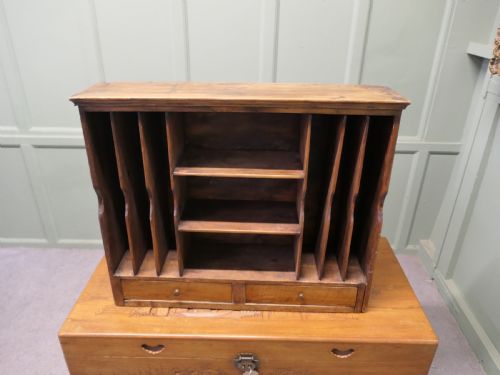


Wooden Document Organiser
A wooden document organiser keeps your papers in order while bringing rich timber grain and period character straight to the desktop.
Wooden Document Organiser
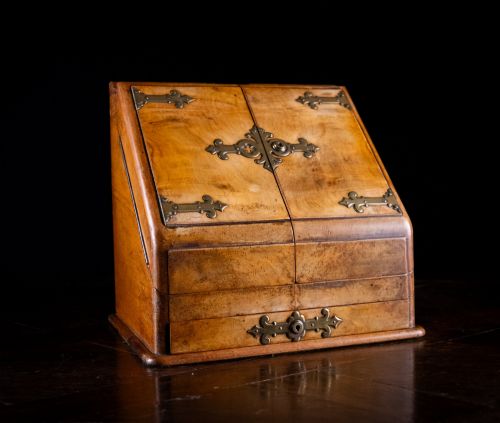
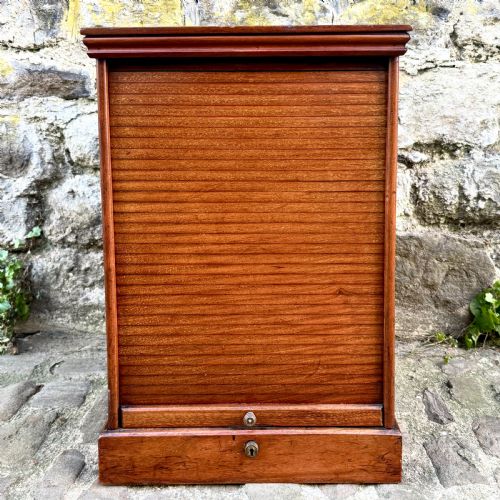
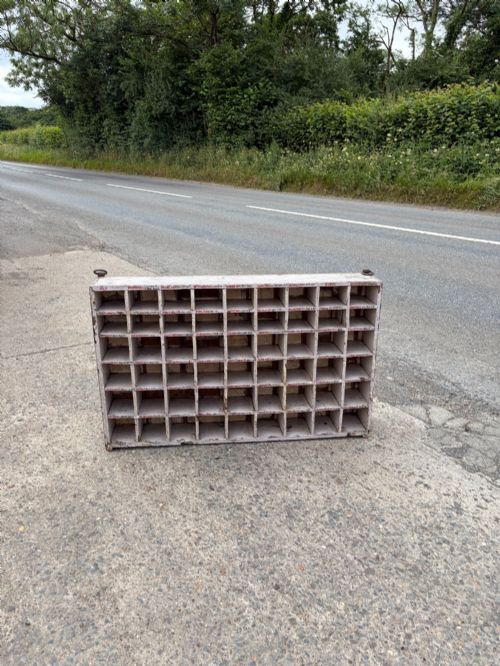
A wooden document organiser groups together stationery boxes, filing cabinets, pigeon holes, and desk tidies designed to keep correspondence sorted. These pieces serve as practical desktop storage solutions that organise letters, files, and requisitions.
The pieces on this page span the nineteenth and early twentieth centuries, covering periods from the Georgian era through to George V. You will encounter tabletop shelves, slope-front writing boxes, and wall-mounted organisers.
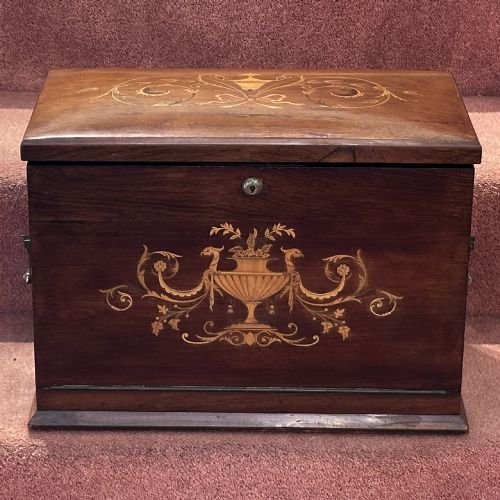
Originating largely from the nineteenth century, the selections include both domestic rosewood stationery boxes and larger institutional oak filing shelves. Oak and mahogany dominate the everyday finds, alongside more decorative walnut and rosewood pieces.
Materials and construction
Cabinet makers utilised dense hardwoods such as oak, mahogany, walnut, and rosewood to build sturdy document stores that withstood daily handling. Secondary woods like pine appear in internal partitions and drawer linings.
Metal fittings in brass and iron provide structural reinforcement and locking mechanisms, while specialised techniques like Tunbridge Ware introduce intricate inlaid mosaic decoration to the timber surfaces.
The selection spans multiple eras including Georgian, Victorian, late Victorian, and George V, alongside industrial styles.
Judging quality in desktop storage
The distinction between standard utility boxes and finer specimens lies in the selection of timber figures, such as figured walnut or richly grained rosewood. Superior examples often incorporate secondary decorative elements like satinwood stringing or specialised internal compartments.
Joinery standards define the better pieces, seen in tight dovetail joints on drawers and neatly fitted pigeon holes. Well-executed additions such as secret drawers or brass carrying handles further separate workshop tiers.
Edmund Nye·Amberg
The Wooden Document Organiser Glossary
- Stationery box
- A desktop cabinet designed specifically to hold writing paper, envelopes, and correspondence. These often feature sloping lids or folding doors that reveal internal dividers.
- Pigeon holes
- A series of small, open compartments stacked in rows to sort letters and documents by category. They appear both as standalone desktop units and fitted inside larger boxes.
- Tunbridge Ware
- A type of woodwork featuring small mosaic tiles made from naturally coloured woods arranged to form geometric or pictorial patterns. It decorates the exterior of nineteenth century boxes.
- Bible box
- An early form of desk box used originally for sacred texts and later for general writing materials. They typically feature a sloping lid and rested on tables before dedicated desks became common.
Wooden Document Organiser: Frequently Asked Questions
How do I date a wooden document organiser?
Dating relies on timber choices, construction methods, and hardware styles associated with specific eras like the Victorian period or George V years. Dovetail construction and brass handles offer key clues to the decade of manufacture.
Cabinet designs also evolved from simple planked bible boxes to complex stationery cabinets with internal locking mechanisms by the late nineteenth century.
Can these organisers hold modern paper sizes?
Most nineteenth-century stationery boxes and pigeon holes were built for older letter formats and folded documents rather than modern A4 sheets. Smaller compartments suit pens, stamps, and modern envelopes.
Larger filing cabinets and post office shelves from the period often accommodate standard folders and contemporary paperwork comfortably.
How do I care for antique timber boxes?
Keep wooden document boxes away from direct sunlight and sudden temperature changes to prevent the timber from warping or splitting. Gentle dusting and occasional wax application maintain the polish.
Protect rosewood and walnut veneers by avoiding excessive moisture and using soft cloths for routine maintenance.
What is the difference between a writing box and a stationery box?
A writing box typically includes a sloping writing surface and internal compartments for inkwells and nibs, designed to be opened for active correspondence. A stationery box sits upright to store paper and letters ready for use.
Stationery cabinets often feature doors or drop-front panels rather than the sloping desk lids found on traditional writing boxes.