
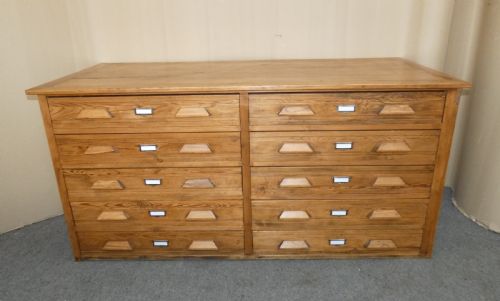


Haberdashery Storage Unit
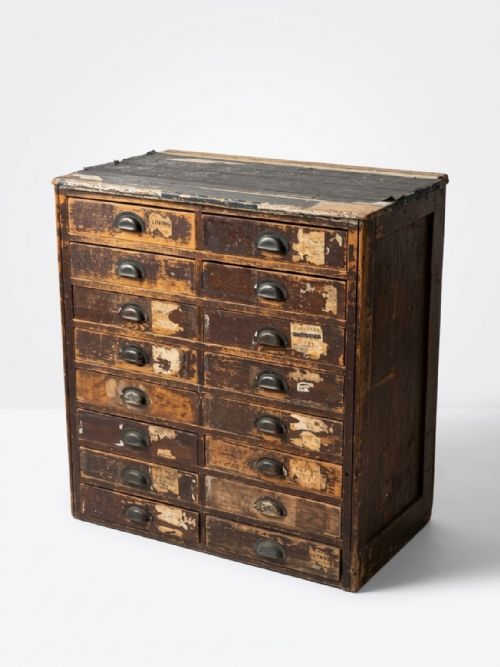
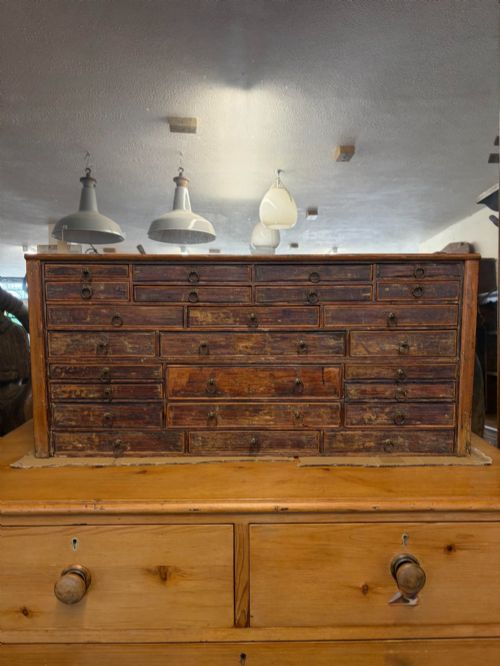
A haberdashery storage unit brings dense, multi-drawer utility into a room, offering clever storage through banks of small, pull-handled compartments built for trade.
Haberdashery Storage Unit
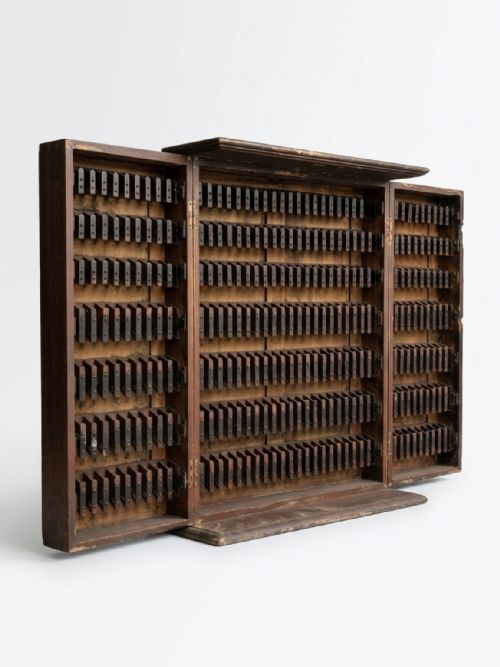
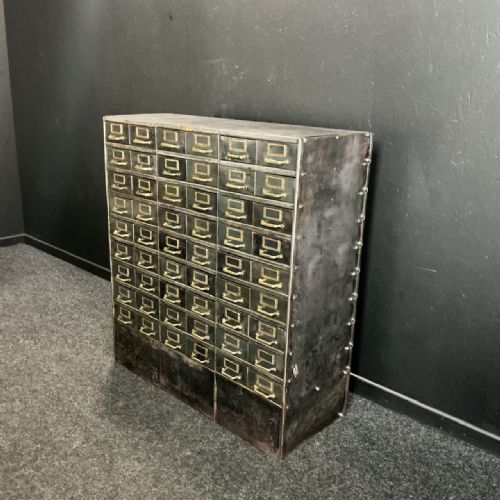
A haberdashery storage unit is essentially a bank of drawers or a shop fitting originally designed for commercial display and stock management. When you search for this phrase, you encounter heavy trade furniture spanning the nineteenth century through the interwar years, including industrial utility and Art Deco variants.
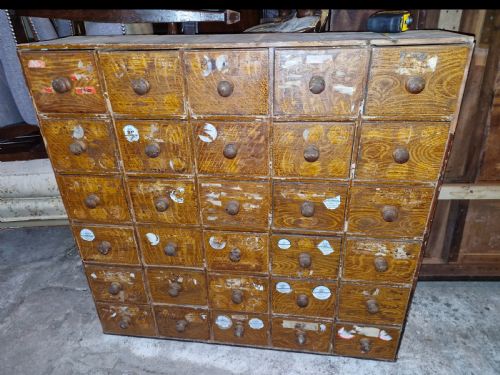
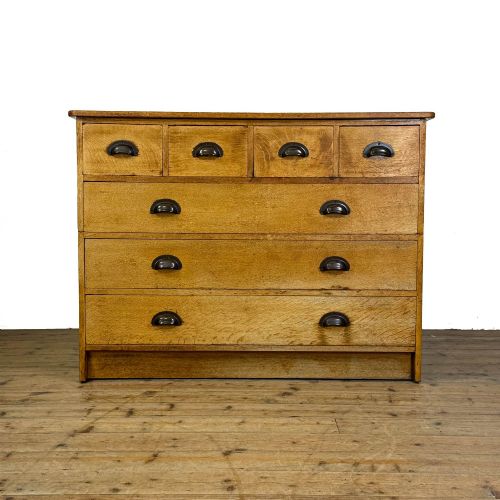
The most common forms on this page are banks of drawers, shop fittings, and drapers' countertop cabinets. These pieces range from substantial pine and mahogany multi-drawer units to oak plan chests and specialist filing cabinets.
How they were made
Construction relies heavily on durable timbers such as pine, oak, mahogany, fruitwood, and satin walnut, often paired with robust iron, brass, and glass elements. Cabinetmakers built these pieces to withstand heavy daily use in shops and offices, utilising solid wood carcases and tight-fitting multi-drawer assemblies.
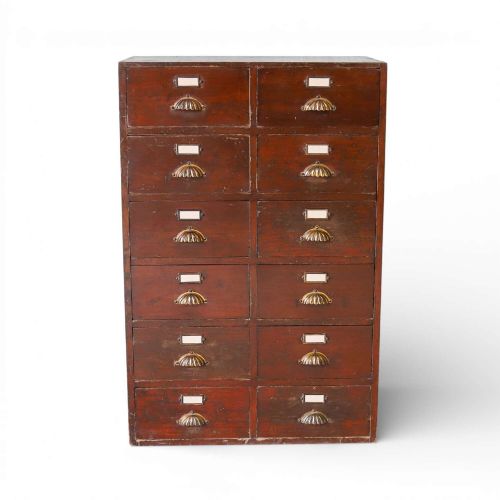
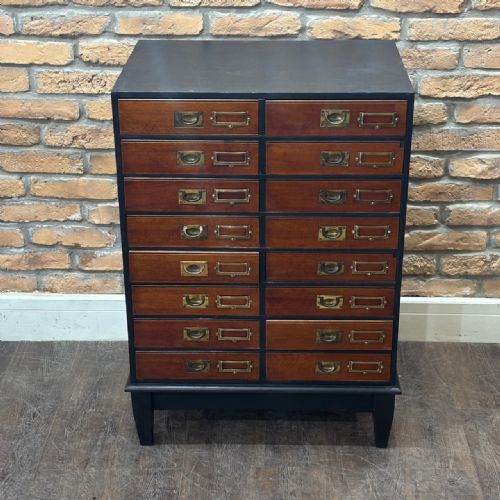
Detailing on these units includes original brass shell pulls and dedicated label holders affixed to the drawer fronts. Painted finishes, notably original white or cream coats on pine shop fittings, also appear alongside polished hardwood surfaces.
Many drawers still hold the invisible ghosts of ribbon, needles, and railway tickets tucked into their original brass label holders.
What varies in quality
The distinction between standard utility items and finer examples lies in the timber selection and the retention of original hardware. Cabinets featuring figured mahogany, satin walnut fronts, or specialised brass label holders command greater interest than plain softwood variants.
Completeness and originality drive the standing of each piece. Units retaining their authentic brass shell pulls, glass panels, and painted surfaces demonstrate superior survival from their commercial origins.
Luxmore's of Ilfracombe
The Haberdashery Storage Unit Glossary
- Bank of Drawers
- A piece of furniture comprising many small drawers stacked closely together. These units were standard trade fittings for sorting small goods.
- Shop Fitting
- Permanent or semi-permanent fixtures installed in commercial premises for display and storage. They are built for intensive daily retail use.
- Shell Pull
- A stamped or cast metal handle shaped like a half-shell, often incorporating a slot for a paper label. They are typical of nineteenth and early twentieth-century trade cabinetry.
- Plan Chest
- A wide, shallow set of drawers designed for storing architectural drawings and maps. In domestic settings, they serve alternative large-format storage needs.
Haberdashery Storage Unit: Frequently Asked Questions
What is a haberdashery storage unit?
A haberdashery storage unit is a multi-drawer cabinet or shop fitting originally used in drapery and general stores to organise small items of stock. They provide numerous compact compartments within a single frame.
Today, these units function as versatile storage furniture in homes and studios, prized for their numerous small drawers that sort craft supplies, stationery, or personal items.
How do I date a cabinet?
Dating relies on timber choices, construction techniques, and style markers present in the piece. Victorian examples often feature heavy pine or mahogany with simple turned knobs or early brass pulls, while Edwardian and 1920s versions introduce specific label holders and varied hardwoods.
Examining the fixings, drawer linings, and overall patina helps distinguish nineteenth-century pieces from interwar industrial utility or Art Deco designs.
Where were these units used?
These cabinets originated behind the counters and along the walls of draper shops, ironmongers, chemist shops, and commercial offices. They kept small merchandise, sewing notions, or documents sorted and accessible for shop assistants.
Their commercial pedigree means they were built to handle frequent opening and closing in busy public environments, resulting in robust construction.
How do I care for the wood?
Maintaining these pieces involves protecting the timber and metal hardware from excessive moisture and direct sunlight. Regular dusting with a soft, dry cloth preserves the polished or painted surface without stripping the aged patina.
For pieces with original painted finishes or brass shell pulls, gentle cleaning avoids damaging the historic surfaces and keeps the labels holders intact.