


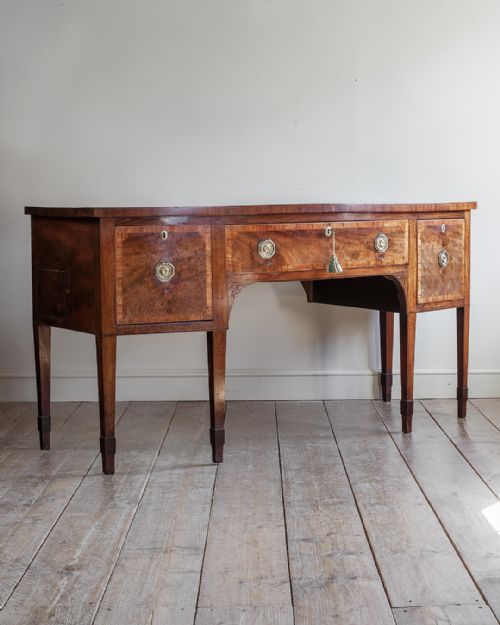
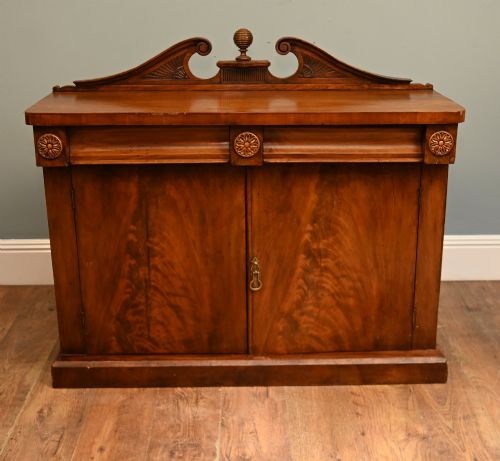
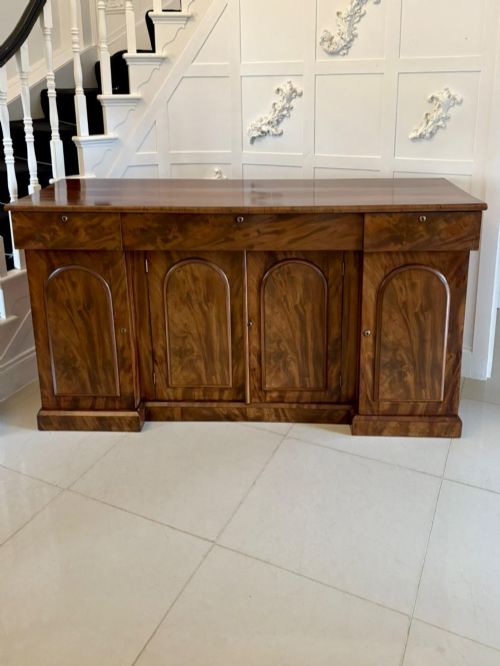
Wooden Dining Cabinet
These wooden dining cabinet pieces are sturdy storage staples that anchor a dining room, bringing practical heritage design into daily service.
Wooden Dining Cabinet
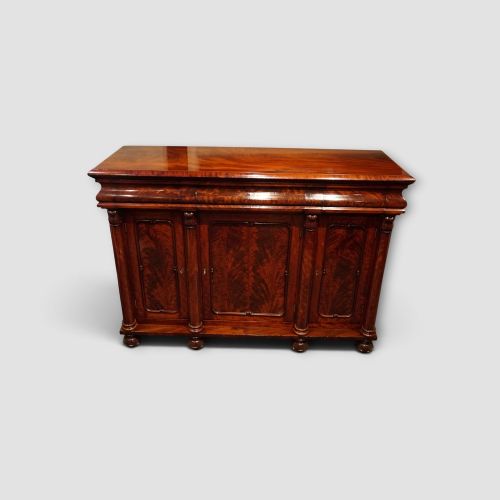
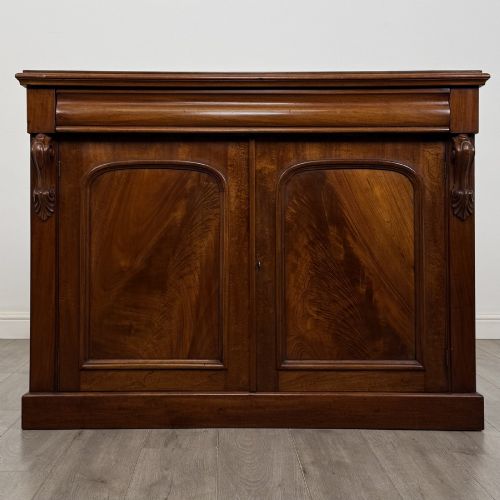
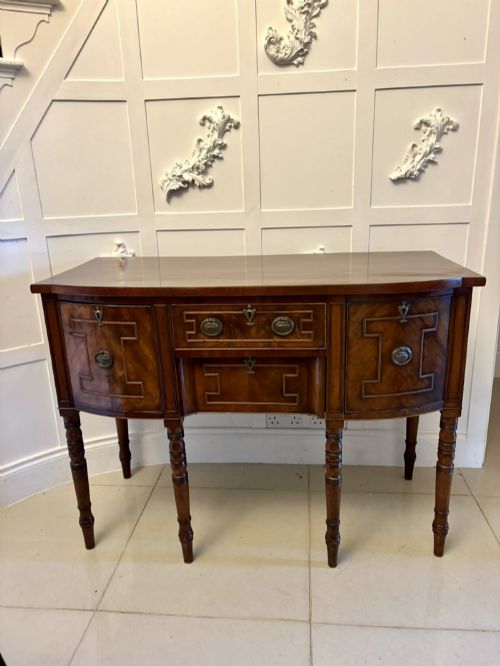
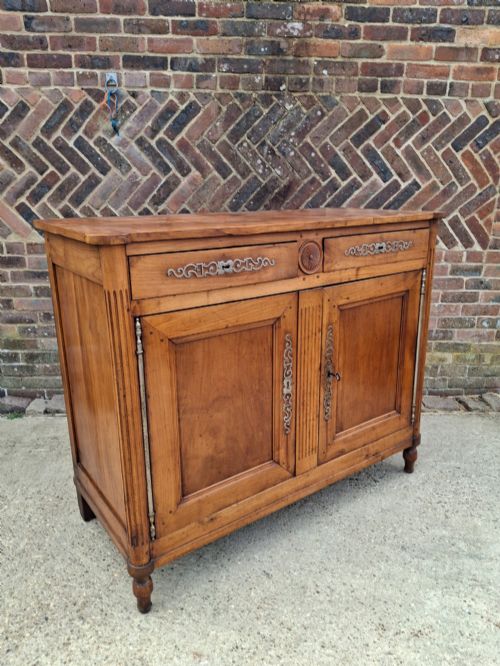
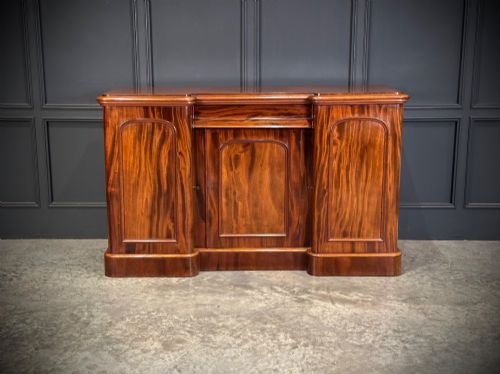
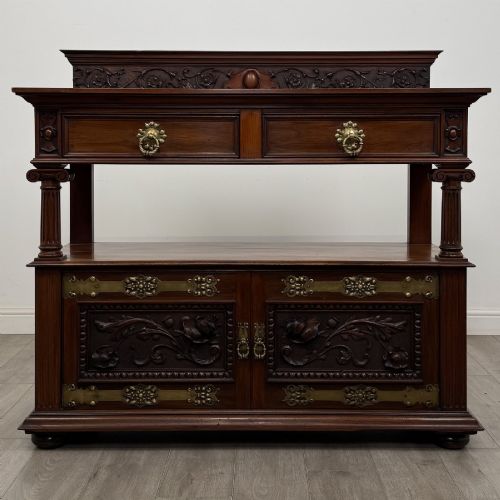
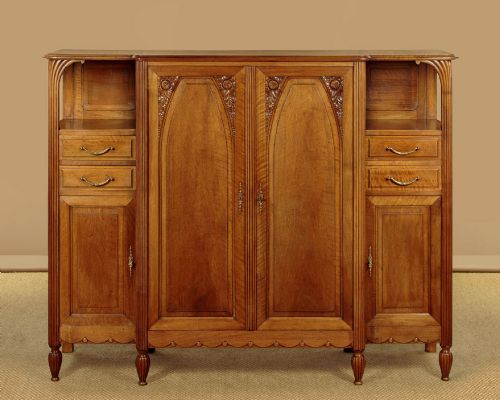
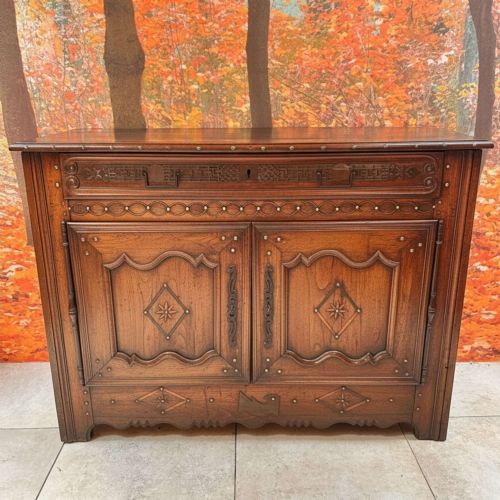
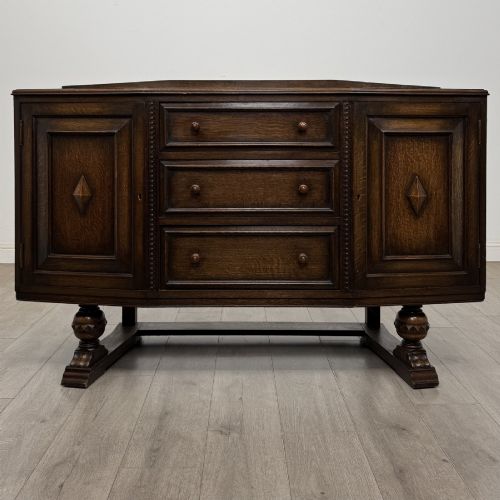
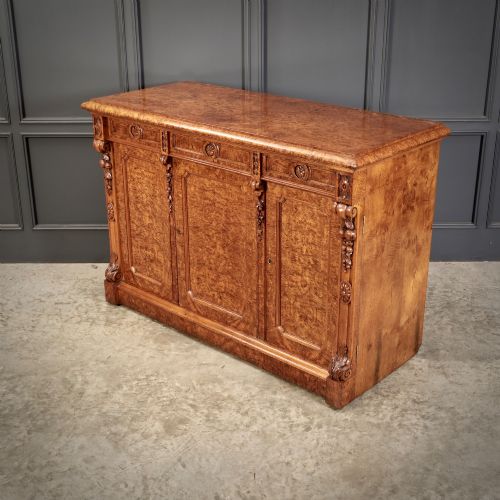
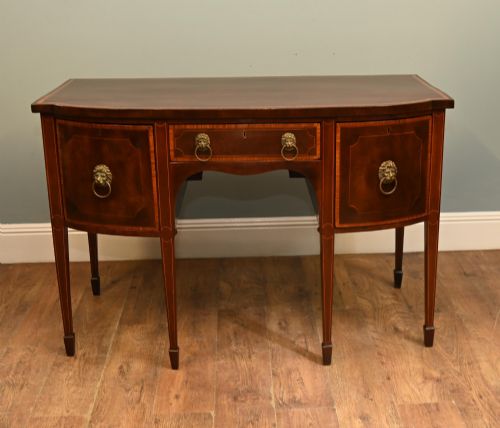
A wooden dining cabinet functions primarily as a sideboard, buffet, or dresser designed to store tableware and serve food. When you search for a wooden dining cabinet, you encounter various forms including chiffoniers, credenzas, and hutches originating from the eighteenth to twentieth centuries.
The most common versions on this page are nineteenth-century and Edwardian mahogany or oak sideboards featuring cupboards and drawers. Pieces range from formal Georgian and Regency designs to rustic country oak and streamlined Art Deco variants.
Makers and cabinetmakers utilised robust regional woods to construct items suited for domestic dining spaces, resulting in distinct proportions and storage layouts across different periods.
Materials and construction methods
Makers built these cabinets predominantly using solid oak and mahogany, often applying flame mahogany veneer, burr walnut, or satinwood crossbanding to visible surfaces. Brass handles and glass panels frequently accent the primary timber structures.
Cabinetmakers employed traditional joinery techniques, mounting doors on sturdy hinges and constructing drawers with precise joints to withstand daily use. Carved details, raised galleries, and inlaid stringing showcase manual skill across Victorian, Edwardian, and earlier examples.
Wooden Dining Cabinet Retail Price Guide 2026
Typical asking prices for wooden dining cabinet among the pieces listed under this phrase on Sellingantiques today, from the lower quarter to the upper quarter. They describe what is for sale here now, not the wider market.
Several cabinets include hidden compartments designed specifically to keep family silver secure from overly curious dinner guests.
Assessing quality and craftsmanship
The degree of refinement in timber selection dictates much of the visual distinction between pieces, with figured veneers and matched grain patterns elevating simpler forms. Subtle details such as finely cut inlays and substantial brass hardware separate standard utility items from finer workshop output.
Structural integrity depends on the precision of the original joinery and the preservation of the wood over time. Pieces that retain their original backboards, drawer linings, and surface finishes demonstrate superior initial manufacture and careful historical upkeep.
Rushworth's·Maurice Adams
The Wooden Dining Cabinet Glossary
- Sideboard
- A long piece of furniture placed in a dining room for holding serving dishes and cutlery. It typically incorporates a combination of cupboards and drawers.
- Chiffonier
- A compact low sideboard popular in the nineteenth century, often featuring enclosed shelving below and sometimes a raised tier or mirror above.
- Crossbanding
- A decorative border technique where thin strips of veneer are laid across the grain of the primary wood. This method creates a contrasting frame around drawer fronts or table tops.
- Credenza
- A sideboard or buffet cabinet originally designed without legs, though later Victorian variants often incorporated carved supports or enclosed marble tops.
- Bowfront
- A convex curved cabinet front that projects outward in an arc. This style became prominent in Georgian and Regency cabinetmaking.
Wooden Dining Cabinet: Frequently Asked Questions
How were wooden dining cabinets used?
These cabinets served to store dining room linens, silverware, and heavy serving platters out of sight. The flat top surface acted as a staging area for serving food and displaying decorative items during meals.
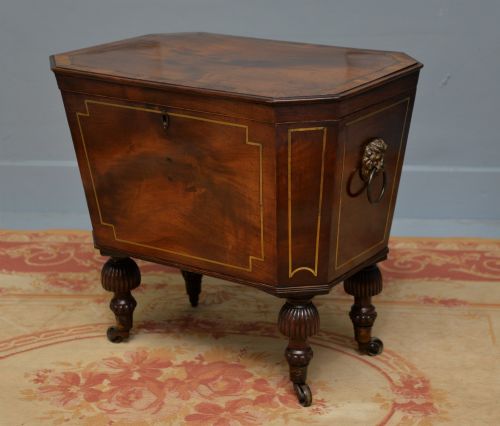
Larger variations included built-in cellarettes for wine storage or internal shelving specifically arranged for glassware and china. Their placement against the dining room wall kept the centre of the room clear for seating and service.
How do I care for a wood cabinet?
Maintain the timber by keeping the piece away from direct heat sources and dramatic humidity fluctuations that cause wood to warp. Regular dusting with a dry cloth prevents particle accumulation on carved details and polished surfaces.
Apply a traditional wax polish occasionally to nourish the grain and protect the finish. Avoid commercial silicone sprays, which can build up and degrade historic polished surfaces over time.
What defines an Edwardian sideboard?
Edwardian sideboards often display lighter proportions and brighter timbers than their heavy Victorian predecessors. Inlaid satinwood crossbanding and mirror-backed galleries frequently characterise pieces from this period.
Cabinetmakers working around the early twentieth century frequently drew inspiration from eighteenth-century Sheraton designs, producing refined items with tapered legs and subtle brass mounts.
Are Art Deco cabinets different?
Art Deco dining cabinets abandon historical revival motifs in favour of geometric lines and streamlined forms. They often showcase striking grain patterns in oak or exotic veneers without heavy carved ornamentation.
Functionality remained central, with specialised internal layouts designed to house modern cutlery sets or integrated drinks storage compartments.