




Wooden Desktop Bookstand
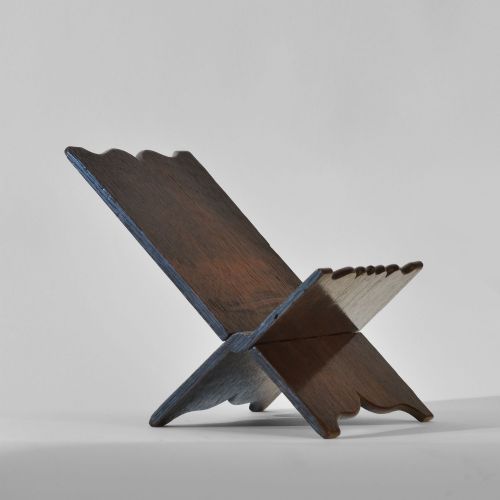
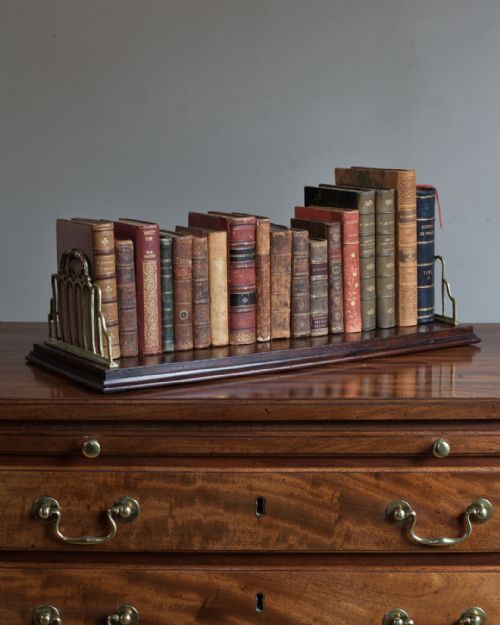
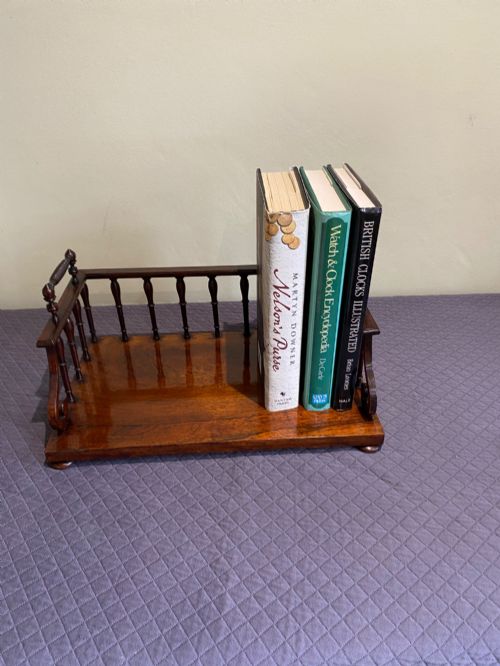
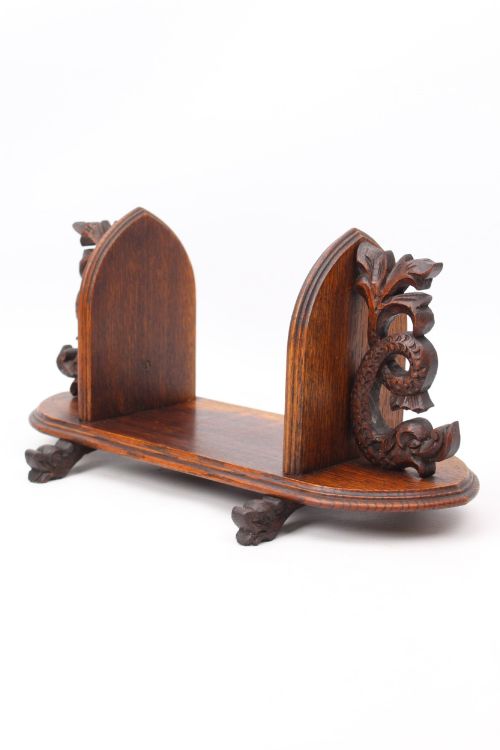
A wooden desktop bookstand holds your volumes upright on a desk, bringing order to working papers and showing off fine timber.
Wooden Desktop Bookstand
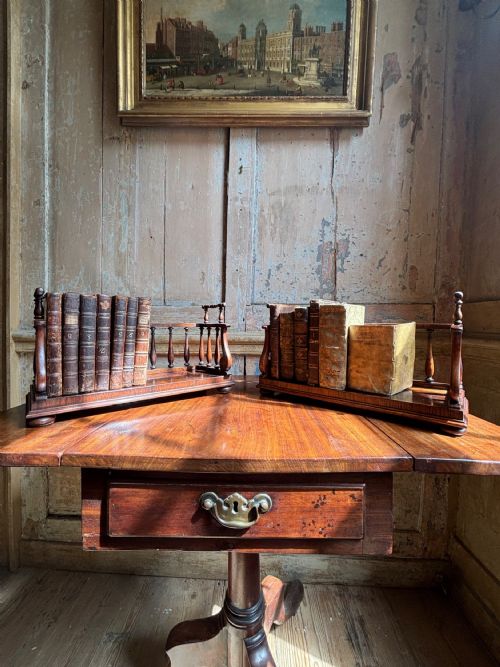
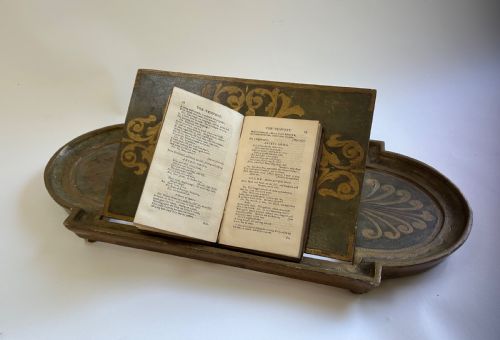
A wooden desktop bookstand provides a sturdy shelf or expanding rack for keeping daily reference volumes close at hand on a writing table. You will frequently encounter forms such as book slides, book racks, and folding bookstands across these listings.
The pieces on this page span the 19th Century, Victorian, Edwardian, and Regency periods, alongside later items from 1910, 1920, and 1930. Styles range from plain English oak to decorative Florentine, Anglo-Indian, and Gothic Revival designs.
Makers utilised varied formats including revolving stands, pairs of book ends, and extending slides that adjust to fit a row of octavos. Each configuration served the practical needs of the library and the study during the nineteenth and early twentieth centuries.
How they were made
Cabinetmakers worked with dense hardwoods like rosewood, walnut, and oak, often selecting burr veneers to create rich grain patterns across the book stand base and uprights. Boxwood inlay, brass mounts, and painted plaques added contrasting detail to the timber framework.
Extending book slides relied on clever internal wooden mechanisms or brass scissor actions to allow the ends to pull outward smoothly. Tunbridge Ware examples integrated tiny coloured wood blocks to form intricate mosaic patterns across the surface.
Wooden Desktop Bookstand Retail Price Guide 2026
Typical asking prices for wooden desktop bookstand among the pieces listed under this phrase on Sellingantiques today, from the lower quarter to the upper quarter. They describe what is for sale here now, not the wider market.
Listings feature 19th Century, Victorian, and Edwardian items alongside pieces dated to 1910, 1920, and 1930.
What varies in quality
The standard of a wooden desktop bookstand rests on the choice of timber and the precision of its joinery. Solid rosewood and figured walnut with crisp carving command attention, while simpler oak versions rely on honest construction.
Quality also shows in the finish of secondary materials, such as heavy brass mounts, hand-painted ceramic plaques, and the smooth operation of extending slides. Finer workshops invested greater labour in decorative Tunbridge Ware mosaics and detailed giltwood carving.
The Wooden Desktop Bookstand Glossary
- Book slide
- An extending desk accessory with two upright ends that move apart on a track to hold a variable number of volumes.
- Tunbridge Ware
- A type of nineteenth-century woodwork decorated with mosaic scenes built from thousands of tiny tinted wood squares.
- Gothic Revival
- A nineteenth-century design style drawing on medieval architectural motifs such as pointed arches and trefoils.
- Giltwood
- Timber that has been coated with a thin layer of gold leaf or gold paint for decorative effect.
- Boxwood
- A pale, dense hardwood frequently used for stringing, inlay, and contrasting details on dark cabinet furniture.
Wooden Desktop Bookstand: Frequently Asked Questions
How do extending book slides work?
Extending book slides feature a central base with movable end pieces that glide outward along a track. This mechanism allows the holder to expand as more volumes are added.
Many examples use hidden wooden runners or brass scissor linkages to maintain a steady grip on the books as the length changes.
What is Tunbridge Ware?
Tunbridge Ware is a specialised form of nineteenth-century woodwork originating from Kent. Artisans glued together thousands of tiny blocks of naturally coloured wood to create mosaic pictures.
These geometric patterns and floral designs adorn the surfaces of select book slides and boxes from the period.
Where were these book stands used?
These book stands were placed on writing desks, library tables, and bureau bookcases in Victorian and Edwardian homes. They kept current reading material within arm reach of the writer.
Revolving versions allowed a user to select a volume from multiple sides while seated at a large partners desk.