

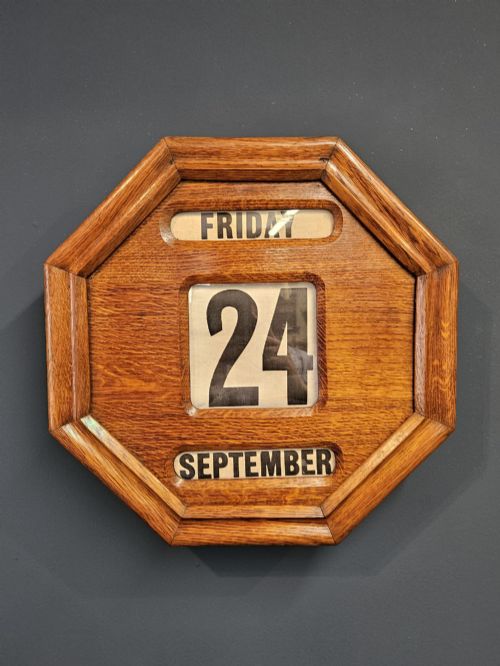
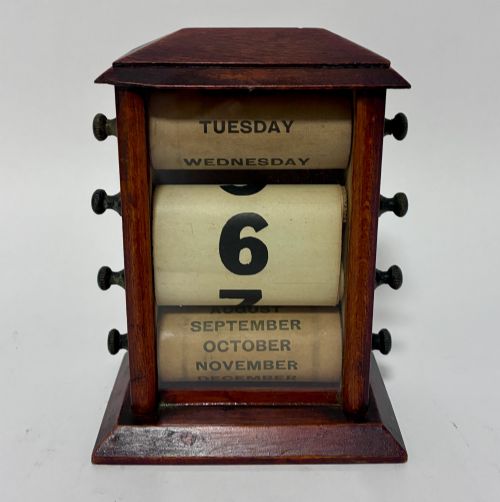
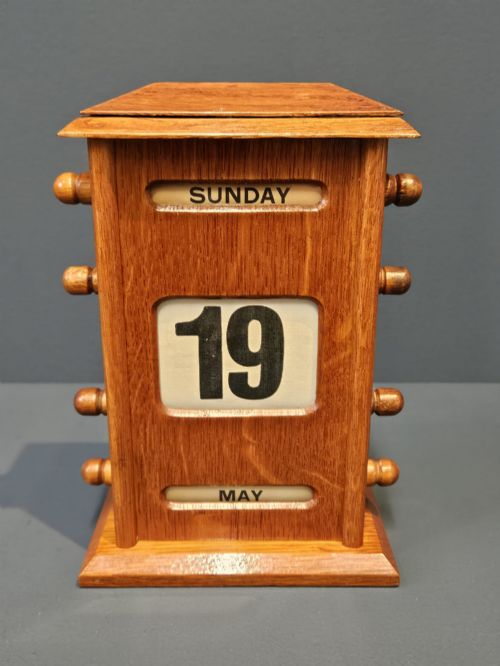
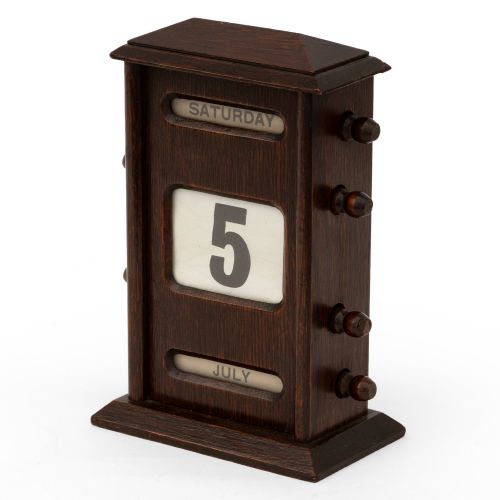


Wooden Desk Calendar
A wooden desk calendar brings mechanical order to the study, offering a tactile way to track the passing days through sliding cards and rotating drums.
Wooden Desk Calendar
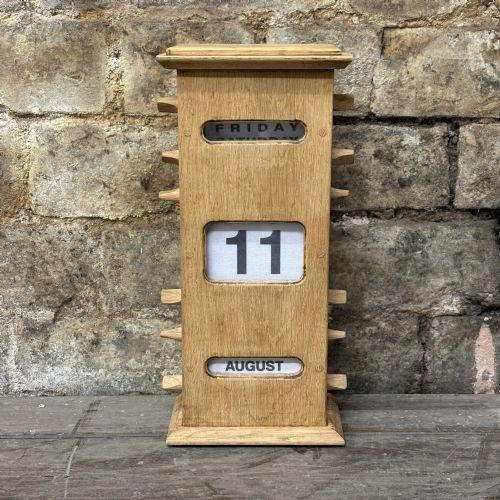
A wooden desk calendar provides a mechanical method for tracking days and dates on a surface. These pieces range from compact tabletop blocks to larger architectural forms suited to office furniture.
The versions most commonly encountered on this page date from the late nineteenth century through to the Art Deco period. They utilise durable hardwoods designed to sit upon writing tables and counters.
How they were made
Cabinetmakers constructed these pieces using solid timbers such as oak, mahogany, and walnut. Surfaces often incorporate brass hinges, bezels, and cardholders to house paper or linen date strips.
Makers integrated mechanical elements including sliding panels, rotating drums, and hinged doors. Glass panels occasionally protect delicate paper calendars or faceplates from dust and wear.
Wooden Desk Calendar Retail Price Guide 2026
Typical asking prices for wooden desk calendar among the pieces listed under this phrase on Sellingantiques today, from the lower quarter to the upper quarter. They describe what is for sale here now, not the wider market.
Listings feature oak, mahogany, and walnut timbers alongside brass, glass, and paper components.
What varies in quality
Quality rests upon the precision of the joinery and the integrity of the mechanism. Pieces featuring substantial timber framing and crisp lettering on the date cards command greater attention.
The refinement of the secondary materials also dictates standard. Solid brass fittings and clear glass protection elevate a piece above simpler utilitarian constructions.
The Wooden Desk Calendar Glossary
- Perpetual calendar
- A mechanism designed to be adjusted manually each month and year without needing a complete reset. It relies on interchangeable cards or rotating drums.
- Stationery cabinet
- A desk accessory incorporating compartments for paper and envelopes, frequently fitted with an integrated calendar or date mechanism.
- Art Deco
- A design style emphasising geometric shapes and streamlined forms, appearing on calendars from the nineteen-thirties.
- Edwardian
- A period spanning the early twentieth century, known for lighter wood tones and refined proportions in desk accessories.
Wooden Desk Calendar: Frequently Asked Questions
How do perpetual calendars work?
These devices use rotating drums, sliding panels, or interchangeable cards to display the day, date, and month. Users manually adjust the elements each morning to maintain the correct sequence.
Most designs accommodate the varying lengths of months through simple hand manipulation rather than complex internal clockwork.
Are these calendars still usable today?
Yes, because perpetual calendars do not rely on fixed year cycles tied to specific days, they remain fully functional. You simply align the correct day and date combination at the start of each month.
They serve as practical desktop tools just as well as they did over a century ago.
What woods were commonly used?
Oak appears most frequently in these pieces, particularly in golden and dark variants from the Victorian and Edwardian eras. Mahogany and walnut also feature prominently among surviving examples.
These dense timbers protected the internal mechanisms and withstood daily office use.
How do I date an antique calendar?
Dating relies upon stylistic clues such as the presence of Art Deco geometry, Edwardian proportions, or Victorian brass detailing. The typography on the date cards and the construction of the timber case offer further guidance.
Comparing the form to dated stationery cabinets and mantel clocks from the same period helps narrow the timeframe.