


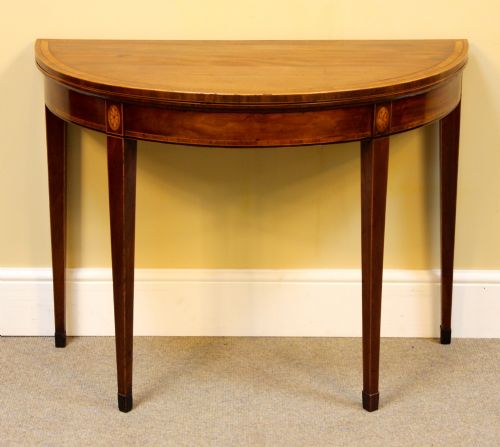
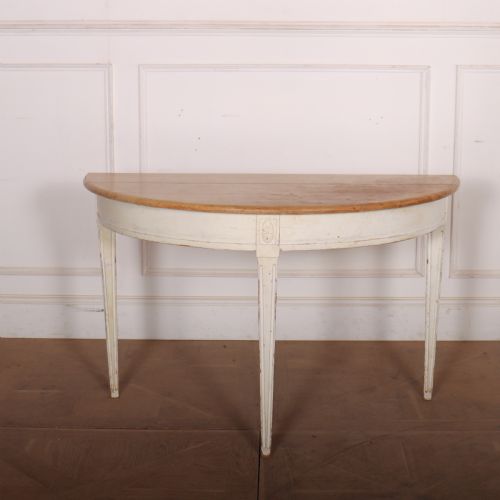

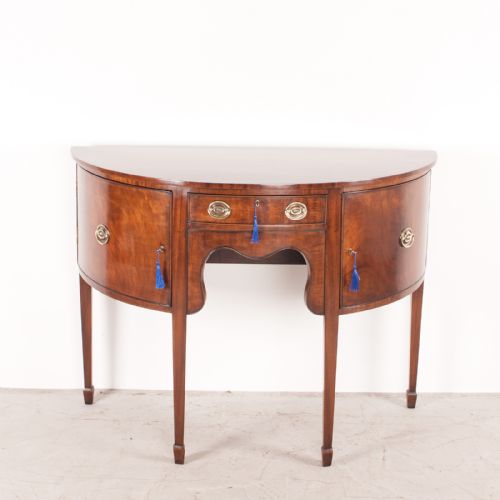


Wooden Demilune Table
A wooden demilune table offers a graceful half-round silhouette that fits snugly against a wall while adding distinct architectural character to a room.
Wooden Demilune Table
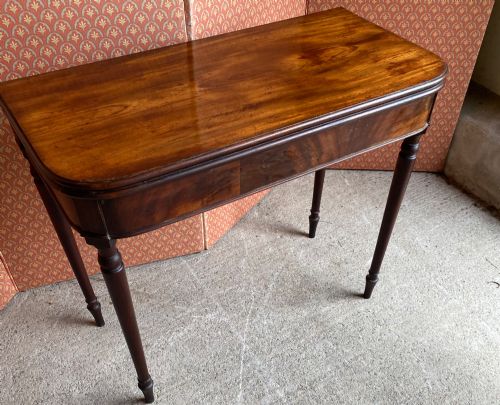
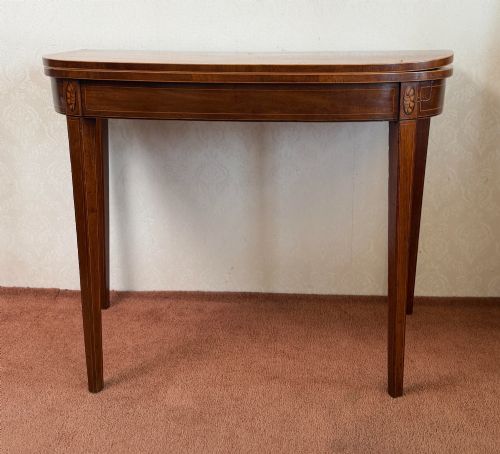
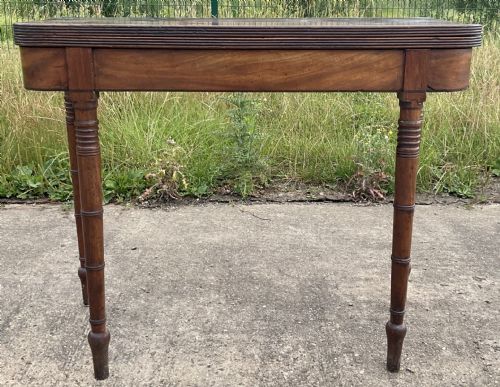
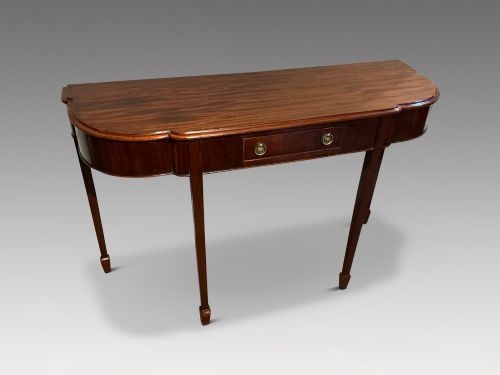
A wooden demilune table is a semicircular piece of furniture designed primarily for placement against flat walls in hallways, drawing rooms, and dining areas. The selection on this page spans the eighteenth and nineteenth centuries, alongside later twentieth-century interpretations, showing considerable variety in form and function.
The objects listed take several forms, most commonly card tables, tea tables, and console tables, with occasional sideboards and side tables appearing among them. These versatile surfaces often feature fold-over tops or flat console designs suited to displaying decorative objects or serving guests.
Origins and regional styles range from British Georgian and Regency pieces in rich mahogany and satinwood to painted Swedish folk items and Italian neoclassical consoles. Buyers encounter everything from austere timber construction to intricately inlaid and hand-painted decorative surfaces.
Factors that distinguish quality
The standard of a wooden demilune table rests upon the choice of timber and the precision of its grain matching, particularly across fold-over leaves and veneered tops. Pieces featuring tightly figured Honduras or Cuban mahogany exhibit greater visual depth than plain boards.
Superior execution shows in the crispness of inlaid stringing, the subtlety of hand-painted motifs, and the structural integrity of the curved frame. Refined proportions and harmonious joinery separate everyday utility items from more ambitious cabinet work.
Wooden Demilune Table Retail Price Guide 2026
Typical asking prices for wooden demilune table among the pieces listed under this phrase on Sellingantiques today, from the lower quarter to the upper quarter. They describe what is for sale here now, not the wider market.
Listings feature woods such as mahogany, satinwood, walnut, and boxwood, alongside applied paint and marble.
The Wooden Demilune Table Glossary
- Demilune
- A half-moon shape used to describe tables with a flat back and a curved front edge. This configuration allows the piece to stand flush against a wall.
- Console table
- A table supported by wall brackets or console legs, designed to stand against a vertical surface. They often serve decorative purposes in entryways.
- Fold-over top
- A hinged table surface that doubles in area when opened out, commonly found on card and tea tables of the Georgian and Regency eras.
- Marquetry
- The art of applying pieces of veneer to a structure to form decorative patterns and pictures. It contrasts different wood colours for visual impact.
- Satinwood
- A durable, yellowish timber prized for its lustrous sheen and smooth texture. It is frequently employed for fine stringing and decorative banding.
Wooden Demilune Table: Frequently Asked Questions
Where should I place a demilune table?
These tables excel in narrow hallways, entrance foyers, and behind sofas where standard rectangular furniture might obstruct movement. Their flat back rests securely against the wall while the curved front softens the geometry of the room.
They also function well in dining rooms as serving surfaces or beneath wall mirrors in sitting rooms to display lamps and decorative objects.
How do fold-over card tables work?
Fold-over tables feature a hinged top leaf that swings open on pivots or a gateleg frame to reveal a larger surface. Historically, these were used for card games, tea drinking, or writing.
When closed, they occupy minimal floor space and present a neat decorative front against the wall.
What is the difference between a console and a tea table?
Console tables are fixed architectural pieces designed strictly to stand against a wall, sometimes featuring wall brackets or elaborate painted decoration. They remain open at all times.
Tea tables usually feature a hinged top that can close flush or open up, serving a dual purpose for hospitality and display.
How do I care for antique wood surfaces?
Maintain antique timber by keeping it away from direct sunlight and sudden temperature shifts that can dry out the wood and cause veneers to lift. Dust gently with a soft cloth rather than using silicone sprays.
Period surfaces benefit from occasional applications of appropriate wax to nourish the grain and preserve the finish.