





Wooden Daybed Frame
A wooden daybed frame offers a versatile piece for reclining, bridging the gap between seating and sleeping across various historic periods.
Wooden Daybed Frame
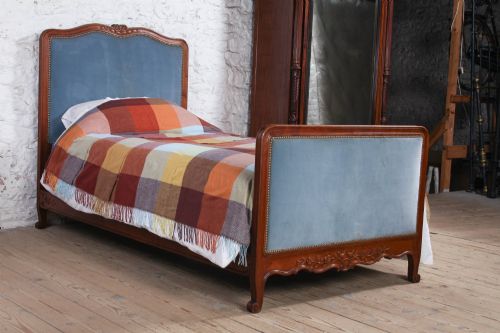
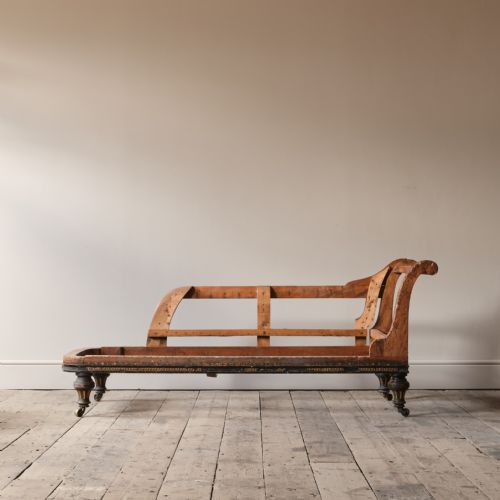
A wooden daybed frame serves as a foundational structure designed for resting, lounging or sleeping in both formal and informal rooms. These items draw on traditional forms from the Regency, Victorian and Edwardian eras, alongside pieces originating from nineteenth-century China and India.
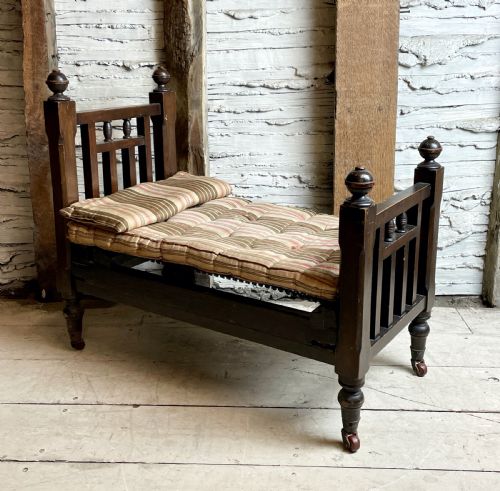
Buyers browsing this selection encounter various related seating forms, including chaise longues, scroll-end sofas, campaign beds and marriage beds. The inventory spans full-scale furniture alongside diminutive pieces such as a large-scale doll bed.
The construction typically relies on substantial timber framing, frequently complemented by decorative turnings, carvings or applied finishes. Examples range from simple pine and hardwood frames to elaborate ebonised wood and red lacquered surfaces.
How they were made
Cabinetmakers constructed these frames using dense timbers such as mahogany, walnut, teak and ebonised wood, joined with traditional woodworking joints to ensure structural stability. Turned elements, scroll ends and hand-carved details required skilled carpentry, particularly in nineteenth-century workshops and regional traditions.
Some examples incorporate functional hardware, including iron mechanisms, brass fittings and detachable legs designed for campaign use or folding steamer chairs. Surface treatments varied from clear polishes that highlighted the natural grain of mahogany and hardwood to heavy red lacquer and ebonisation.
Wooden Daybed Frame Retail Price Guide 2026
Typical asking prices for wooden daybed frame among the pieces listed under this phrase on Sellingantiques today, from the lower quarter to the upper quarter. They describe what is for sale here now, not the wider market.
Even dolls received proper lodging once in a while, as proved by a large-scale Edwardian miniature bed.
What varies in quality
The standard of a wooden daybed frame rests on the grade of timber selected by the maker and the crispness of any carved or turned ornamentation. Superior examples display thoughtful proportions, robust structural joinery and well-executed secondary woods that remain stable over centuries.
Finishing also distinguishes finer pieces, whether through the depth of a polished mahogany surface or the careful application of traditional lacquering. Maker attribution, as seen in stamped or documented workshop pieces, elevates the standing of certain nineteenth-century frames.
Holland and Sons
The Wooden Daybed Frame Glossary
- Daybed frame
- The structural wooden skeleton designed to support a mattress or squab cushion for daytime reclining and sleeping. These pieces combine the characteristics of a chair and a bed.
- Chaise longue
- An upholstered sofa in the form of a chair with a long seat large enough to support the user's legs. Nineteenth-century versions frequently feature a single raised scroll end.
- Campaign bed
- Portable furniture constructed for travelling officers, featuring folding elements, detachable legs or dismantling frames for ease of transport. These items prioritise practicality alongside solid timber construction.
- Ebonised wood
- Timber treated with a dark finish to imitate expensive ebony. This technique was popular during the nineteenth century for achieving a formal, dramatic appearance.
- Scroll end
- A sweeping, curved terminal on the arm or headboard of a sofa or daybed. The design references classical furniture forms revived during the Regency and Victorian periods.
Wooden Daybed Frame: Frequently Asked Questions
What is a wooden daybed frame used for?
These frames serve primarily as daytime seating that accommodates reclining or napping. They function effectively in studies, sunrooms and larger living spaces as an alternative to standard sofas.
Historically, variations such as campaign beds and chaise longues provided flexible resting places within domestic interiors. Today, they continue to offer a practical architectural anchor for loose cushions and mattresses.
How do I identify a Regency daybed?
Regency frames typically exhibit classical revival motifs inspired by ancient Greek, Roman and Egyptian design. Look for sweeping scroll ends, reeded legs and dark polished timbers.
These pieces often emphasise clean architectural lines and balanced proportions, distinguishing them from the heavier, more ornately carved Victorian styles that followed.
Are these frames sturdy enough for daily use?
Most antique wooden frames were built using dense hardwoods like mahogany, walnut and teak with traditional joinery. This solid construction generally allows for regular daily seating when placed on a level surface.
However, buyers should consider the age of the timber and any moving mechanisms, such as folding joints on campaign furniture, which require careful handling.