



Wooden Cutlery Canteen
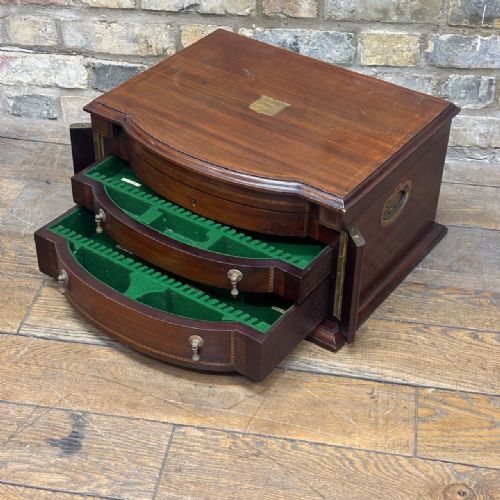
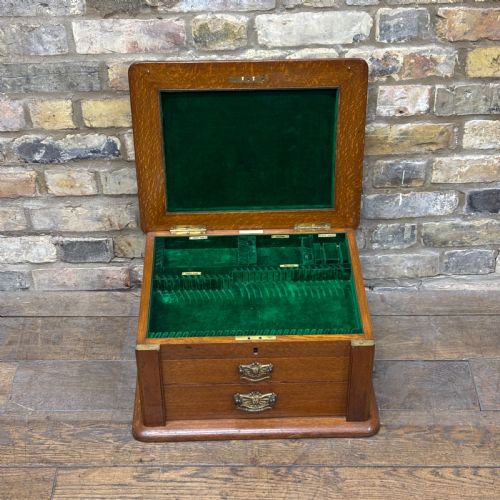
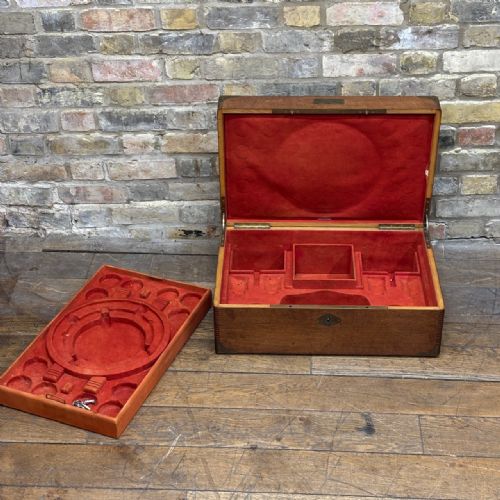
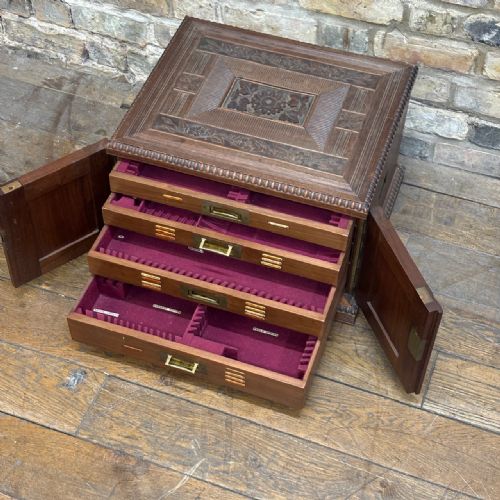
A wooden cutlery canteen provides fitted storage for domestic flatware, combining robust timber construction with partitioned interiors designed to keep sets organised.
Wooden Cutlery Canteen
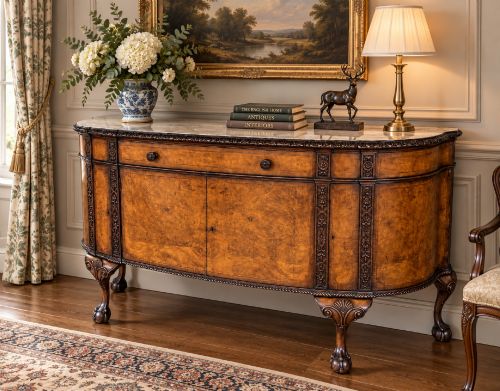
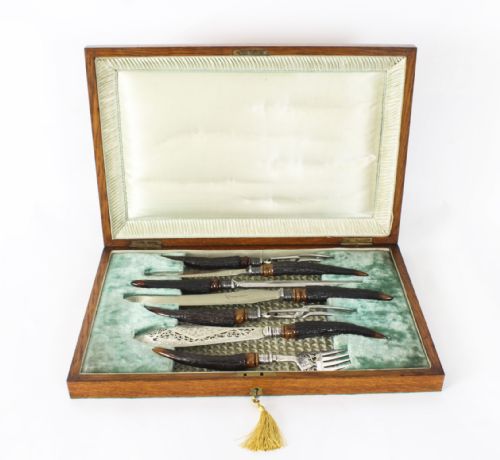
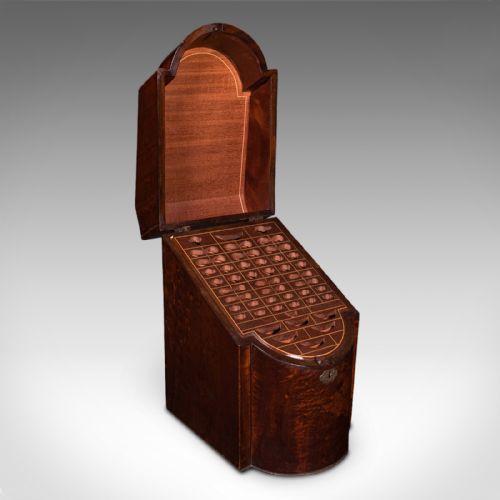
A wooden cutlery canteen encompasses various forms designed to house flatware, ranging from upright knife boxes to heavy floor-standing sideboards and table-top chests. These pieces span multiple eras, including Georgian, Victorian, Edwardian, and Art Deco periods, reflecting changing dining habits over centuries.
Origins represented in the inventory point predominantly to English craftsmanship, with occasional examples extending to Portuguese workshops. Forms vary from compact 18th-century boxes to large 20th-century canteens containing over one hundred pieces.
Materials and construction
Constructed primarily from durable hardwoods like mahogany, oak, walnut, and coromandel, these canteens rely on solid timber carcases designed to withstand heavy daily use. Cabinetmakers utilised precise joinery to ensure lids and drawers fit securely around internal utensils.
Interiors frequently feature linings of velvet or satinwood, protecting the metal surfaces of silver plate and steel blades from friction. Exterior hardware typically incorporates brass handles, escutcheons, and locks, adding functional metal accents to the wooden structures.
Wooden Cutlery Canteen Retail Price Guide 2026
Typical asking prices for wooden cutlery canteen among the pieces listed under this phrase on Sellingantiques today, from the lower quarter to the upper quarter. They describe what is for sale here now, not the wider market.
Storage formats range from tabletop knife boxes and silver chests to large fitted sideboards containing extensive flatware sets.
Evaluating craftsmanship and condition
Superior examples of a wooden cutlery canteen are distinguished by the selection of figured timbers, such as burr walnut or rich mahogany, and meticulous internal partitioning. Quality rests in how securely the fitted interior holds the flatware and the precision of the cabinetmaker's joints.
Makers such as Walker & Hall or firms like Waring & Gillows demonstrate the high standards found in designated canteens, where branding and original hardware remain intact. Lesser pieces show simpler construction, plainer secondary woods, or altered internal fittings over time.
Walker & Hall·Waring & Gillows
The Wooden Cutlery Canteen Glossary
- Canteen
- A fitted chest, box, or cabinet designed specifically to store and organise a set of cutlery.
- Escutcheon
- A protective metal plate surrounding a keyhole, usually fashioned from brass on these wooden cases.
- Silver plate
- A base metal coated with a thin layer of silver, commonly found on the flatware housed within Edwardian and Victorian canteens.
- Carved
- Ornamented by cutting into the solid wood surface, a technique seen on various period dining accessories.
- Fitted interior
- An internal arrangement of tailored slots, trays, and baize linings designed to keep specific utensils securely separated.
Wooden Cutlery Canteen: Frequently Asked Questions
What fits inside a wooden cutlery canteen?
These canteens typically house matched or expanded sets of flatware, including table knives, forks, spoons, and serving pieces. The internal trays and vertical slots are shaped precisely for each utensil type.
Larger cabinets also accommodate carving sets, fish knives, and specialised servers, keeping entire dining services organised in one dedicated chest.
Where should I place a canteen at home?
Table-top boxes and smaller chests sit well on sideboards, side tables, or designated server units in a dining room. Larger floor-standing sideboards function as both storage furniture and serving surfaces.
Keep wooden items away from direct heat sources and strong sunlight to prevent timber warping and protect the internal linings.
Can I use these for modern cutlery?
Many older canteens feature slots sized for antique flatware shapes, which can differ slightly from modern knife and fork dimensions. Checking internal measurements ensures contemporary cutlery fits comfortably.
Some buyers repurpose the fitted compartments to store jewellery, stationery, or sewing supplies when original sets are absent.