




Wooden Counter Cabinet
These wooden counter cabinet pieces are commercial shop fittings and small display cases that bring practical tabletop storage into modern rooms.
Wooden Counter Cabinet
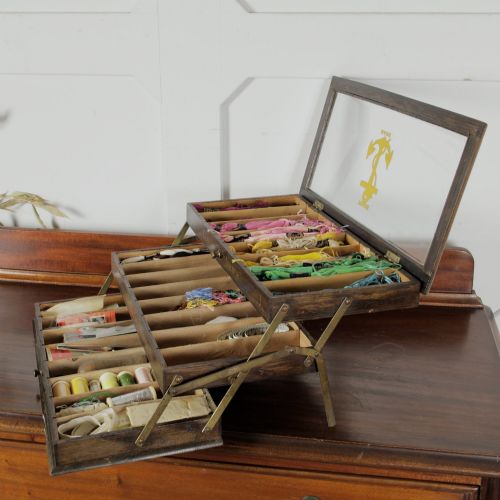
A wooden counter cabinet is a display or storage unit designed to sit upon shop counters and tables, frequently appearing as glazed cases, drapers chests, and advertising dispensers. You will most often encounter early twentieth-century and Victorian examples on this page, originating from commercial settings.
The selection ranges from tall haberdashery drawers and apothecary boxes to brass-framed countertop display cases and chocolate advertising units. These forms served tradesmen, chemists, and drapers before finding new roles in domestic interiors.
Makers utilised various regional woods, notably oak, mahogany, walnut, and pine, constructing sturdy carcasses suited to daily public trade. The surviving pieces carry the marks of their working pasts through original glazing, brass hardware, and painted signage.
Materials and construction
Makers constructed the primary frames of a wooden counter cabinet from hardwoods like mahogany, oak, and walnut, alongside utilitarian pine and cedar. These timbers provided the structural strength needed for heavy mercantile drawers and glazed display housings.
Glass panels were set into wooden doors or brass frames to protect merchandise while maintaining visibility for customers. Brass pulls, hinges, and corner brackets completed the construction, adding durable mechanical details to the commercial cabinetry.
Wooden Counter Cabinet Retail Price Guide 2026
Typical asking prices for wooden counter cabinet among the pieces listed under this phrase on Sellingantiques today, from the lower quarter to the upper quarter. They describe what is for sale here now, not the wider market.
Listings span the Victorian, Edwardian, and Art Deco eras, featuring oak, mahogany, pine, and brass.
Quality differences across the range
Quality in a wooden counter cabinet rests on the selection of figured timbers, the precision of the drawer dovetails, and the integrity of the original glazing. Finer pieces display carefully matched mahogany or walnut veneers and robust brass framing.
The presence of original manufacturer branding, sign-written advertising panels, and working mechanical dispensing mechanisms distinguishes standard utility fittings from superior commercial display items. Intact hardware and original painted finishes also elevate the standing of a piece.
Saml Elliott And Sons·Ermen And Roby·Cadburys
The Wooden Counter Cabinet Glossary
- Haberdashery cabinet
- A multi-drawer unit originally used in drapers and cloth shops for storing ribbons, threads, and small sewing goods. These cases feature shallow drawers that often retain glass fronts or compartmented interiors.
- Countertop display cabinet
- A glazed showcase built to sit upon a shop counter for customers to view small wares. They typically feature hinged or sliding rear doors for the attendant.
- Apothecary box
- A specialised storage chest fitted with small compartments or drawers for medicines and powders. These portable or countertop units often feature secure locking mechanisms.
- Dovetail
- A traditional wood joint formed by interlocking wedge-shaped fingers. This joint provides high tensile strength for drawer corners and cabinet frames.
Wooden Counter Cabinet: Frequently Asked Questions
What were wooden counter cabinets used for?
These units served as trade fixtures in nineteenth and early twentieth-century shops, pharmacies, and drapers. Merchants used them to store small goods like sewing threads, soaps, and confectionary while displaying products securely behind glass.
Today, they transition easily into domestic settings for organising small collections, jewellery, or stationery on tabletops and sideboards.
How do I date a wooden counter cabinet?
Dating relies on observing construction methods, timber choices, and hardware styles across Victorian and early twentieth-century periods. Mass-produced brass framing and specific advertising typography often point toward the nineteen-twenties or nineteen-thirties.
Earlier nineteenth-century examples display hand-cut joinery, solid mahogany or pine carcasses, and simpler utilitarian layouts without brand signage.
How should I clean a wooden counter cabinet?
Maintenance requires gentle dusting with a dry cloth and occasional application of appropriate beeswax to nourish aged timber surfaces. Avoid using harsh chemical cleaners that can strip original polishes and painted advertising.
Glass panels benefit from standard glass cleaner applied sparingly to a cloth rather than sprayed directly onto the wood.
Are all wooden counter cabinets glazed?
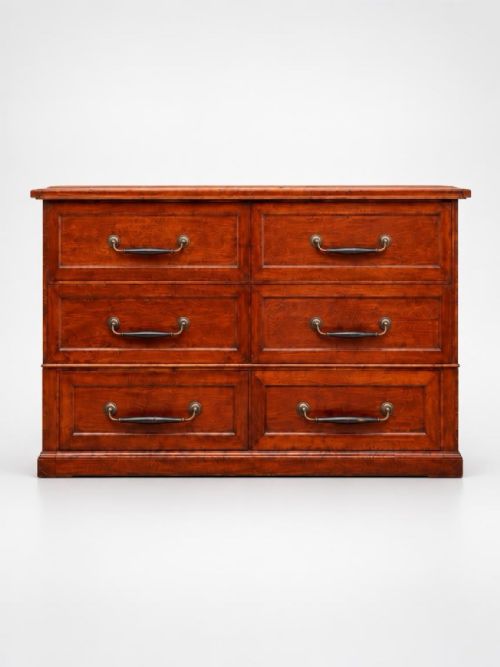
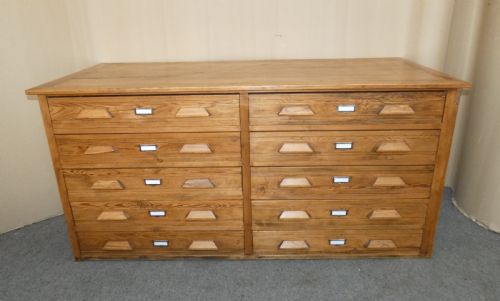
Not all examples feature glass display areas; many consist entirely of banks of drawers used for stock storage behind counters. Pieces intended for drapers or apothecaries often combined solid wood drawers with glass-fronted display compartments.
The choice between a glazed showcase and a drawer unit depended on whether the merchant needed to display merchandise or keep it stored out of sight.