
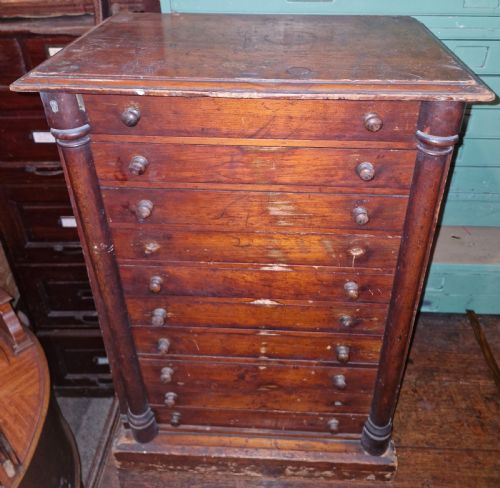


Wooden Coin Chest
A wooden coin chest organises small treasures securely, bringing solid craftsmanship and orderly storage into daily life.
Wooden Coin Chest
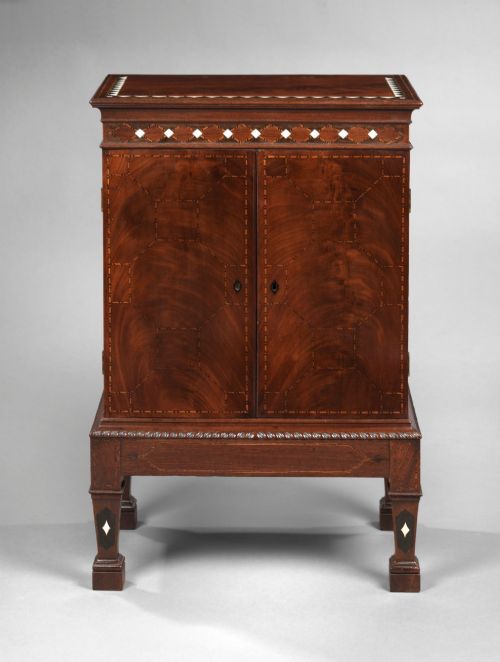
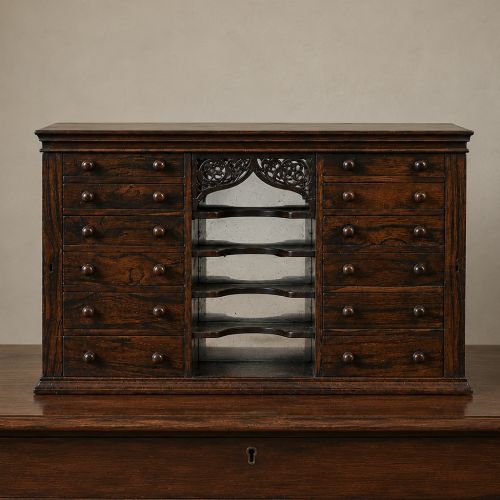
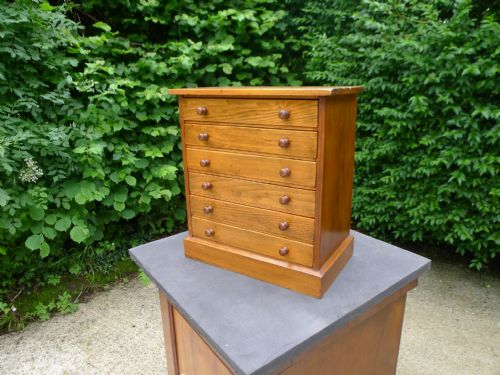
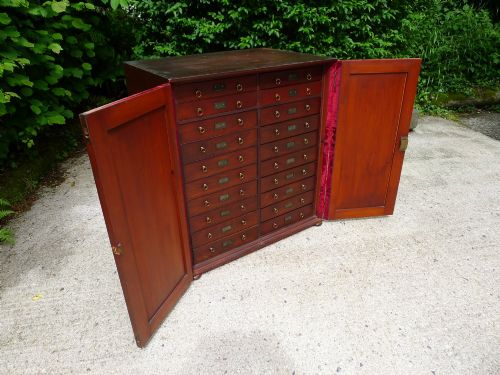
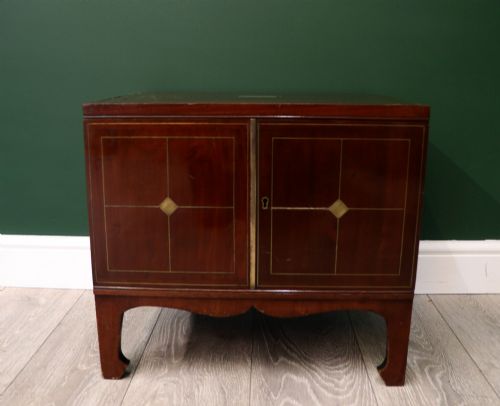
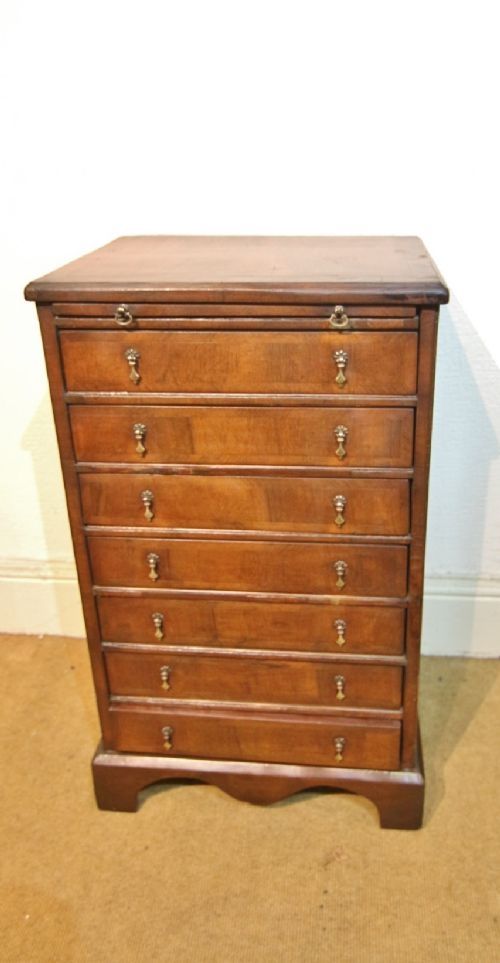
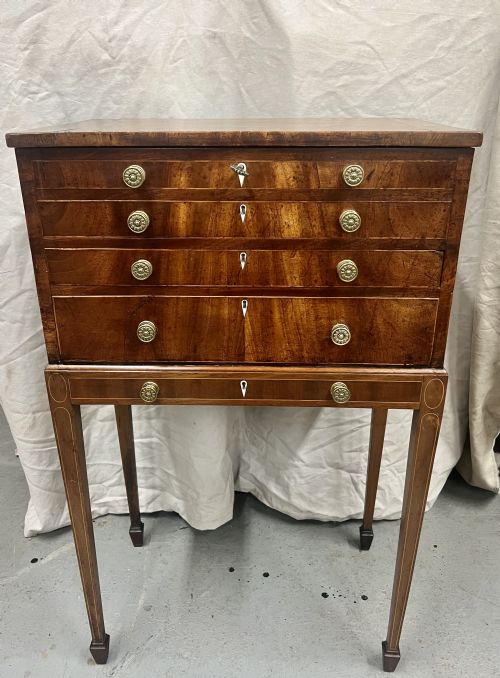
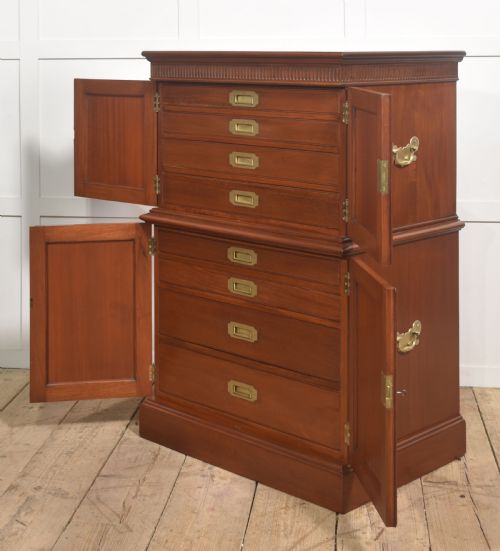
A wooden coin chest takes the form of a miniature set of drawers or a specialised cabinet designed to hold small items safely. When buyers search for a wooden coin chest, they encounter compact pieces built with multiple small internal trays or drawers intended for specimens, currency, or curiosities.
Most examples appearing here belong to the Victorian and Georgian periods, utilising durable hardwoods configured as table chests, desktop cabinets, or campaign styles. Makers built these forms to keep delicate collections protected yet accessible within a tidy footprint.
The objects span simpler deal or pine boxes up to finely figured mahogany, walnut, and rosewood cabinets fitted with brass hardware. Each variant offers a distinct architectural character derived from nineteenth century utility and craftsmanship.
What varies in quality
The hierarchy of quality rests on the selection of timber, the precision of the drawer fit, and the integrity of the original hardware. Fine examples display well-figured mahogany or burr walnut veneers paired with hand-cut dovetails on every internal drawer.
Simpler pieces constructed from stained deal or pine represent utility workshops rather than high-end cabinetmaking, showing straightforward construction without decorative brass inlay. The presence of original working locks and keys further elevates the standing of an individual chest.
Some nineteenth-century drawers still hide forgotten microscopic dust grains left behind by Victorian beetle collectors.
Brady·William John Burchall·Charles William Schofield
The Wooden Coin Chest Glossary
- Campaign style
- Furniture built with recessed brass handles and reinforced corners for portability during military travel. These pieces prioritize sturdy construction and space-saving efficiency.
- Collectors cabinet
- A specialised piece of furniture featuring numerous shallow drawers for organising specimens or small valuables. They range from small desktop cases to large multi-drawer banks.
- Wellington chest
- A tall, narrow chest of drawers secured by a locking hinged pilaster on one side. This design prevents all drawers from opening simultaneously.
- Specimen case
- A shallow wooden box or cabinet fitted with glass or solid doors to display small objects. They often include internal divisions suited for classified grouping.
Wooden Coin Chest: Frequently Asked Questions
What were these wooden chests originally used for?
These cabinets served collectors, naturalists, and numismatists who needed a secure, dust-free environment for organising delicate items. The shallow drawers kept coins, fossils, and insects flat and separated from one another.
Over time, owners adapted the multi-drawer format to store sewing accessories, documents, and other small household valuables on a desktop or table.
How do I care for a antique wooden chest?
Keep the wood conditioned by applying a traditional beeswax polish occasionally, avoiding modern silicone sprays that damage historic finishes. Place the cabinet away from direct sunlight and heat sources to prevent the timber from splitting.
Inspect the internal baize or velvet linings gently with a soft brush to remove dust without disturbing fragile drawer bases.
How can I tell a Georgian chest from a Victorian one?
Georgian chests tend to feature simpler, robust proportions with heavy oak or early mahogany framing, reflecting utilitarian design. Their drawer construction often employs hand-cut dovetails with coarser interior finishes.
Victorian pieces frequently introduce more elaborate veneers like burr walnut, glass fronts, and sophisticated locking mechanisms as manufacturing techniques advanced.
Can I use a collectors chest for modern storage?
The shallow drawers suit modern items like jewellery, watches, fountain pens, and craft supplies perfectly. Their compact footprints allow them to sit comfortably on modern desks or dressing tables.
Collectors often repurpose the felt-lined trays to protect contemporary accessories from scratches and dust.