



Wooden Coffee Table Drawer
These wooden coffee table drawer pieces bring centuries of timber craftsmanship and practical storage right to the centre of a room.
Wooden Coffee Table Drawer
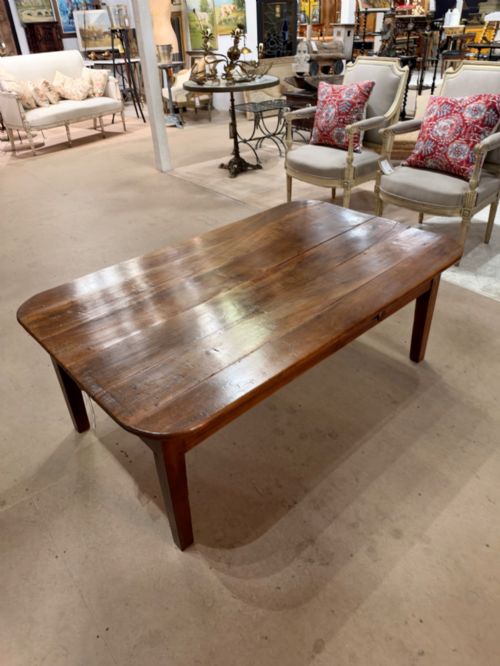
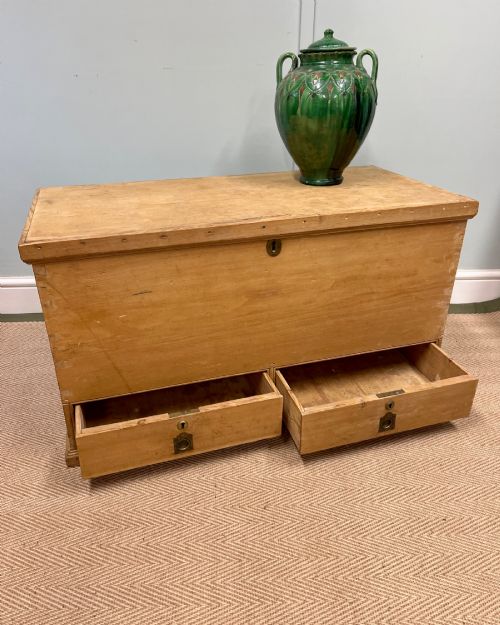
When you search for a wooden coffee table drawer, you are looking at low tables and converted storage pieces spanning the eighteenth to the twentieth centuries. The selection encompasses purposeful coffee tables alongside low tables and adapted trunks or blanket boxes.
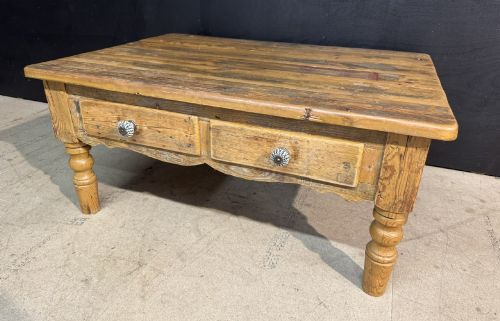
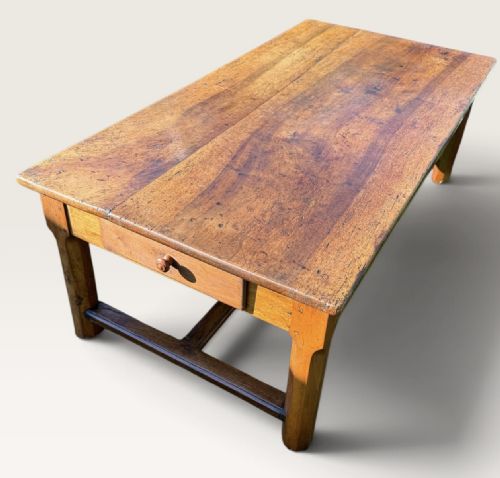
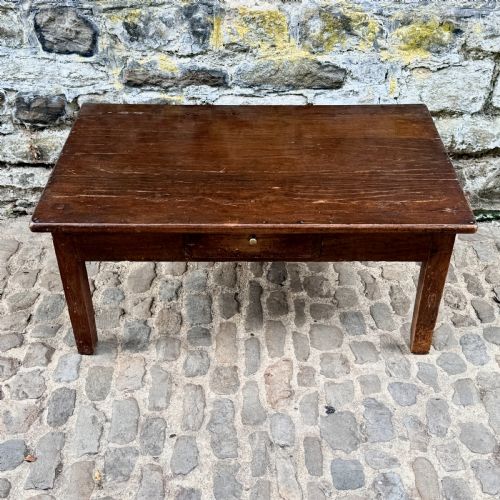
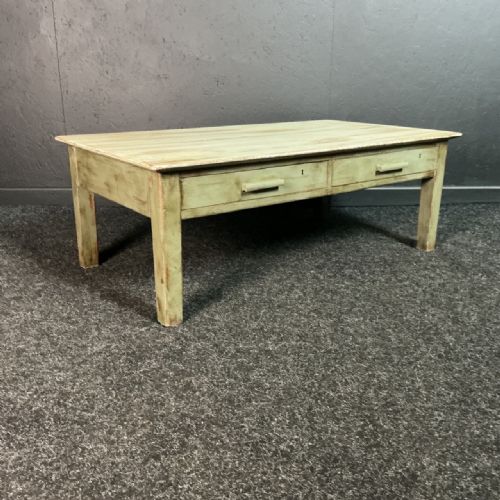
You are most likely to meet nineteenth century pine and oak examples on this page, often featuring a single side drawer or turned legs. Regional pieces stretch from French Provincial and Rustic Farmhouse to English Country styles.
Origins vary widely across the inventory, ranging from local English and French workshops to Anglo-Indian and traditional Japanese forms. Each piece combines a solid timber surface with the utility of an integrated drawer.
How they were made
Carpenters constructed these tables using a variety of regional timbers, predominantly pine, oak, walnut, and cherry wood. Hardwoods provide robust structural frames, while softer pine offers accessible domestic utility.
Metal components such as brass handles and iron fittings secure the drawers and lids. Paint finishes also appear across several examples, adding surface colour to the raw wood underneath.
Wooden Coffee Table Drawer Retail Price Guide 2026
Typical asking prices for wooden coffee table drawer among the pieces listed under this phrase on Sellingantiques today, from the lower quarter to the upper quarter. They describe what is for sale here now, not the wider market.
One exceptional nineteenth century blanket box conceals four secret drawers within its pine structure, waiting for hidden letters.
What varies in quality
The distinction between standard domestic items and finer pieces lies in the selection of timber and the execution of the joinery. Walnut and cherry wood examples generally display a higher grade of material than basic pine versions.
Proportion and execution of the drawer mechanism dictate the refinement of the piece. Smooth movement and careful integration into the apron separate simpler functional items from more considered furniture.
The Wooden Coffee Table Drawer Glossary
- Pine
- A softwood commonly used in domestic furniture and rustic trunks throughout the nineteenth century. It provides a lighter tone and grain.
- Walnut
- A dense hardwood favoured for finer eighteenth and nineteenth century tables. It yields rich dark figures and a smooth finish.
- Apron
- The structural timber beneath the tabletop that houses the drawer. It supports the surface and conceals the storage space.
- Turned leg
- A wooden leg shaped on a lathe to create decorative cylindrical profiles. This feature appears frequently on nineteenth century pine tables.
Wooden Coffee Table Drawer: Frequently Asked Questions
What periods do these tables come from?
The pieces span from the eighteenth century through to the early twentieth century. Most examples date from the nineteenth century.
Dating relies on timber selection, construction methods, and regional style characteristics. Later pieces from the 1920s and 1930s sit alongside much older Georgian and Victorian items.
What woods were used?
Makers utilised a wide range of regional timbers depending on local availability. Pine, oak, walnut, cherry wood, and fruitwood all appear.
Softer woods like pine often serve utilitarian and rustic items. Hardwoods like walnut and oak generally denote more formal or substantial furniture.
How do I use a drawer table in a living room?
The integrated drawer provides concealed storage for small items like remote controls or notebooks. This keeps the main surface clear.
Placement depends on the height and scale of the table. Side drawers require adequate clearance from surrounding seating to open fully.
Are these all purpose-built coffee tables?
Many items originate as low tables, writing tables, or converted storage pieces. Trunks, blanket boxes, and writing desks also provide low surfaces.
Height and proportions determine how each piece functions in a modern seating area. Converted chests offer deep interior space alongside surface utility.