

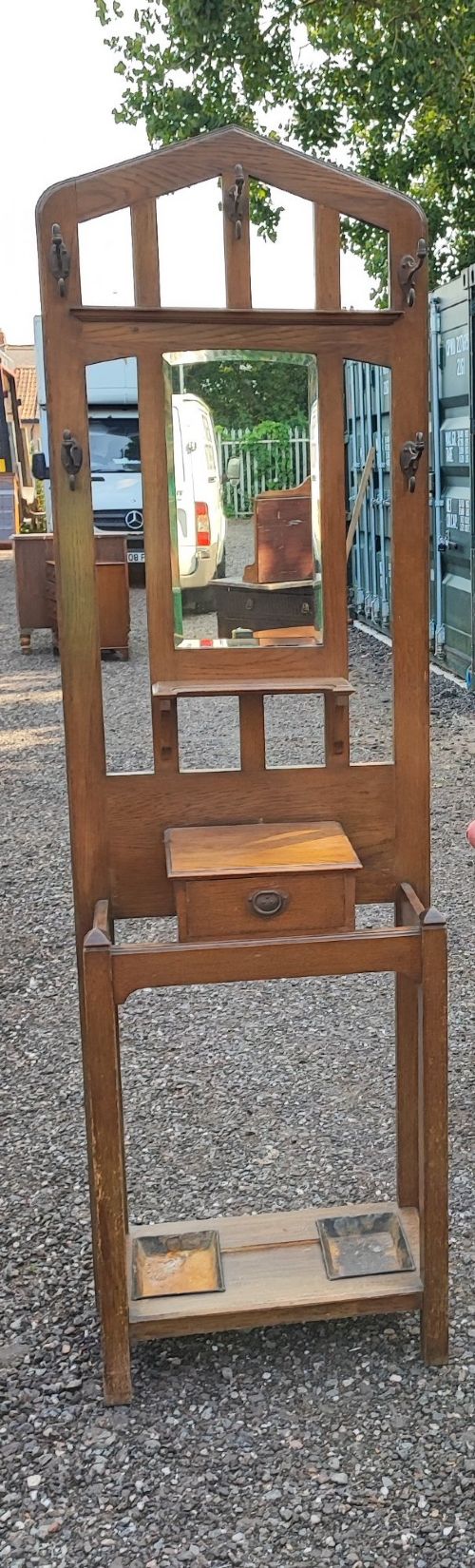


Wooden Coat Stand Mirror
A wooden coat stand mirror anchors the hallway with practical storage and a polished glass plate.
Wooden Coat Stand Mirror
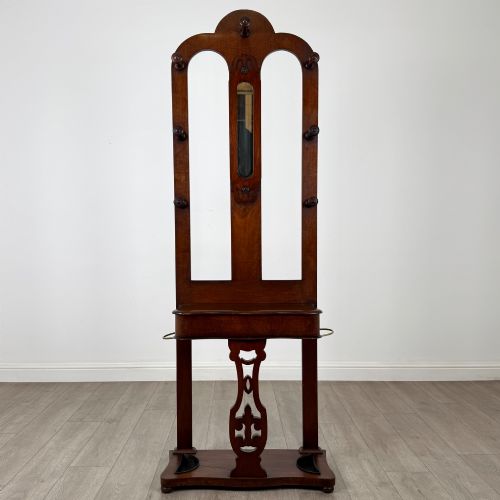
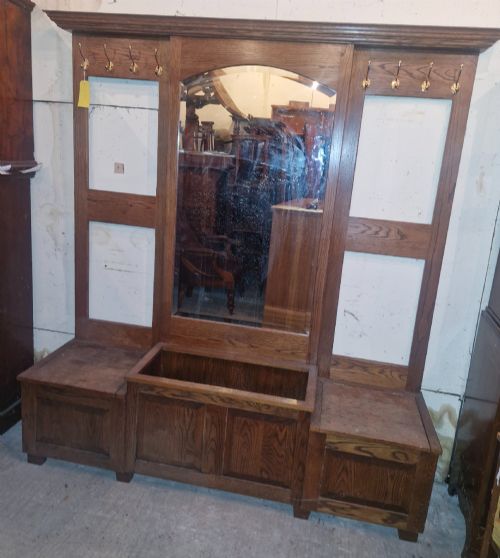
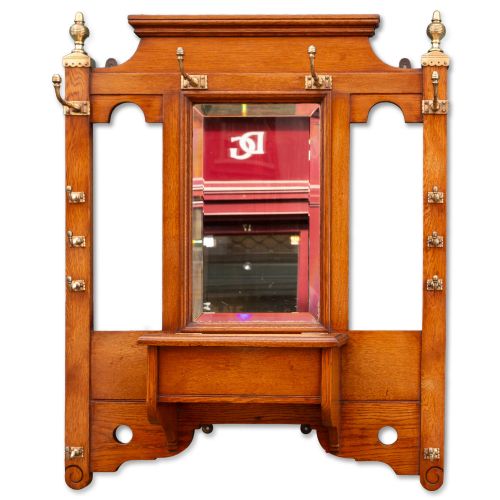
A wooden coat stand mirror combines a timber frame with a glass plate, hooks for outerwear and often umbrella storage or a seat, serving as a functional piece for entrance halls. The selection here spans the Victorian and Edwardian eras through to the early twentieth century, alongside specific regional designs.
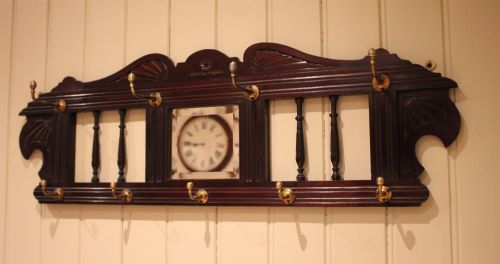
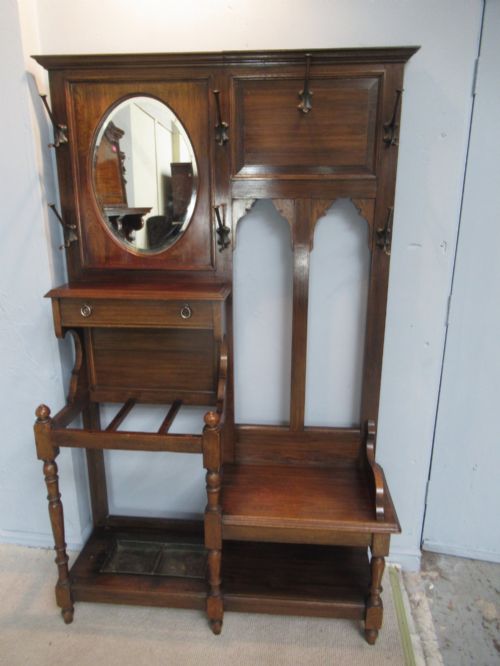
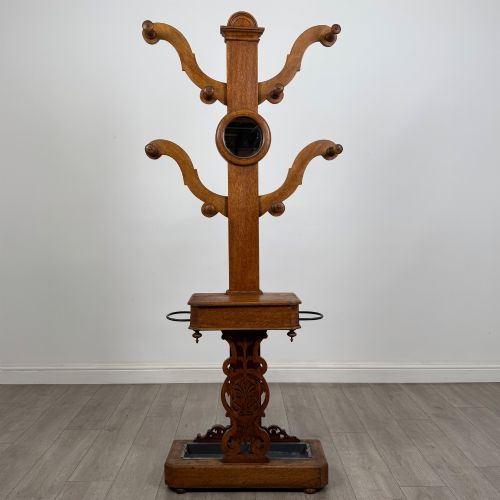
Most examples you encounter appear in oak or mahogany, frequently taking the form of a hall stand with an integrated mirror, hat pegs and umbrella wells. Pieces range from straightforward wall-mounted racks to large, multifunctional items incorporating carved details or marble components.
How they were made
Cabinetmakers utilised hardwoods such as oak, walnut and mahogany, often shaping them through traditional joinery and carving techniques. Metal elements like brass and iron form the coat hooks and rails, while glass provides the mirrored surfaces.
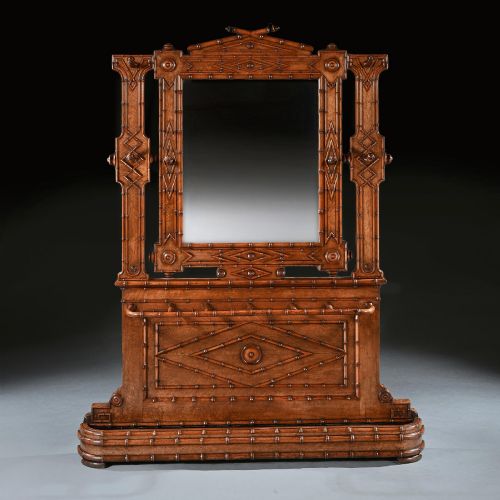
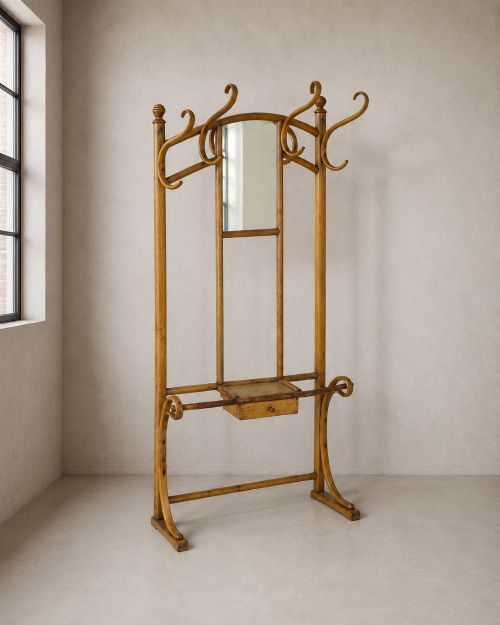
Certain pieces incorporate specialist decorative methods, including bentwood construction, faux bamboo turning, ceramic tile inserts and deep bevelling on the mirror plates.
Materials represented across the selection range from golden oak and walnut to marble, brass, and iron.
What varies in quality
The standard of a piece depends on the depth and crispness of the timber carving, the choice of cabinet woods and the integration of secondary materials like marble or decorative tiles. Simpler utilitarian items contrast with substantial, architecturally conceived furniture featuring detailed mouldings and fitted hardware.
Preservation of the original glass, brass hooks and structural elements also dictates the standing of an individual hall stand. Finer examples display harmonious proportions and careful execution across every visible surface.
Ellen E. Houghton of Minton·Thonet
The Wooden Coat Stand Mirror Glossary
- Hall stand
- A piece of hallway furniture combining a mirror, coat hooks, hat racks and often umbrella stands or a bench seat. These items served as a central repository for outdoor garments upon entering a home.
- Bentwood
- Wood softened through steaming and bent into curved shapes under pressure, notably utilised by makers such as Thonet. This technique created lightweight yet resilient furniture frames.
- Faux bamboo
- Wood turned and carved to imitate the jointed texture and appearance of natural bamboo. This decorative treatment gained popularity during the nineteenth century under Asian design influences.
- Japonisme
- The influence of Japanese art and aesthetics on Western design, visible in late nineteenth-century decorative arts. It emphasised asymmetry, natural motifs and clean lines.
- Bevelled plate
- A mirror glass with an angled edge ground down around the perimeter. This finish added a decorative prismatic border to the reflective surface.
Wooden Coat Stand Mirror: Frequently Asked Questions
Where should a hall stand go?
Place a wooden coat stand mirror in an entrance hall or porch where guests arrive and outdoor garments are removed.
Ensure there is sufficient clearance around the piece for hanging coats and accessing any incorporated seat or umbrella wells.
How do I care for the wood?
Dust the timber surfaces regularly with a soft, dry cloth and avoid placing the furniture in direct sunlight or near heat sources.
Occasional application of appropriate wax polish maintains the finish without building up excessive residue.
Are the mirrors original?
Many pieces retain their original glass plates, often identifiable by minor foxing or age spots within the silvering.
Replacement glass does occur over decades of use, so inspect the plate for signs of period bevelling and fitting.
How do I date these pieces?
Stylistic indicators such as Arts and Crafts simplicity, Aesthetic Movement detailing or heavy Victorian carving help establish the period.
Construction methods, screw types and the condition of the brass hooks also provide clues to the approximate decade of manufacture.