

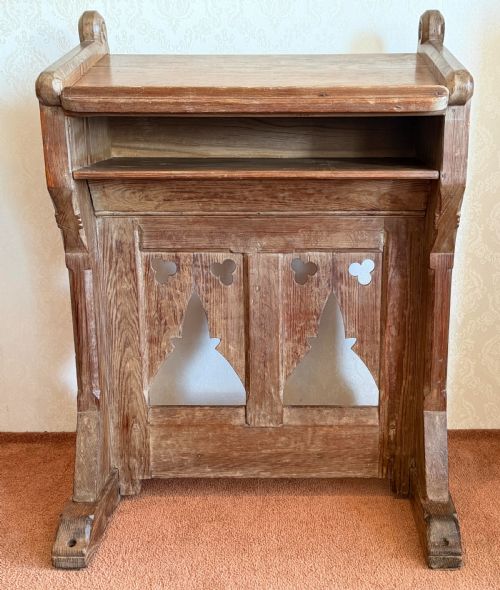


Wooden Church Desk
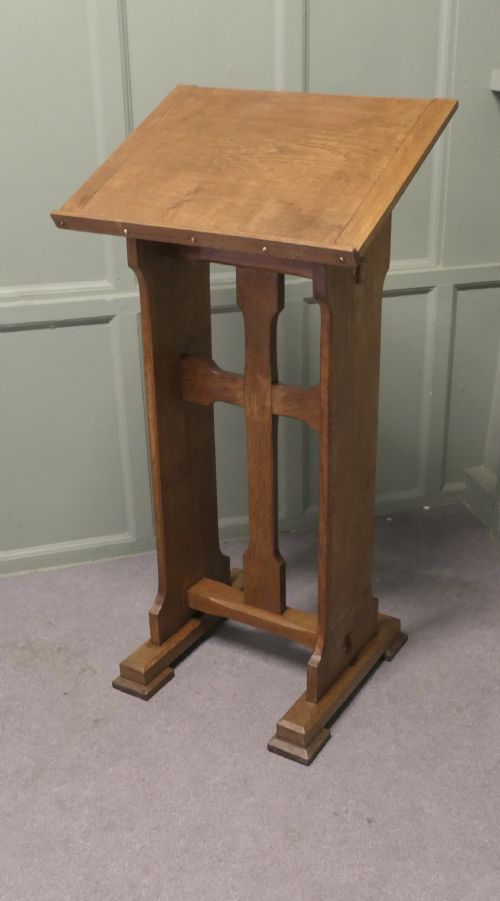
A wooden church desk brings immediate ecclesiastical presence into a room, serving variously as a reading stand, podium or chapel table.
Wooden Church Desk
A wooden church desk covers a range of devotional furniture, most frequently appearing as lecterns, reading stands, side tables and podiums. When searching for a wooden church desk, buyers encounter pieces originating from the Georgian period through to the 1930s.
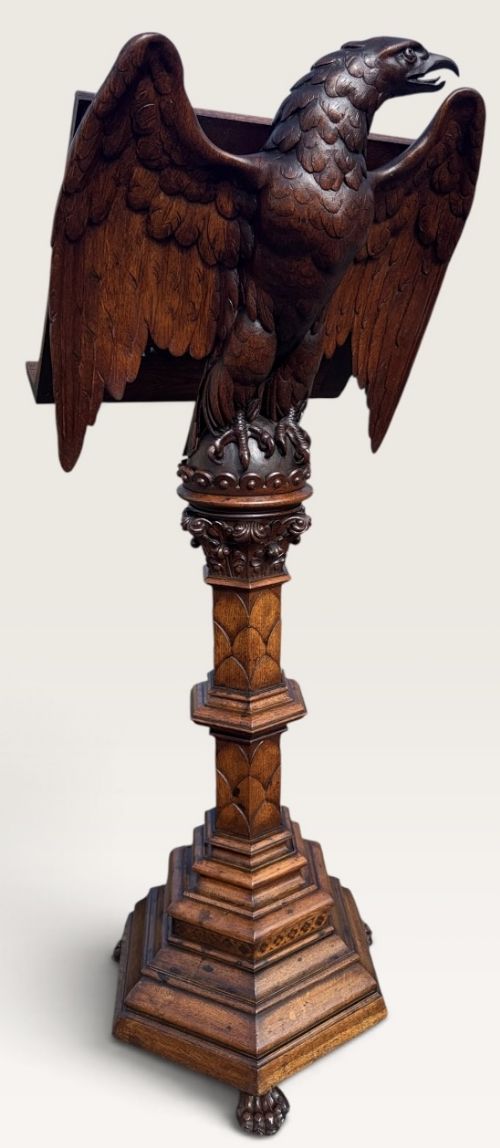
The Victorian era dominates the selection, bringing substantial Gothic Revival influence and robust construction into domestic or commercial interiors. Pieces such as carved eagle lecterns, pitch pine side tables and small oak reading stands represent the core of what is available.
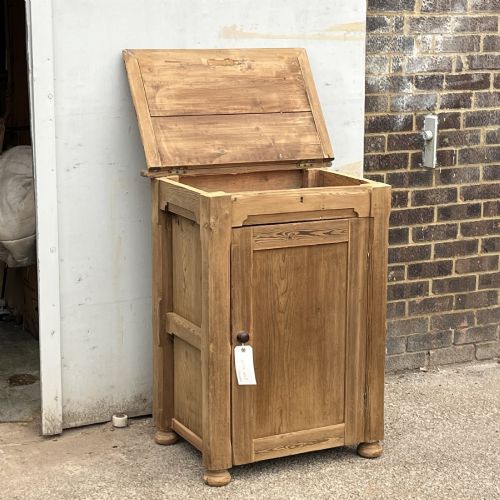
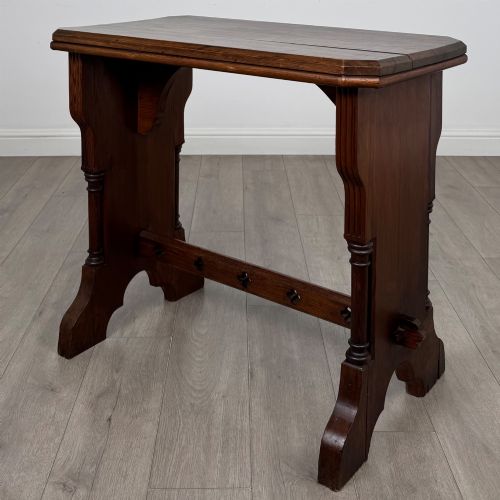
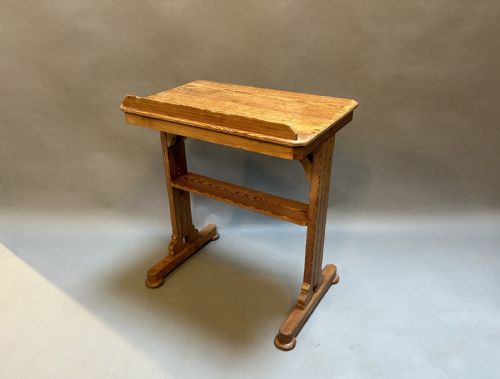
Forms span from simple pine side tables and chapel tables to heavily carved oak lecturn cupboards and Arts and Crafts reception desks. Each piece reflects the functional demands of ecclesiastical spaces, adapted over time for reading, greeting or display.
Materials and construction
Oak and pitch pine serve as the primary timbers, selected for their durability and capacity to hold deep, detailed carving. Craftsmen also utilised standard pine and mahogany, pairing these woods with brass work and cast iron fittings.
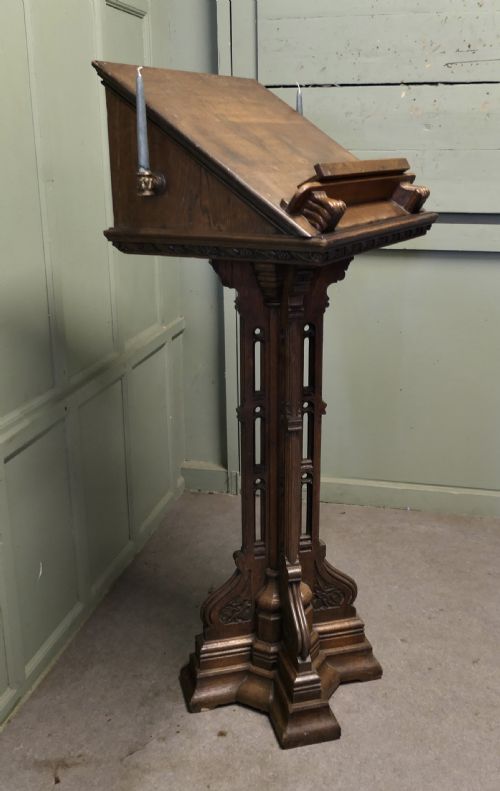
Construction techniques combine traditional joinery with architectural styling, particularly the pointed arches and tracery associated with the Gothic Revival movement. Joiners shaped solid timber into heavy reading slopes, panelled cupboards and stable podium bases.
Wooden Church Desk Retail Price Guide 2026
Typical asking prices for wooden church desk among the pieces listed under this phrase on Sellingantiques today, from the lower quarter to the upper quarter. They describe what is for sale here now, not the wider market.
Listings feature oak, pine, pitch pine, mahogany, brass and cast iron across Victorian, Georgian, Arts and Crafts and Edwardian periods.
Assessing quality
Quality rests upon the depth and crispness of the wood carving, especially on figural elements such as eagles and standard Gothic mouldings. Superior examples display thoughtful proportions and harmonious integration of brass hinges, handles or brackets.
The choice of timber heavily influences the standard of the piece, with dense, well-figured oak and pitched pine standing apart from utility softwood alternatives. Alterations or later modifications, such as those found on adapted cupboard desks, also shape the standing of an item.
The Wooden Church Desk Glossary
- Lectern
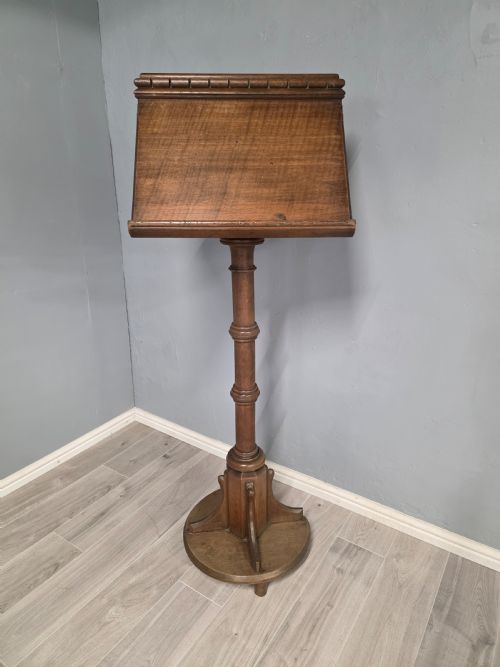
- A tall stand with a slanted top used to hold a book for reading aloud. These often feature adjustable slopes or carved book rests.
- Prie Dieu
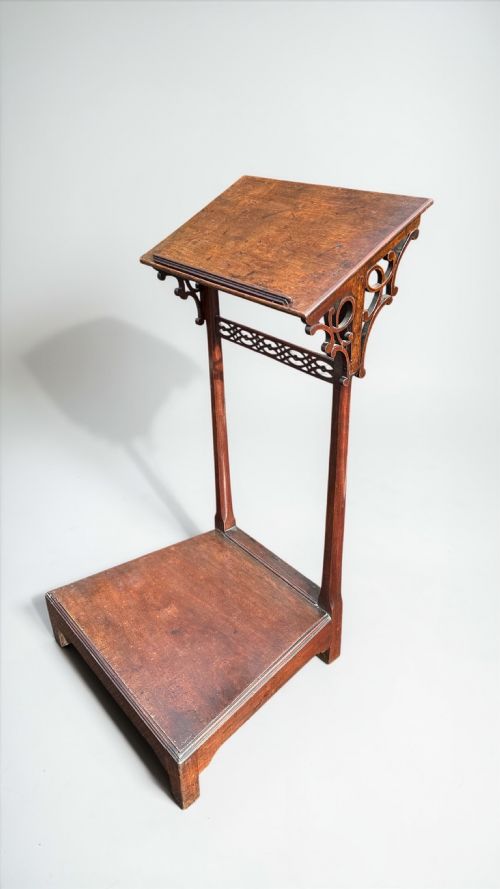
- A small devotional desk designed for kneeling and prayer, combining a sloping top with a padded kneeler. Eighteenth-century examples follow Chippendale design principles.
- Pitch Pine
- A dense, resinous softwood commonly used in Victorian ecclesiastical furniture. It offers significant durability and a distinct grain pattern.
- Gothic Revival
- An architectural and decorative style drawing on medieval forms, featuring pointed arches, trefoils and heavy carved ornamentation. This aesthetic defines the majority of Victorian church pieces.
- Podium
- A freestanding platform or raised desk used by a speaker or greeter. Arts and Crafts interpretations often highlight clean structural lines in golden oak.
Wooden Church Desk: Frequently Asked Questions
How are wooden church desks used today?
Buyers repurpose these pieces as restaurant reception greeter stations, reading stands for studies, or distinctive lamp tables in living spaces. The slanted surfaces prove practical for holding open books, sheet music or menus.
Larger items like lecturn cupboards and chapel tables serve as focal points in hallways or dining rooms, adding architectural weight and historic character to modern interiors.
What is the difference between an oak and a pine church desk?
Oak pieces generally offer greater weight, darker historic patination and a finer ground for intricate Gothic carving. They tend to originate from formal ecclesiastical settings where longevity and status mattered.
Pine and pitch pine examples provide a lighter visual presence while retaining robust structural integrity. These woods often display a pronounced grain and suit simpler utility or regional workshop designs.
How do I identify a Gothic Revival church desk?
Look for architectural motifs drawn from medieval stone buildings translated into woodwork, such as pointed lancet arches, quatrefoils and tracery panels. These elements are standard across Victorian ecclesiastical pieces.
Mouldings and chamfered edges further signal the style, frequently accompanied by brass hinges or book ledges designed to match the solemnity of church interiors.
Can I use a church lectern as a standing desk?
Many lecterns and reading stands feature fixed or adjustable slopes at a height well-suited for standing work or reading. Their stable bases and wide ledges accommodate large books and modern tablets alike.
Check the height and surface angle of specific podiums or reading stands to ensure comfortable daily use for writing or presentations.