



Wooden Cherub Figure
These wooden cherub figure pieces bring Baroque movement and sacred theatre directly into a room.
Wooden Cherub Figure
A wooden cherub figure captures the lively, emotive forms seen across 17th century, 18th century, and 19th century ecclesiastical carving. These works often appear as single decorative carvings, wall sculptures, or paired altar angels designed to command attention from architectural heights.
Italian Baroque and German Baroque styles dominate the selection, bringing dynamic postures and expressive gestures to the carved wood. Buyers frequently encounter limewood and oak figures finished with polychrome paint, gesso, or gold leaf.
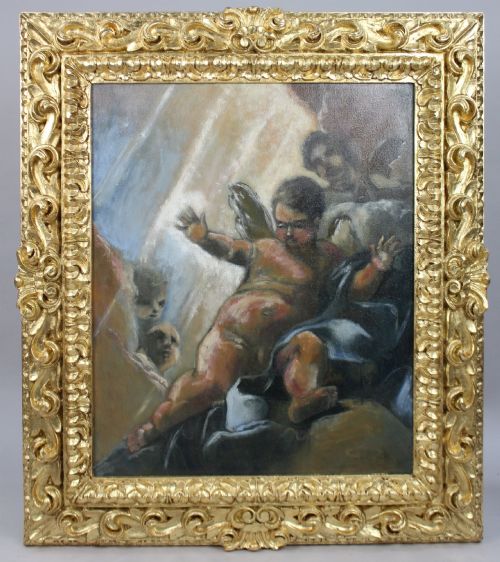
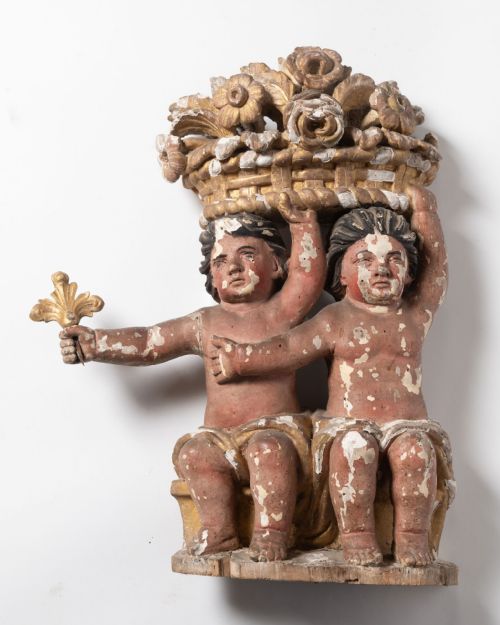
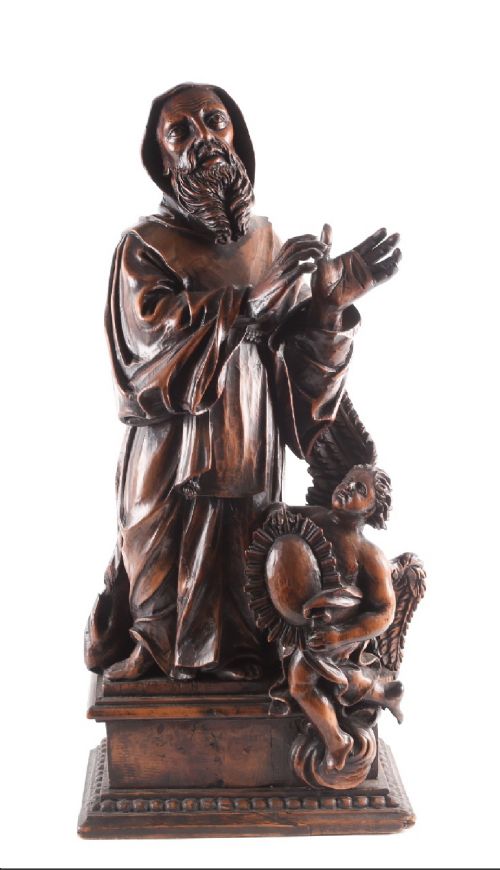
Architectural fragments and devotional figures sit alongside pairs of putti resting on carved clouds. The inventory also includes sculptural stands and oil paintings set within carved giltwood frames.
Materials and Methods
Carvers shaped these figures from dense hardwoods like oak, or fine-grained softer woods such as limewood that allowed for deep, undercut drapery and feathered wings. Master artisans utilised sharp gouges and chisels to realise complex facial expressions and muscular anatomical details.
Surfaces were frequently sealed with gesso before receiving layers of polychrome paint, silvering, or gold leaf applied to catch candlelight in sacred spaces. Some pieces retain traces of original oil pigments over bare wood, showing the hand of the workshop painter.
Several angels appear to lean out from their perches with expressions suggesting they would rather be anywhere else.
Judging Quality
Quality rests primarily in the anatomical confidence of the carving, distinguishing fluid, lifelike musculature from stiff or formulaic execution. The depth of the relief and the crispness of the feather work on the wings reveal the carver's mastery.
The survival of original surface treatments, whether polychrome paint or gold leaf, dictates the visual power of the piece. Losses to the wooden substrate or poorly executed later overpainting diminish the integrity of the sculpture.
The Wooden Cherub Figure Glossary
- Putti
- Plural of putto, referring to a chubby male infant depicted in classical art, often winged and associated with divine or mythological themes. These figures appear frequently in Baroque church interiors and secular decorations.
- Polychrome
- Decorated in multiple colours, often applied over a gesso ground on wooden sculptures. This technique gave carved saints and angels a lifelike presence in dim ecclesiastical settings.
- Giltwood
- Wood that has been coated with a thin layer of gold leaf or powder. It provides a luminous finish that reflects candlelight effectively in period church settings.
- Limewood
- A fine-grained, pale wood favored by European carvers for its even texture and lack of pronounced grain. It permits intricate, deep undercutting without splintering.
- Term
- A pillar or pedestal that tapers downward, terminating in a bust or figure at the top. These architectural supports often feature cherubic or human forms integrated into the design.
Wooden Cherub Figure: Frequently Asked Questions
Where were these figures placed originally?
These carvings originated primarily in European churches, chapels, and domestic shrines as part of larger architectural altarpieces or choir stalls. They often occupied elevated positions flanking tabernacles or supporting structural cornices.
Over time, many of these devotional items entered private collections, transitioning from sacred architecture to mantelpieces and gallery walls.
How should I clean a wooden cherub figure?
Dust the surface gently with a soft, dry artist's brush or a feather duster to remove loose particles without disturbing delicate gesso or leafing. Avoid using water, chemical sprays, or abrasive cloths that can strip historic finishes.
Keep the sculpture away from direct sunlight and strong heat sources to prevent the wood from drying out and cracking.
How can I tell the period of a carved angel?
Examine the tool marks left on the reverse or unpainted areas, as hand-carved pieces from the seventeenth and eighteenth centuries show irregular chisel paths. The composition, drapery style, and preparation layers beneath any paint also offer strong clues to the era of production.
Comparing the wear patterns and wood shrinkage to documented examples helps confirm whether a piece belongs to the Baroque era or a later nineteenth-century revival.
Are these figures always religious?
While the majority of early examples served sacred functions in churches, the Baroque and Renaissance revivals embraced putti as decorative motifs for secular interiors. These figures often symbolise love, peace, or classical abundance rather than strictly biblical narratives.
Their placement shifted accordingly, moving from altars to aristocratic drawing rooms and libraries.