




Wooden Case Holder
These wooden case holder examples protect small personal items and valuable tools, bringing tactile history and neat utility straight to a desk or pocket.
Wooden Case Holder
A wooden case holder gathers specific functional items, appearing in forms such as card cases, cigar cases, cutlery boxes, match holders, and sewing accessories. These pieces span centuries of craftsmanship, taking inspiration from Victorian, Georgian, and Meiji traditions.
The objects on this page range from small pocket versions to larger desktop cabinets and stationery boxes. Buyers will frequently encounter mahogany knife boxes, carved fruitwood sewing cases, and intricate burr walnut designs.
Origins stretch across English, French, Japanese, Chinese, and Indian workshops. Each wooden case holder reflects the daily habits and domestic customs of its original era.
Materials and construction methods
Makers utilised solid timbers like mahogany, satinwood, and burr walnut, frequently enhancing surfaces with delicate inlay work or deep carving. Woods were selected for their grain pattern and ability to withstand regular handling.
Metal elements such as brass mounts, hinges, and gun metal detailing appear alongside glass panels and fabric linings. These secondary materials provided structural reinforcement and protective interiors for delicate contents.
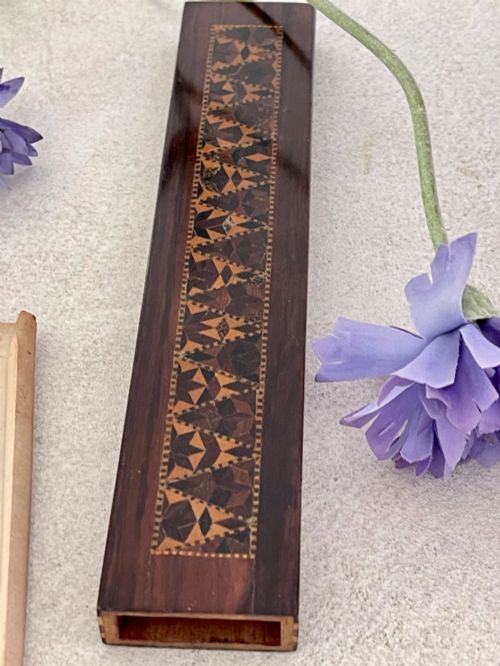
Carving techniques vary from the figurative depth seen in Black Forest and Chinese items to the geometric precision of Tunbridge Ware. Construction relies on traditional joinery suited to housing cards, cutlery, or tobacco.
Wooden Case Holder Retail Price Guide 2026
Typical asking prices for wooden case holder among the pieces listed under this phrase on Sellingantiques today, from the lower quarter to the upper quarter. They describe what is for sale here now, not the wider market.
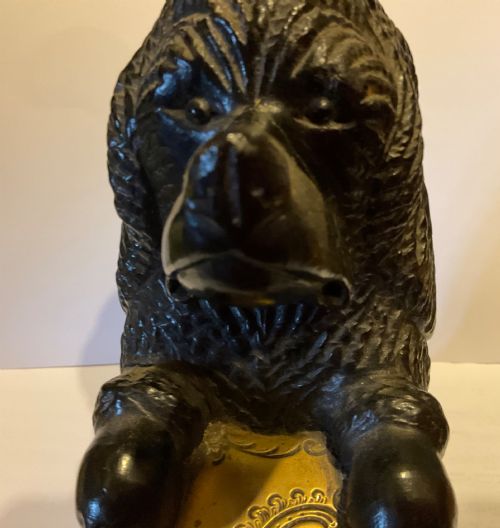
A begging dog carved from wood holds matches patiently, ready to light a pipe with unexpected charm.
Assessing quality and execution
Quality rests in the crispness of the carving and the precision of the wood inlay. Finer examples display meticulous attention to detail in figurative motifs and flush-fitting lids or doors.
The choice of timber significantly affects the piece, with burr walnut and figured mahogany elevating the visual impact. Patina also plays a role, showing the warmth accumulated from decades of handling.
Structural integrity and original fittings distinguish superior items from standard utility pieces. Hinges, clasps, and internal partitions that remain intact and functional indicate higher workshop standards.
The Wooden Case Holder Glossary
- Burr walnut
- A highly figured wood grain obtained from walnut tree growths, prized for its swirling patterns on Victorian cases.
- Tunbridge Ware
- A form of woodworking involving tightly packed mosaic tiles of naturally coloured woods to create geometric or pictorial scenes.
- Black Forest
- A style of deeply carved wooden decorative items originating from Central Europe, frequently featuring animals or natural motifs.
- Patina
- The surface sheen and softening of colour developed on wood through age, light exposure, and handling.
- Satinwood
- A durable, yellowish timber from tropical trees used for veneering and decorative banding on fine boxes.
Wooden Case Holder: Frequently Asked Questions
What were these wooden cases originally used for?
These pieces served to store, protect, and transport personal valuables and daily accessories. Owners kept playing cards, calling cards, sewing cottons, cigars, or cutlery inside them.
Their robust construction ensured that delicate items remained safe during travel or while stored securely on a desk or sideboard.
How do I care for antique wood cases?
Keep the wood away from direct sunlight and sudden temperature shifts to prevent warping or splitting. A light application of appropriate wax maintains the surface sheen.
Avoid using harsh chemical cleaners or excess moisture on the wood or any internal fabric linings.
How can I tell a Georgian box from a Victorian one?
Georgian pieces often emphasise clean architectural proportions, simple stringing, and heavy mahogany construction designed for dining rooms or writing desks. Victorian items frequently showcase more eclectic styles, intricate inlays, and varied timbers like burr walnut.
Examining the internal fittings, handles, and locking mechanisms also helps determine the manufacturing period.
Are these cases suitable for modern daily use?
Many of these pieces adapt easily to contemporary living as desktop tidies, jewellery boxes, or card storage. Their sturdy construction remains entirely functional for holding small modern items.
Careful handling ensures that delicate hinges and historical surfaces endure for everyday enjoyment.