

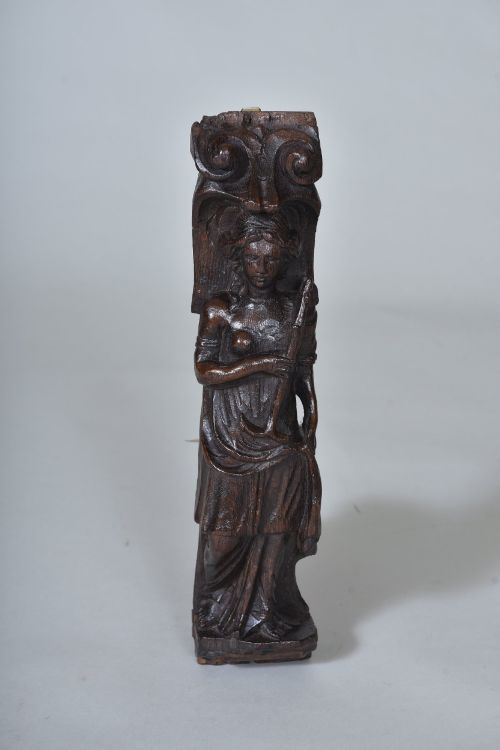
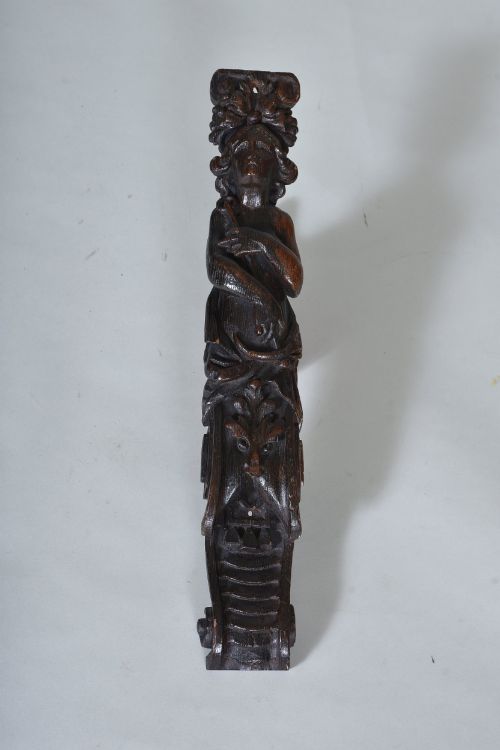


Wooden Caryatid Carvings
These wooden caryatid carvings bring sculptural human figures straight into architecture, holding up mantels, cornices and furniture with classical weight.
Wooden Caryatid Carvings
When buyers search for wooden caryatid carvings, they find figural supports and architectural elements that bridge the gap between sculpture and structure. The examples appearing on this page span several centuries, reaching back to sixteenth-century folk art and seventeenth-century oak work.
The most frequent forms you meet here include architectural salvage, oak carvings, corbels and herms. Pieces range from early European regional work to nineteenth-century continental examples and African tribal headrests.
Jacobean and Tudor aesthetic influences recur across the older English and continental pieces, often taking the form of female figures or structural supports on socle bases.
Materials and construction
These items rely heavily on solid timber, with dark oak and chestnut dominating the European material record alongside various dense hardwoods used in African tribal pieces. Craftsmen carved these figures directly from structural blocks of wood destined for furniture or buildings.
Secondary elements appear sparingly, utilising metal fixings or fabric where functional mounting or display requires them. Surface treatment generally consists of the natural ageing of unpainted timber.
Wooden Caryatid Carvings Retail Price Guide 2026
Typical asking prices for wooden caryatid carvings among the pieces listed under this phrase on Sellingantiques today, from the lower quarter to the upper quarter. They describe what is for sale here now, not the wider market.
Listings span from the 16th century through the 19th century, utilising oak, chestnut, and African hardwood.
Assessing quality and depth
Provenance and integrity of the surviving timber also set pieces apart, particularly where centuries of wear have softened the original chisel marks without obscuring the anatomical structure.
The Wooden Caryatid Carvings Glossary
- Caryatid
- A sculpted female figure serving as an architectural support taking the place of a column or pilaster. They appear frequently on furniture and mantelpieces.
- Herm
- A carved bust or figure on a pillar, tapering downward, originating in classical antiquity. Pairs of these often appear as decorative architectural terminals.
- Corbel
- A structural piece of stone or wood projecting from a wall to carry a weight. In earlier interiors, these frequently took human or grotesque figurative forms.
- Socle
- A short plinth or pedestal supporting a sculpture, candlestick or bust. This base gives stability to vertical figures displayed on flat surfaces.
Wooden Caryatid Carvings: Frequently Asked Questions
What is a wooden caryatid?
A wooden caryatid is a carved human figure that functions as a structural support in architecture or furniture, such as on a fireplace surround or cabinet.
These figures combine sculpture with utility, carrying the weight of a cornice or mantelpiece upon their heads.
How were these carvings used originally?
Builders integrated them into grand domestic interiors as structural supports, wall reliefs, corbels or furniture elements.
Over time, many of these elements became detached from their original context through architectural salvage.
How do I date an old wood carving?
Dating relies on identifying the tool marks, timber species, stylistic period cues like Jacobean or Tudor folk art, and the natural patina of the wood.
Comparing the sculptural style and regional characteristics helps narrow down the century of production.
Where should I place one at home?
These pieces suit mantelpieces, tabletops, or wall mounts where their sculptural form remains visible from multiple angles.
Keeping them away from direct heat sources helps protect the historic oak and hardwood from splitting.