





Wooden Card Games Box
A wooden card games box is a neat container for counters and decks, built for parlour evenings and still prized on the desk today.
Wooden Card Games Box
A wooden card games box serves as a tidy repository for counters, dice, and decks used in evening parlour amusements. These pieces span Georgian, Regency, Victorian, and Edwardian eras, reflecting the domestic leisure habits of past centuries.
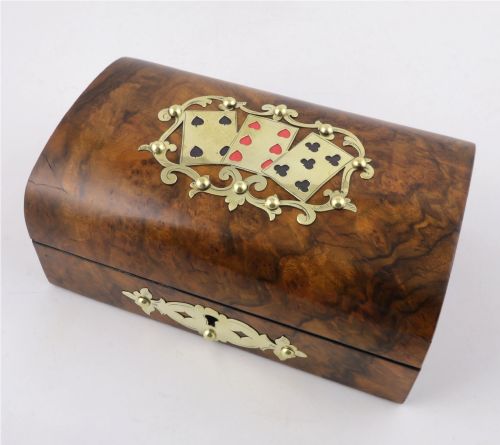
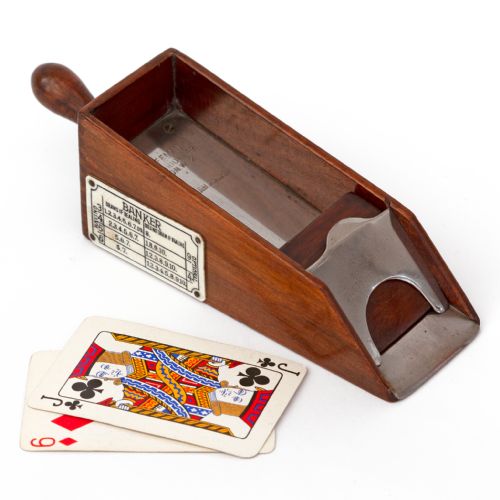
Buyers most frequently encounter Victorian walnut and mahogany examples on this page, alongside earlier Regency parquetry pieces and Edwardian items. The assortment ranges from compact card shoes and cribbage board boxes to ornate caskets housing complete gaming sets.
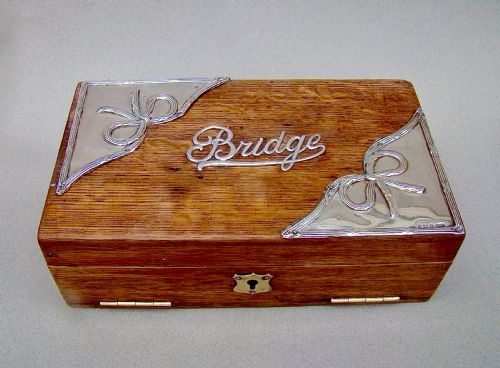
The material selection leans heavily towards figured timbers like burr walnut, rosewood, and satinwood, often enhanced with brass escutcheons or silver mounts. Many of these items survive alongside their original interior compartments designed to keep cards and counters sorted.
How they were made
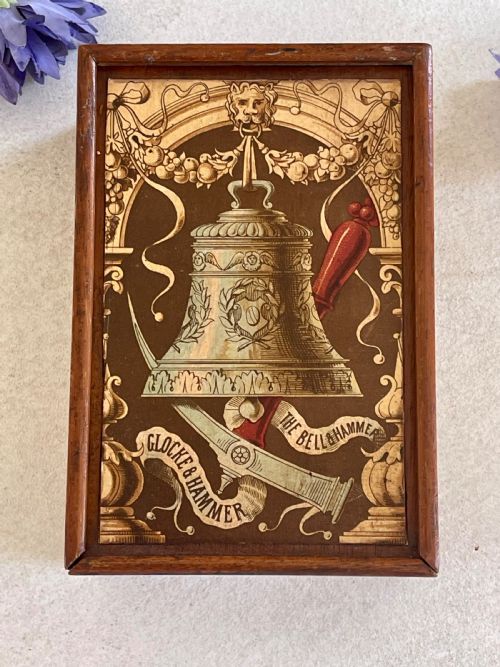
Cabinet makers utilised dense hardwoods such as mahogany, walnut, and kingwood, selecting pieces with striking grain patterns for the exterior surfaces. Marquetry, parquetry, and hand painting frequently decorated the lids, employing contrasting woods and pigments to create geometric or pictorial motifs.
Metalwork played a structural and decorative role, with brass hinges, locks, and metal mounts reinforcing the wooden joints. Silver mounts also appear on later Edwardian boxes, bearing hallmarks that trace the piece to specific silversmiths and assay offices.
Wooden Card Games Box Retail Price Guide 2026
Typical asking prices for wooden card games box among the pieces listed under this phrase on Sellingantiques today, from the lower quarter to the upper quarter. They describe what is for sale here now, not the wider market.
Listings feature periods from the Georgian and Regency eras through to the Edwardian years, constructed in mahogany, walnut, and brass.
What varies in quality
Construction methods and timber selection dictate the standing of a wooden card games box. Finely figured burr walnut, kingwood, or satinwood veneers require meticulous skill from the cabinet maker, separating simpler utilitarian containers from finer parlour pieces.
The complexity of the interior fittings and the finesse of any parquetry inlay or hand painting elevate certain examples above standard production. Original brass hardware, working locks, and retained gaming accessories further distinguish the superior pieces in this range.
Levi & Salaman
The Wooden Card Games Box Glossary
- Parquetry
- Geometric mosaic woodwork formed by small pieces of timber fitted together on a surface. It frequently creates repeating patterns on the lids of Regency boxes.
- Burr walnut
- A highly figured timber harvested from walnut tree growths, prized for its swirling grain. Cabinet makers used its distinctive texture to adorn luxury Victorian boxes.
- Cribbage board box
- A container featuring integrated scoring tracks for the card game cribbage. These combination pieces store the necessary pegs and cards within the box itself.
- Card shoe
- A weighted device designed to hold and dispense multiple decks of playing cards smoothly. Miniature mahogany versions appear among these gaming accessories.
Wooden Card Games Box: Frequently Asked Questions
What fits inside a wooden card games box?
These boxes typically accommodate standard decks of playing cards alongside small bone or mother-of-pearl counters used for scoring.
Many incorporate dedicated interior compartments or lift-out trays to keep dice, card shoes, and game pieces neatly separated.
How do I date a wooden card games box?
Dating relies on observing the prevailing timber choices, construction techniques, and decorative styles of periods like Regency or Victorian.
Silver mounts bearing assay office hallmarks can also provide a precise year of manufacture for Edwardian pieces.
How should I care for the wood?
Maintain the polished timber surfaces by keeping the boxes away from direct sunlight and sudden changes in room temperature.
Applying a light coat of appropriate wax periodically helps preserve the finish of hardwoods like mahogany, walnut, and satinwood.