

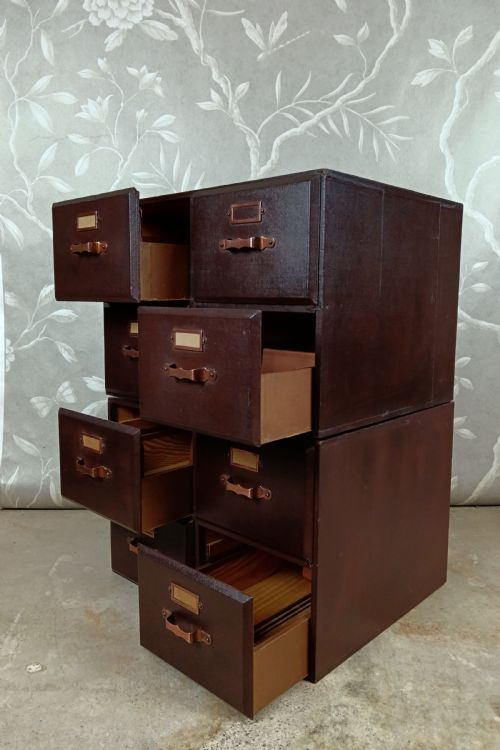


Wooden Card Box
A wooden card box brings order to parlour games and desk stationery, offering a tidy home for cards and counters.
Wooden Card Box
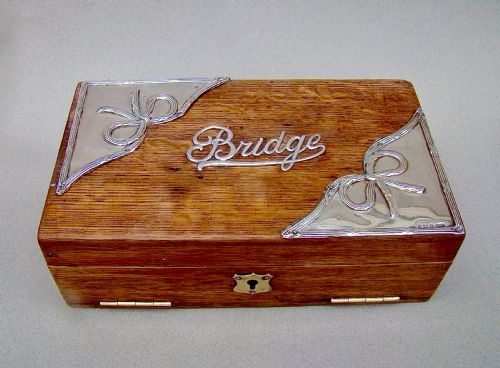
A wooden card box handles the storage of playing cards, games sets, and desk indexes across various historical periods. The examples on this page span Georgian, Regency, Victorian, and Edwardian eras alongside early twentieth-century pieces.
Most entries function as games boxes, cribbage boxes, or card cases, while related storage forms include filing cabinets and index drawers in wood. Materials range from mahogany and walnut to burr yew, kingwood, rosewood, and beech.
Makers and workshops utilised brass mounts, silver mounts, glass, paper, and metal to finish these pieces. Styles stretch from Black Forest carvings and parquetry inlay to nineteenth-century industrial library designs.
Materials and construction
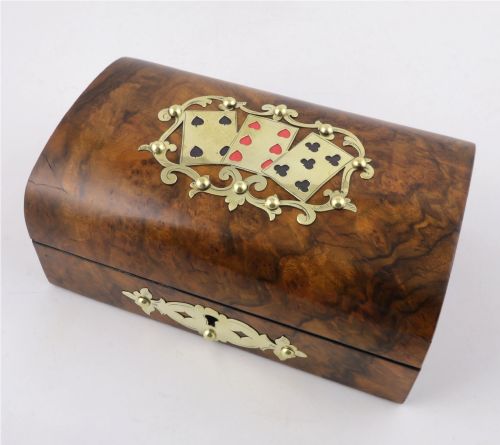
Cabinetmakers constructed these boxes using dense timbers such as mahogany, walnut, rosewood, and kingwood, occasionally employing decorative veneers like burr walnut and burr yew wood. Parquetry inlay added geometric surface patterns to Regency pieces.
Metal fittings such as brass hinges, locks, and internal dividers provided structural support and security for the contents. Silver mounts appeared on later Edwardian boxes, while carved details defined Black Forest and Chinese wood items.
Wooden Card Box Retail Price Guide 2026
Typical asking prices for wooden card box among the pieces listed under this phrase on Sellingantiques today, from the lower quarter to the upper quarter. They describe what is for sale here now, not the wider market.
Card players required specialised wooden caskets just to keep their poker dice and cribbage pegs from rolling into the hearth.
Judging quality in construction
Quality rests in the selection of timber figure, such as the richness of burr walnut or kingwood, and the precision of the parquetry inlay. Finer boxes display crisp, deep carving work rather than shallow or mechanical stamping.
Hardware integrity separates standard items from superior ones, visible in heavy brass hinges, functional locks, and undamaged internal partitions. Original finishes and good surface patination retain the historical character of the piece.
Levi and Salaman·Samuel Porter·Amberg
The Wooden Card Box Glossary
- Parquetry
- Woodwork formed by geometric patterns of wood veneers laid down on a solid ground. This technique often embellished the lids of Regency games boxes.
- Cribbage board box
- A container designed to hold playing cards and scoring pegs for the game of cribbage. These typically feature drilled scoring tracks on the lid.
- Burr walnut
- A prized wood grain obtained from the warted excrescences of walnut trees, showing swirling patterns. Cabinetmakers utilised this timber for decorative Victorian caskets.
- Black Forest
- A style of deeply carved wooden decorative objects originating from Central Europe. Such pieces often depict animals or foliage connected to forest themes.
Wooden Card Box: Frequently Asked Questions
What fits inside a wooden card box?
These boxes accommodated decks of playing cards, counters, and scoring markers for pastimes like cribbage and ecarte. Some variations served different domestic needs, holding index cards or office papers.
Interior compartments kept card suits and small gaming pieces separated during storage and transport. The design reflected the specific parlour game played in the household.
How do I date a wooden card box?
Dating relies on timber choices, construction methods, and stylistic cues from periods like the Georgian, Regency, and Victorian eras. Mahogany and parquetry point to earlier decades, while burr walnut and specific brass hinges suggest later nineteenth-century manufacture.
Maker marks, silver hallmarks, or inscribed dates on attached plaques provide exact reference points. Comparing the lock mechanisms and interior linings also helps determine the age of the piece.
Were these boxes used only for cards?
While many housed playing cards and poker dice, similar wooden boxes functioned as index filing drawers, stereoscope viewers, or desk caskets. Cabinetmakers adapted the basic lidded box format for various office and parlour tasks.
Larger games boxes contained multiple compartments for counters, boards, and game instructions. Smaller cases served travellers who needed to carry personal items securely.
How should I clean a wooden card box?
Maintenance involves dusting with a soft, dry cloth to protect the timber surface and any brass or silver mounts. Avoid using harsh chemical cleaners or excess moisture that could damage old veneers and paper linings.
Applying occasional microcrystalline wax helps preserve the polish and guards against dry air. Keeping the box away from direct sunlight and heat sources prevents the wood from warping.