





Wooden Breakfront Bookcase
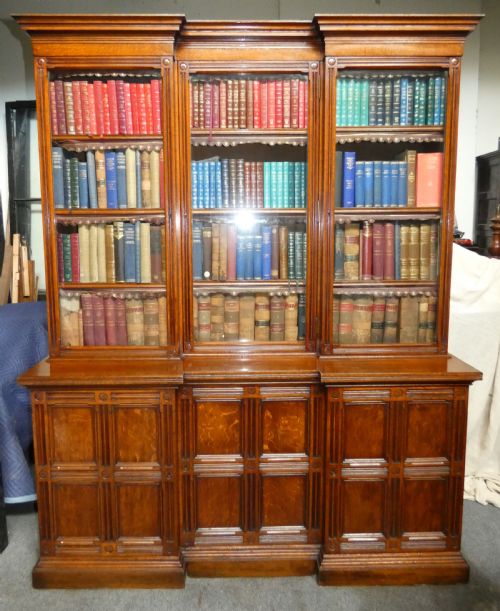
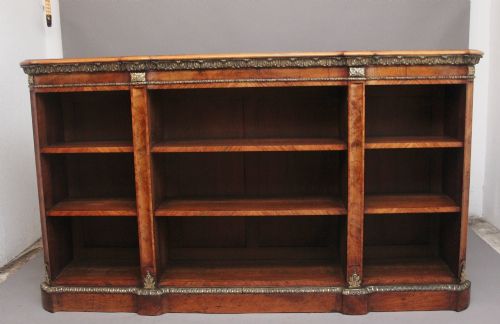
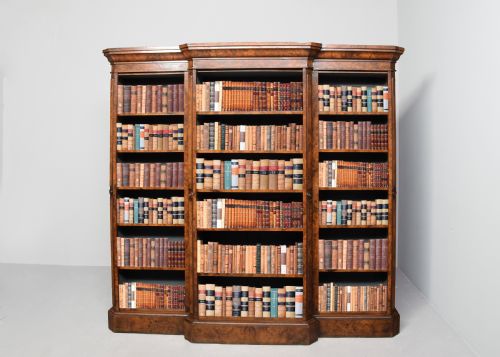
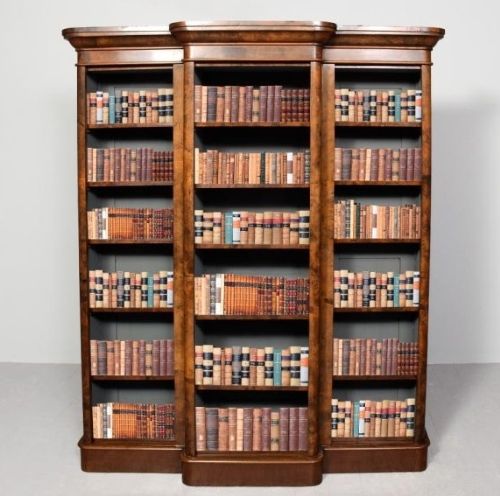
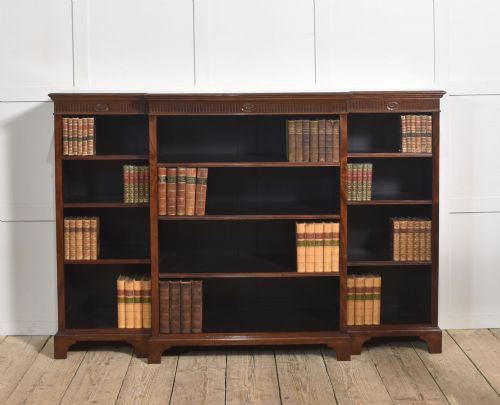
A wooden breakfront bookcase commands a room with its distinctive projecting centre section, offering substantial display and storage space for a serious library.
Wooden Breakfront Bookcase
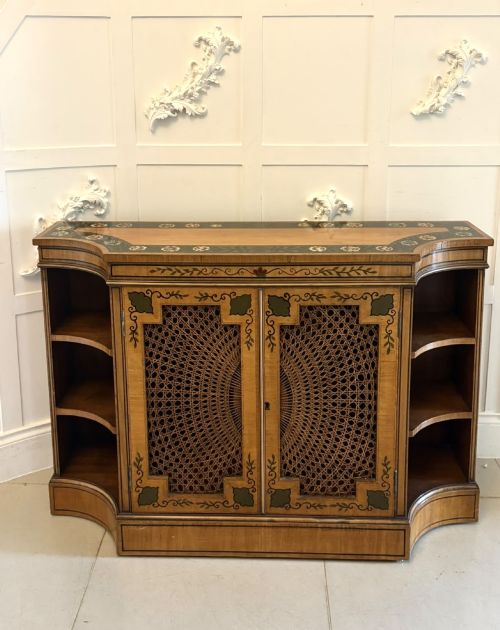
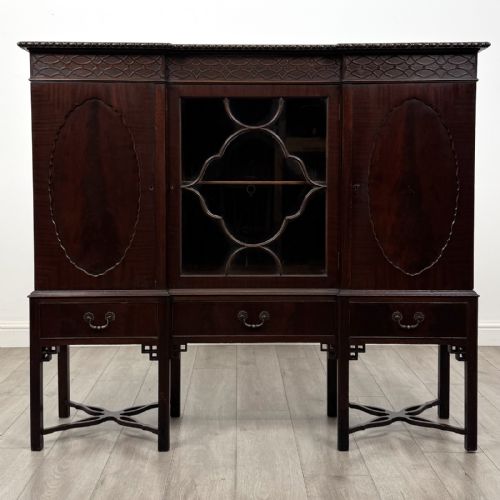
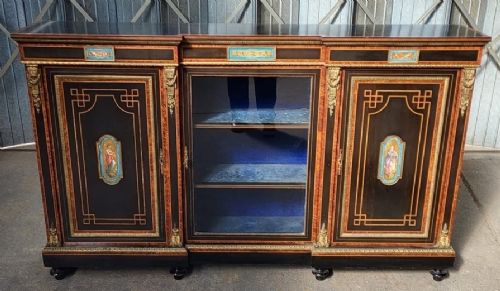
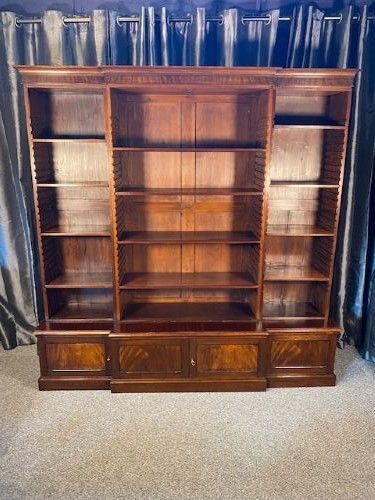
A wooden breakfront bookcase is defined by its tripartite architectural facade, where the central section steps forward from the flanking wings. When searching for a wooden breakfront bookcase, buyers most frequently encounter examples spanning the Victorian period and the early twentieth century, alongside revival styles referencing earlier centuries.
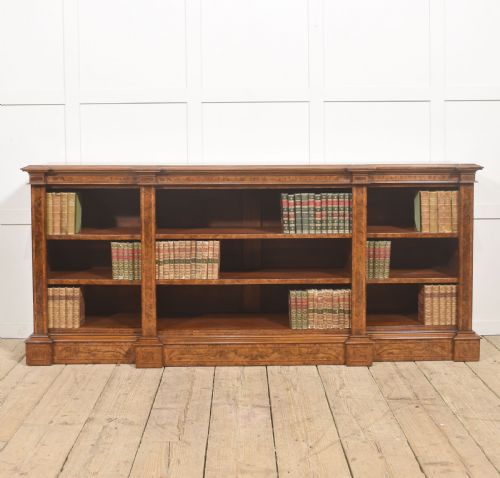
The format ranges from large library bookcases fitted with glazed or open upper shelves to lower open bookcases designed for display. Woods such as mahogany, walnut, burr walnut and oak dominate the construction, often enhanced with satinwood inlay or brass details.
Origins stretch across English country house workshops and international makers, encompassing formal Georgian and Regency proportions as well as Gothic Revival interpretations. The scale varies from diminutive proportions to monumental library installations with adjustable shelving.
Materials and construction methods
Cabinetmakers utilised dense hardwoods like mahogany, walnut and oak for the primary carcase and framing, frequently selecting figured veneers such as flame mahogany or burr walnut for the principal door panels and drawer fronts. Satinwood provides contrasting stringing and inlay across revival pieces, while secondary timbers line the interiors.
Construction relies on traditional joinery techniques, accommodating sectional designs that allowed these large pieces to be dismantled for transport into grand interiors. Shelving is commonly supported by adjustable systems, and glazed sections utilise timber framing to secure individual glass panes.
Wooden Breakfront Bookcase Retail Price Guide 2026
Typical asking prices for wooden breakfront bookcase among the pieces listed under this phrase on Sellingantiques today, from the lower quarter to the upper quarter. They describe what is for sale here now, not the wider market.
Distinctions in craftsmanship
The division between standard production and exceptional work rests upon the selection of timber veneers and the precision of the joinery within the projecting centre section. Superior pieces display continuous grain matching across large surfaces and finely detailed carved mouldings or brass mounts.
Interior fittings, such as finely finished adjustable shelving systems and robust backboards, separate utilitarian library furniture from high-status architectural commissions. The integration of glazed doors with hand-blown glass or detailed tracery further elevates the standing of a piece.
JOHNSTONE AND JEANES
The Wooden Breakfront Bookcase Glossary
- Breakfront
- An architectural cabinet design where the central section projects forward from the two flanking wings. This configuration creates depth and visual rhythm across the facade.
- Flame mahogany
- A highly figured wood veneer displaying a distinctive flame-like pattern caused by the cutting angle through the timber grain. Cabinetmakers reserved this material for prominent surfaces.
- Burr walnut
- Timber harvested from the gnarled growths of walnut trees, producing a dense, swirling pattern of rich grain. It appears on high-status Victorian and Edwardian cabinetry.
- Adjustable shelving
- A functional system allowing internal bookcase shelves to be raised or lowered on wooden racks, brass studs or metal tracks. This accommodates books of varying heights.
- Sheraton Revival
- A late nineteenth and early twentieth century design movement replicating the light, refined furniture styles of the eighteenth-century designer Thomas Sheraton. It frequently incorporates satinwood and delicate inlay.
Wooden Breakfront Bookcase: Frequently Asked Questions
What is a breakfront bookcase?
A breakfront bookcase is a large cabinet featuring a central section that projects further forward than the left and right wings. This architectural layout breaks up the flat line of a wall and creates distinct bays for shelving.
Such pieces were traditionally designed for grand libraries and drawing rooms to house extensive book collections while serving as a focal point. The upper sections often incorporate glazed doors or open shelves, whilst lower sections may house closed cupboards or drawers.
How do I style a breakfront bookcase?
Living with a large wooden bookcase involves balancing dense rows of books with decorative objects, ceramics, and framed prints across the adjustable shelves. Allowing some breathing space between items highlights the proportions of the projecting centre section.
Because these bookcases command significant visual weight, positioning them against a solid wall in a principal room allows the timber grain and architectural details to anchor the space effectively.
Are the shelves adjustable?
Many period bookcases feature adjustable shelving supported by traditional wooden tooth racks, brass studs, or movable wooden brackets. This flexibility allows the owner to reconfigure shelf heights for volumes of different sizes.
When inspecting a piece, checking the mechanism reveals whether the shelving adjustments are original to the cabinet construction or later additions.
How do I identify Victorian bookcases?
Victorian bookcases often utilise dense timbers like mahogany and walnut, frequently featuring rich burr veneers or carved architectural mouldings. They tend to be substantial in scale, reflecting the domestic architecture of the nineteenth century.
Comparing the timber choice, construction methods, and hardware against standard nineteenth-century manufacturing practices helps distinguish these pieces from later revival items.