

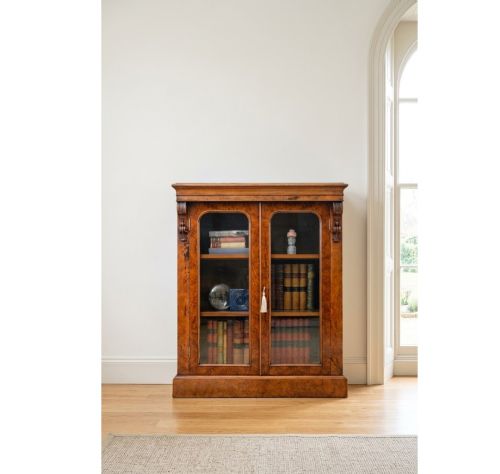
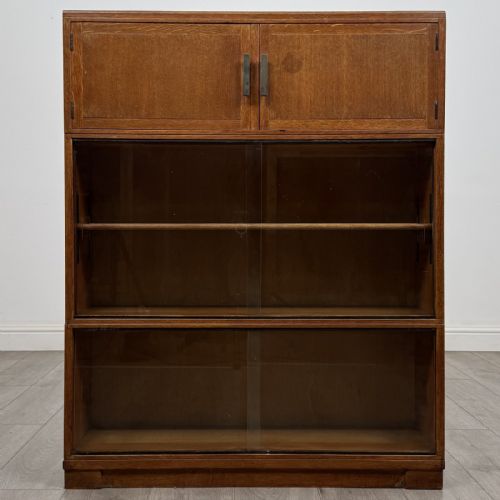

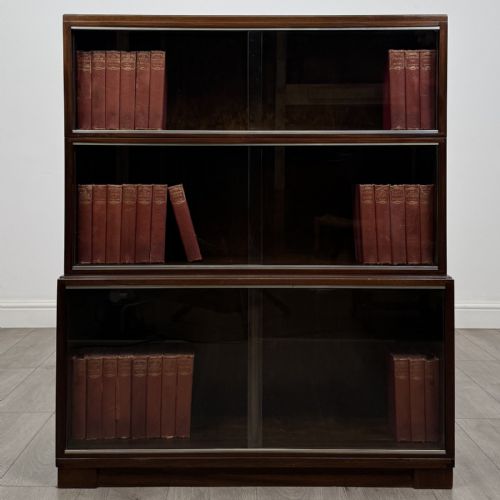
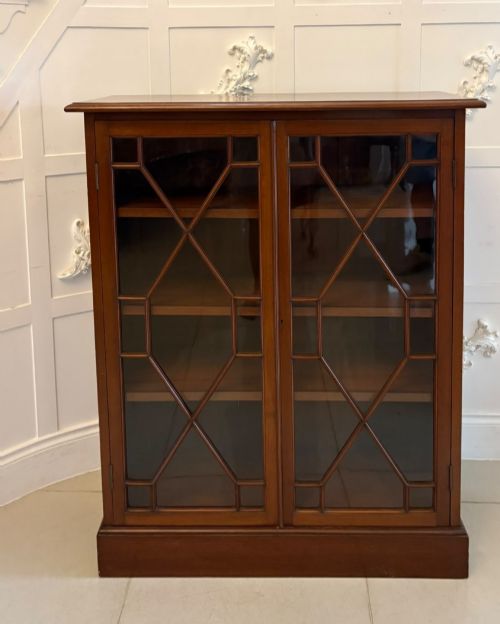
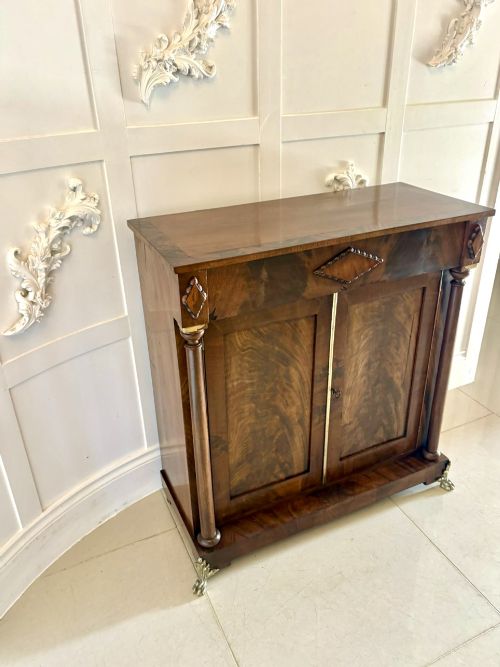
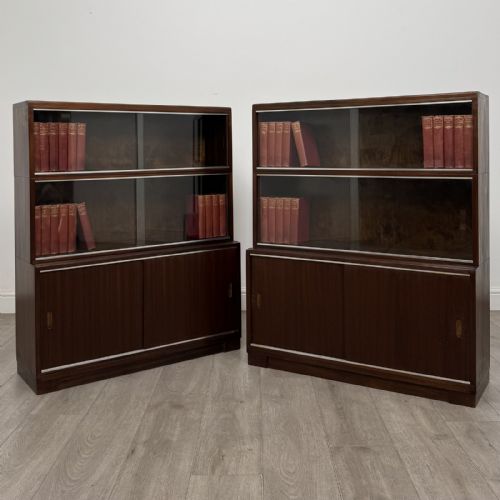
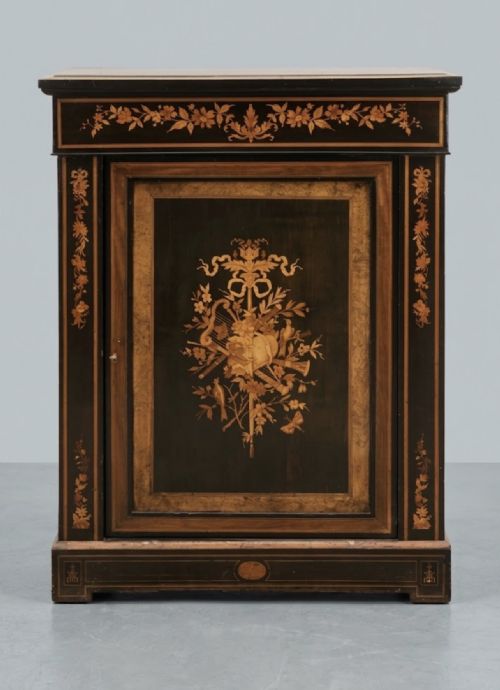
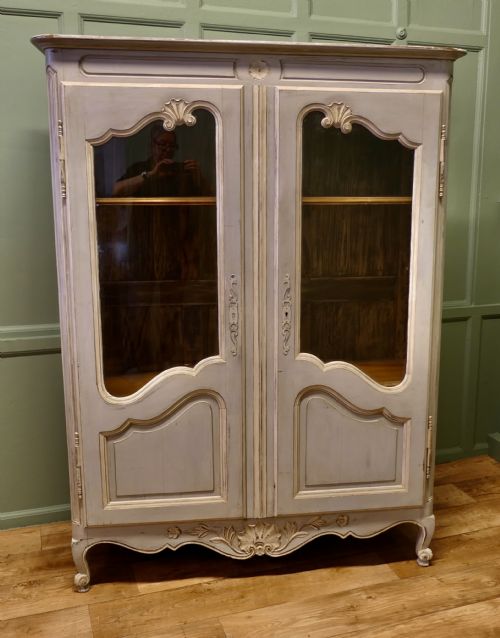
Wooden Bookcase with Doors
These wooden bookcases with doors protect volumes behind glass and timber panels while bringing period craft into a room.
Wooden Bookcase with Doors
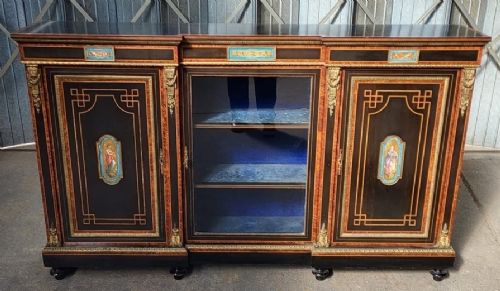
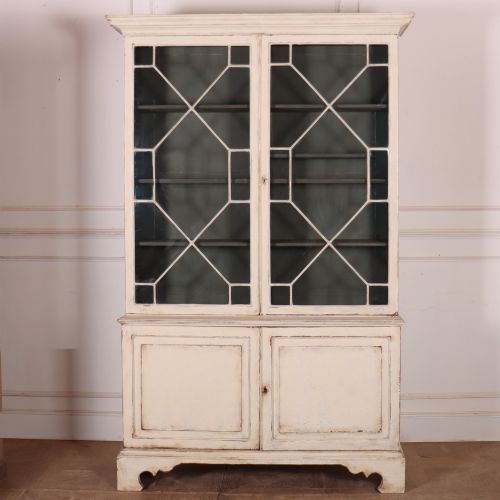
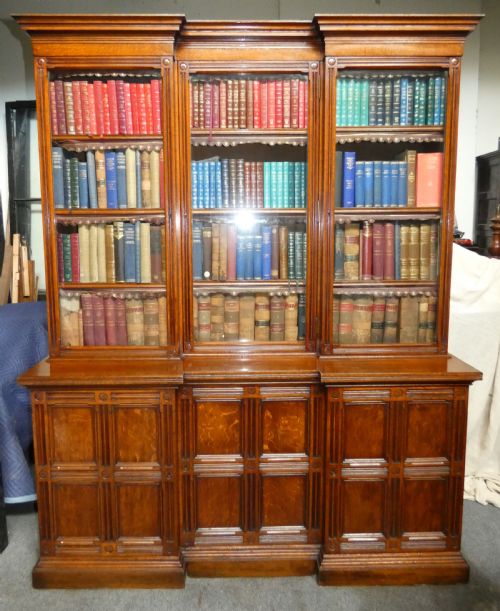
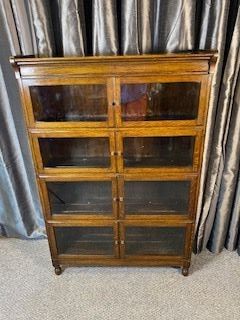
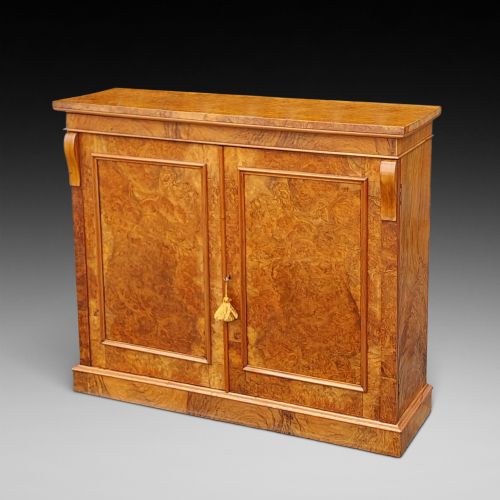
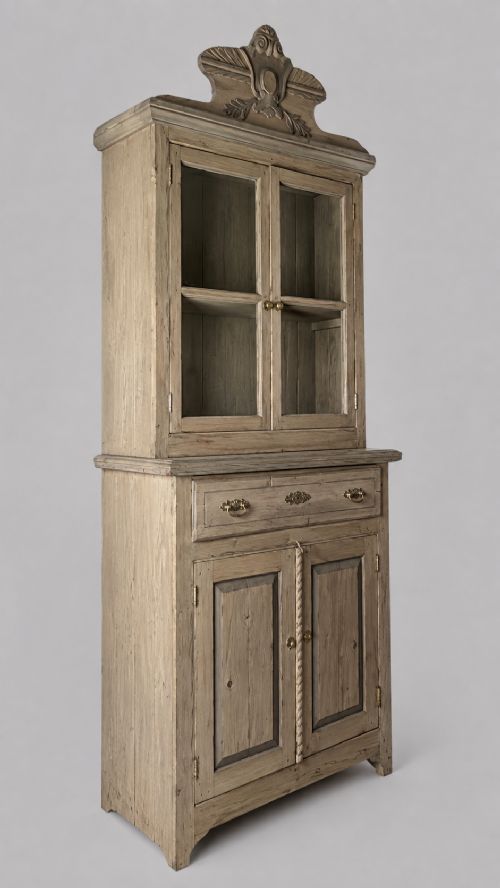
A wooden bookcase with doors brings together upright storage for volumes and enclosed cabinet space, appearing in forms such as tall library cupboards, bureau bookcases with fitted writing interiors, and low chiffoniers. Buyers seeking this phrase encounter pieces spanning the Georgian, Regency, Victorian, and Edwardian eras, alongside later twentieth-century examples.
The material palette leans heavily on mahogany and oak, occasionally featuring flame mahogany or satinwood veneer, complemented by glass viewing panels, brass hardware, and lead work. Forms range from slim two-part bureau bookcases with bun handles to substantial three-door library editions and corner cabinets.
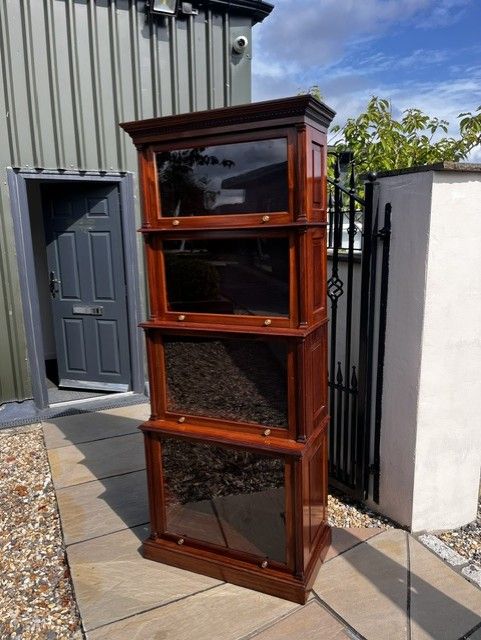
Makers and workshops of the nineteenth and early twentieth centuries built these pieces to organise domestic and institutional libraries, integrating cupboards below or beside the shelving. The inclusion of doors, whether solid wood, glazed, or sliding, distinguishes these cabinets from open bookshelves by keeping dust away from contents.
Construction and Materials
Makers relied primarily on solid mahogany and oak for structural integrity, often applying figured veneers such as flame mahogany and satinwood to drawer fronts and door panels for visual depth. Carcasses were joined using traditional carpentry methods to support heavy rows of books.
Glazing featured prominently in upper sections, held together by wooden or lead framing that created individual panes for display. Brass handles, hinges, and key escutcheons provided functional contrast to the dark timber surfaces.
Wooden Bookcase with Doors Retail Price Guide 2026
Typical asking prices for wooden bookcase with doors among the pieces listed under this phrase on Sellingantiques today, from the lower quarter to the upper quarter. They describe what is for sale here now, not the wider market.
Listings span the eighteenth, nineteenth, and early twentieth centuries, featuring oak, mahogany, and amboyna alongside glass and brass elements.
Evaluating Quality
The grade of timber selection marks the primary division between standard utility items and finer pieces, visible in the grain pattern of mahogany or oak and the careful matching of veneers. Superior examples display restrained inlay work and refined mouldings rather than heavy ornamentation.
Internal fittings dictate utility and execution, seen in adjustable shelving systems, cleanly compartmentalised stationery interiors within bureau sections, and functioning locks with original keys. The structural stability of heavy two-part carcases reflects the joinery skill employed during manufacture.
Minty·John Alexander
The Wooden Bookcase with Doors Glossary
- Secretaire bookcase
- A cabinet incorporating a pull-down writing drawer with internal pigeonholes and small drawers, positioned beneath upper shelving.
- Chiffonier
- A low sideboard or cabinet with enclosed cupboards beneath a display surface or upper shelf, popular across the Regency and Victorian periods.
- Bureau bookcase
- A two-part storage piece featuring a slant-front writing flap above cupboards or drawers, topped by a glazed or panelled bookcase section.
- Flame mahogany
- A veneer cut from timber where the branch meets the trunk, producing a distinctive flickering flame pattern across door panels and drawer fronts.
- Amboyna
- An exotic tropical wood yielding a rich, mottled golden-brown veneer utilised for decorative cabinet highlights during the nineteenth century.
Wooden Bookcase with Doors: Frequently Asked Questions
What is a bureau bookcase?
A bureau bookcase combines a sloping desk flap for writing with upper shelving enclosed by doors. The folding front reveals small drawers and pigeonholes for paperwork.
Lower sections typically provide supplementary storage through drawers or cupboards, creating a compact workstation and library unit in one piece.
How do I identify a Victorian bookcase?
Victorian pieces frequently employ dense mahogany with deep reddish tones, substantial proportions, and simple architectural cornices. Glazed upper doors often feature heavy wooden framing.
Interior shelving is frequently adjustable via wooden ratchets or metal pins, accommodating varying book sizes without fixed divisions.
Why choose a cabinet with glass doors?
Glass doors protect leather bindings and paper pages from airborne dust, smoke, and moisture while maintaining visibility of book spines.
This enclosed design suits formal sitting rooms and libraries where preserved condition and tidy presentation matter alongside accessibility.
What is an Edwardian oak bookcase?
Edwardian oak bookcases reflect early twentieth-century domestic design, often presenting lighter timber tones and simpler vertical lines than their Victorian predecessors.
Some examples incorporate Arts and Crafts influences or sliding glass doors, prioritising practical household utility and smaller room proportions.