





Wooden Book Display Unit
A wooden book display unit brings order to libraries and parlours through open shelving and display space.
Wooden Book Display Unit
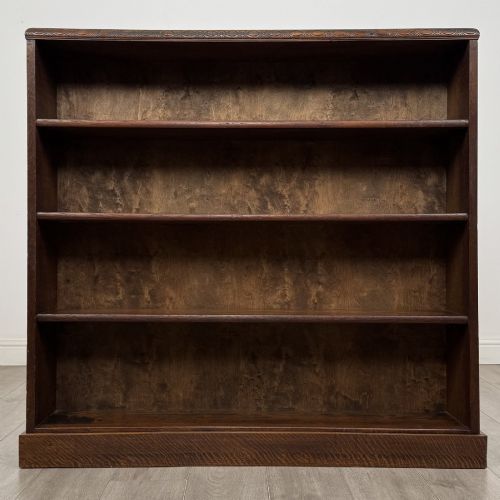
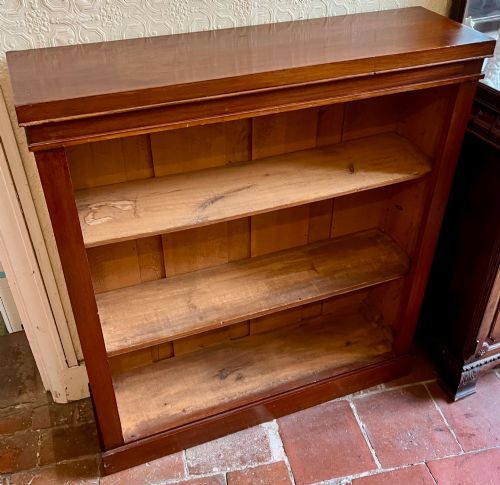
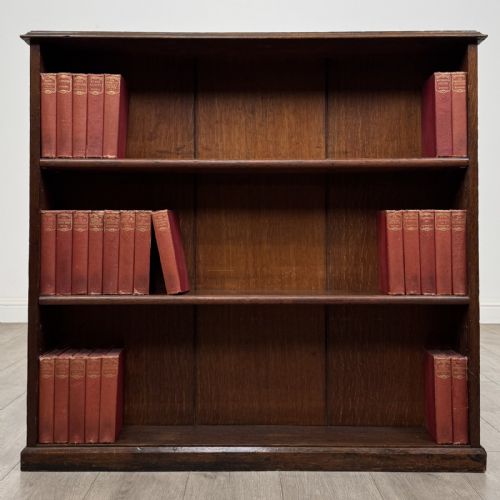
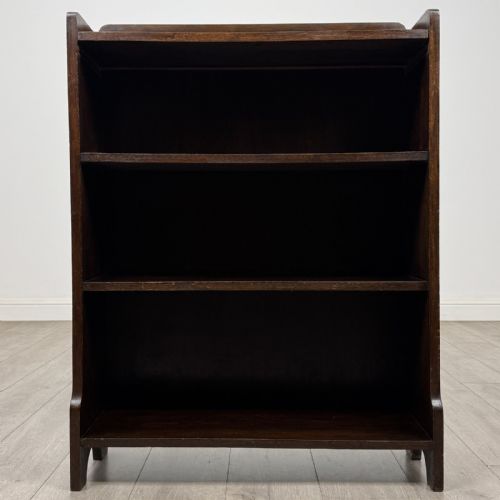
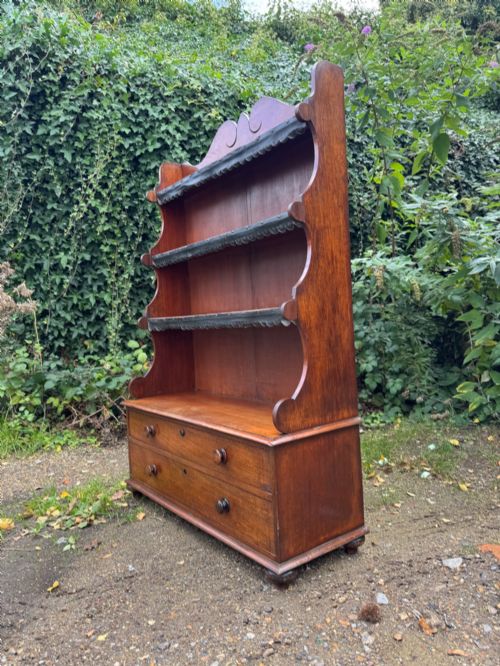
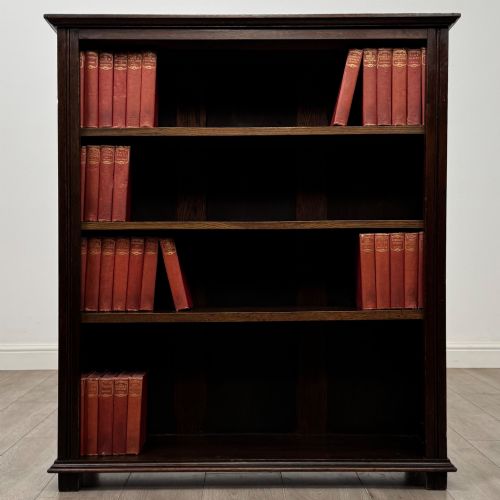
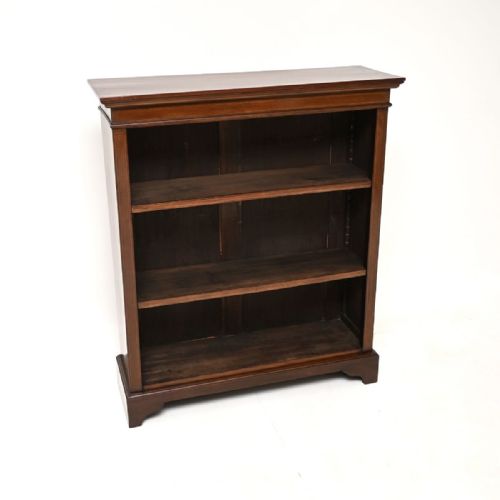
A wooden book display unit serves primarily to hold and show volumes in domestic rooms, appearing on this page most often as an open bookcase or whatnot. These pieces emerge from the nineteenth and early twentieth centuries, spanning Victorian, Edwardian, and Arts and Crafts periods.
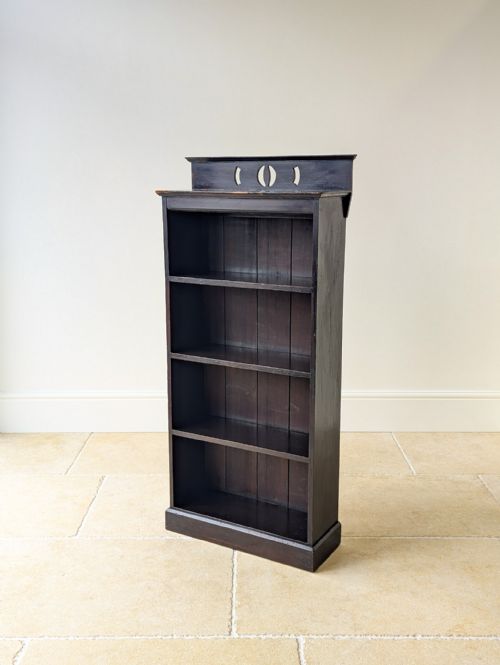
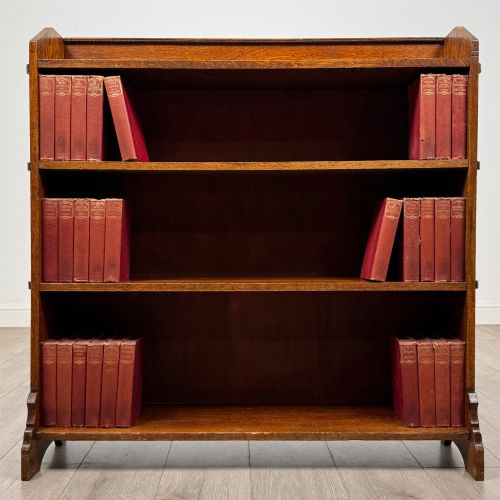
Makers constructed these units in varied formats, from low oak shelving with raised galleries to large breakfront mahogany bookcases with adjustable shelves. Buyers meet smaller wall hanging shelf racks alongside substantial double-width models designed for larger collections.
The selection reflects utility and display, encompassing simpler pine and oak pieces alongside finely figured walnut and inlaid mahogany furniture. Each variant provides accessible storage suited to everyday reading rooms and studies.
Construction and materials
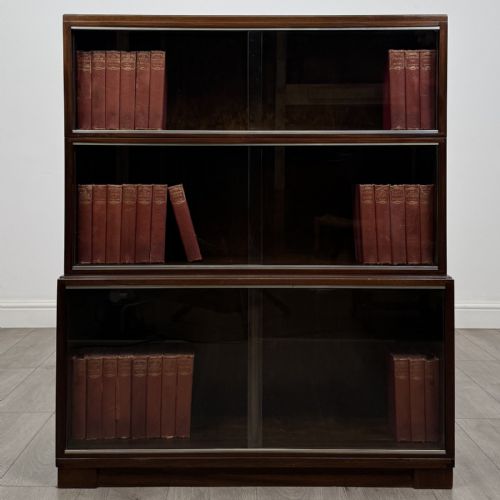
Carpenters utilised solid timbers such as oak, mahogany, pine, and walnut, frequently selecting burr veneers to enrich larger surfaces. Brass hardware appears on fittings while glass protects items in cabinets equipped with sliding doors.
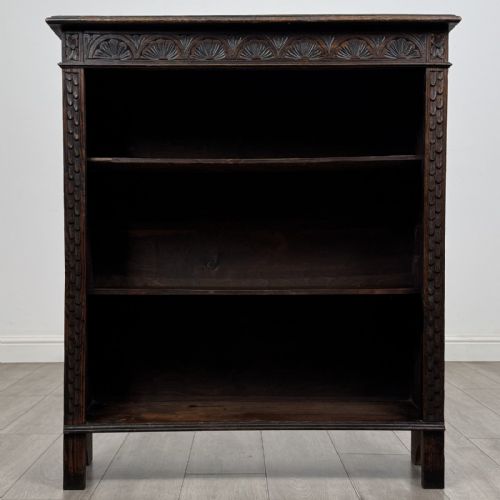
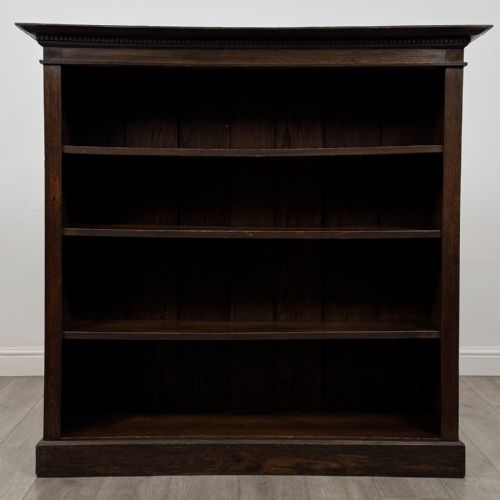
Construction methods prioritised practical function through adjustable shelving systems and sturdy panel joints. Carved details, decorative cut-outs, and dentil cornices provide architectural finish without obscuring the primary wooden grain.
Wooden Book Display Unit Retail Price Guide 2026
Typical asking prices for wooden book display unit among the pieces listed under this phrase on Sellingantiques today, from the lower quarter to the upper quarter. They describe what is for sale here now, not the wider market.
Early carpenters ensured nobody ever lost their place by designing shelves deep enough to swallow entire reading lamps.
Distinctions in standard
Superior examples distinguish themselves through the selection of choice timber, such as figured mahogany or burr walnut, matched with careful grain alignment across the panels and shelves. Lesser pieces rely on plain utilitarian pine or straightforward oak without decorative refinement.
Design complexity separates standard utility items from distinguished workshop pieces, evident in dentil cornices, raised galleries, and decorative cut-outs. The integration of adjustable shelving mechanisms and clean joinery indicates higher standards of original construction.
The Wooden Book Display Unit Glossary
- Open bookcase
- A piece of furniture designed for book storage featuring unobstructed front access rather than doors. These units typically incorporate fixed or adjustable wooden shelves.
- Whatnot
- A set of open shelves standing on pillars, used for displaying small objects or books. They range from simple tiered stands to more elaborate corner units.
- Breakfront
- A cabinet or bookcase whose central section projects forward from the flanking wings. This architectural arrangement creates depth and visual interest across larger pieces.
- Dentil cornice
- A decorative moulding featuring a series of small, evenly spaced rectangular blocks resembling teeth. It sits at the uppermost edge of corniced bookcases and cabinets.
- Raised gallery
- A low decorative railing or rim running along the top surface of a piece. It prevents displayed items from sliding off the edge.
Wooden Book Display Unit: Frequently Asked Questions
Where should I place a wooden book display unit?
These units suit studies, libraries, and living rooms where accessible book storage is required.
Position them against interior walls away from direct sunlight and heat sources to protect the wood and bindings.
How do adjustable shelves work?
Adjustable shelves rest on internal supports that fit into vertical slots or rows of pin holes inside the bookcase uprights.
This system allows owners to alter shelf heights to accommodate volumes of varying sizes.
What is the difference between an open bookcase and a cabinet?
An open bookcase provides direct, unobstructed access to the contents through open fronts.
Cabinets incorporate doors, occasionally glazed or sliding, which enclose the shelving space to protect contents from dust.
How do I care for antique wood finishes?
Maintain timber surfaces by dusting with a soft dry cloth and applying occasional appropriate wax polish.
Avoid liquid cleaners and maintain stable room humidity to prevent timber movement.