



Wooden Barrel Umbrella Holder
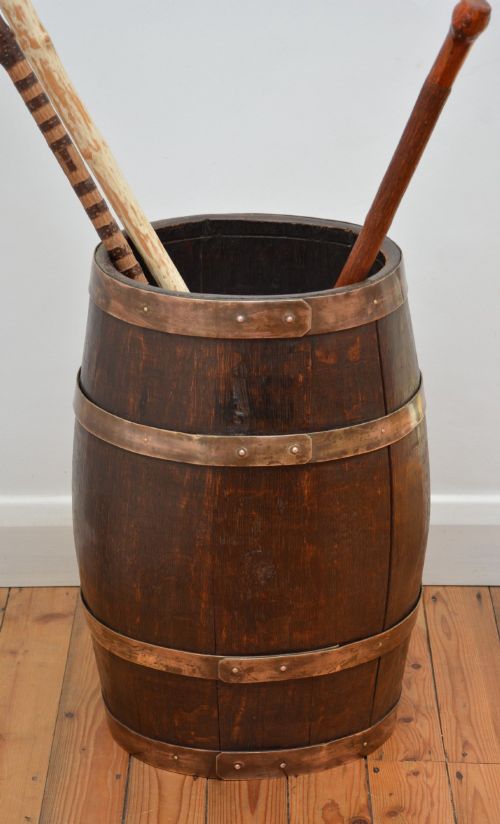
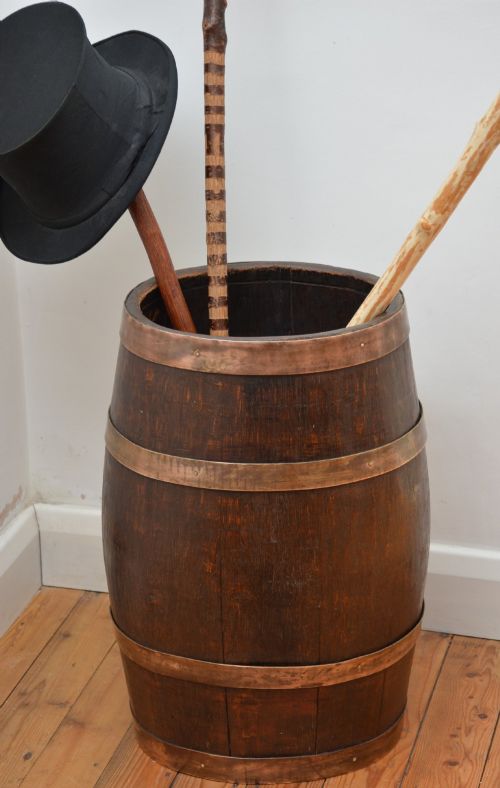
A wooden barrel umbrella holder brings sturdy country house utility and coopered craftsmanship straight into a hallway.
Wooden Barrel Umbrella Holder
A wooden barrel umbrella holder takes the traditional form of a coopered vessel designed specifically to keep hallway floors dry from wet walking gear. These pieces range from compact Edwardian examples to substantial Victorian country house specimens.
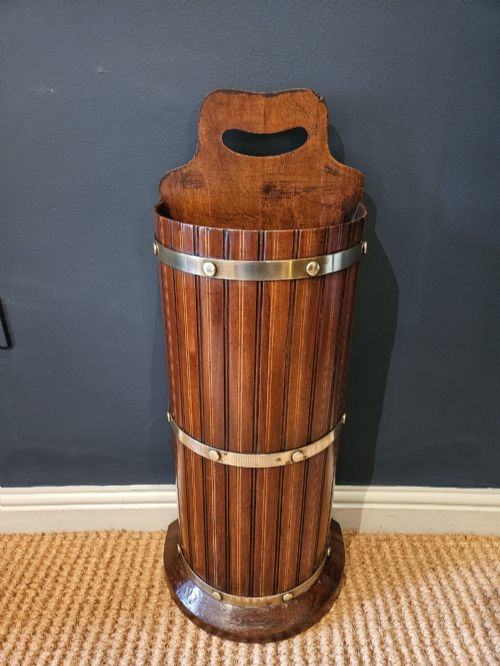
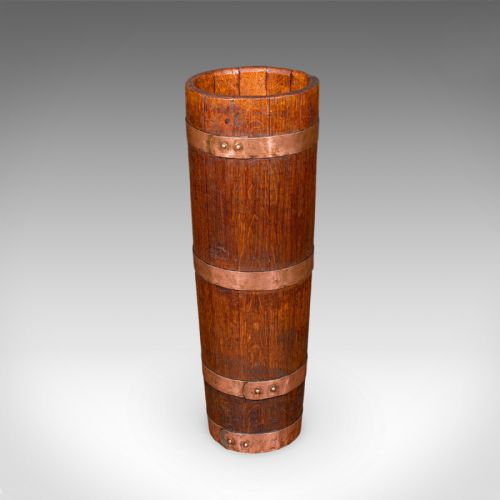
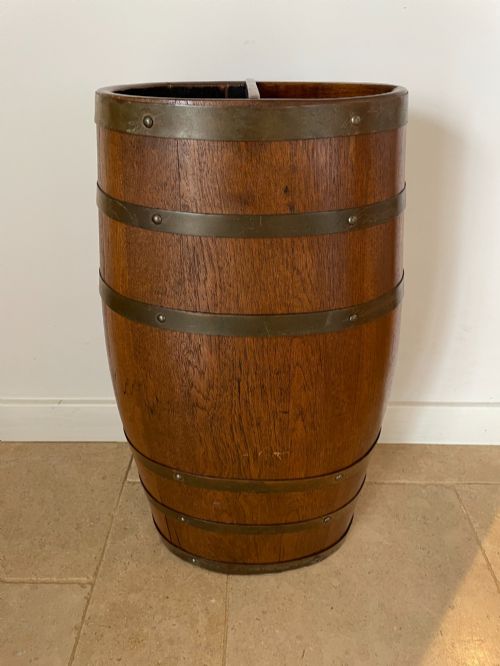
Most entries follow a familiar circular or oval footprint shaped by individual wooden staves held together by metal bands. Buyers frequently encounter oak versions finished with brass or copper braces.
The primary function remains holding sticks and umbrellas upright near the entrance door. They bridge practical utility and domestic decorative arts across the nineteenth and early twentieth centuries.
How they were made
Cooperage forms the basis of construction, requiring skilled artisans to shape individual wooden staves so they fit tightly together without adhesive. Oak serves as the primary timber, valued for durability and resilience against moisture.
Metal components provide structural tension and visual contrast. Black iron, polished brass, and copper bands encircle the wooden staves alongside fitted umbrella loops that keep individual sticks separated.
Wooden Barrel Umbrella Holder Retail Price Guide 2026
Typical asking prices for wooden barrel umbrella holder among the pieces listed under this phrase on Sellingantiques today, from the lower quarter to the upper quarter. They describe what is for sale here now, not the wider market.
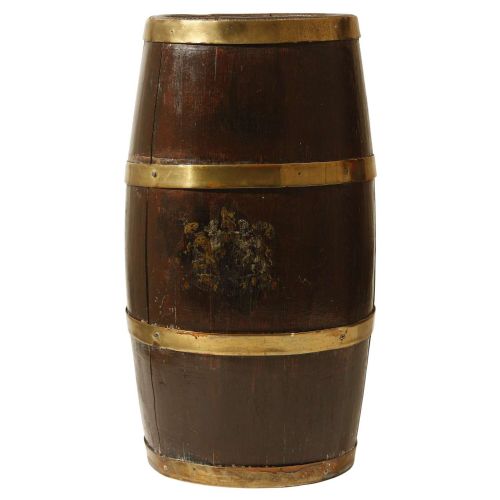
Oval forms appear alongside traditional circular barrels, occasionally incorporating painted details or cast metal coats of arms.
What varies in quality
Quality rests upon the precision of the cooperage and the weight of the metal fittings. Tight stave joints and heavy brass or copper bracing distinguish better examples from simpler utility items.
Material selection and decorative additions elevate certain pieces above standard hall furniture. Original coats of arms, oval rather than round footprints, and rich mahogany timbers mark the upper end of the range.
R.A. Lister
The Wooden Barrel Umbrella Holder Glossary
- Coopered
- Constructed from curved wooden staves bound together with metal hoops, much like a traditional wine cask. This technique ensures the vessel remains stable when holding heavy walking sticks.
- Stave
- An individual narrow strip of wood with bevelled edges that forms the curved side of a barrel. Skilled makers taper these pieces to create symmetrical cylinders or oval shapes.
- Brass bound
- Fitted with polished brass bands that encircle the wooden body to hold the staves firmly in place. This metalwork often includes decorative riveting or applied crests.
- Umbrella loop
- An internal metal ring or divider secured near the top of the stand to keep long items upright and separate. It prevents walking sticks from tangling inside the well.
Wooden Barrel Umbrella Holder: Frequently Asked Questions
What is a wooden barrel umbrella holder?
A wooden barrel umbrella holder is a coopered vessel designed to store walking sticks and wet umbrellas in an entrance hall. These pieces use curved wooden staves bound by metal hoops to form a deep cylindrical or oval container.
Most examples date from the Victorian and Edwardian periods, constructed primarily from oak with brass or copper reinforcements. They combine robust domestic utility with traditional woodworking craftsmanship.
How do I care for wooden umbrella stands?
Care involves protecting the timber from standing moisture and regular polishing of the metal bands. Ensure that drip trays or liners are utilised inside the base to prevent water from rotting the wooden floor.
Keep the staves conditioned with suitable wax to maintain the grain and prevent the wood from drying out in heated hallways. Gentle dusting keeps both the oak and the metal fittings looking smart.
Are these umbrella holders waterproof?
Traditional coopered barrels were designed to hold wet items, but timber naturally expands and contracts with moisture. Many period pieces rely on original metal linings or inner bases to contain dripping water.
It remains wise to inspect the interior base of any antique holder to see how moisture management was handled by the original maker. Modern users often place a small hidden dish inside to protect the historic wood.
How do I date an antique stick stand?
Dating relies on observing the timber species, the style of metal bracing, and construction methods. Victorian and Edwardian pieces often display heavier oak construction with distinct brass or iron bands.
Earlier Georgian and Regency examples might feature finer mahogany timbers and simpler, elegant proportions. Maker marks or stamps, when present, offer a direct link to specific workshops like R.A. Lister.