


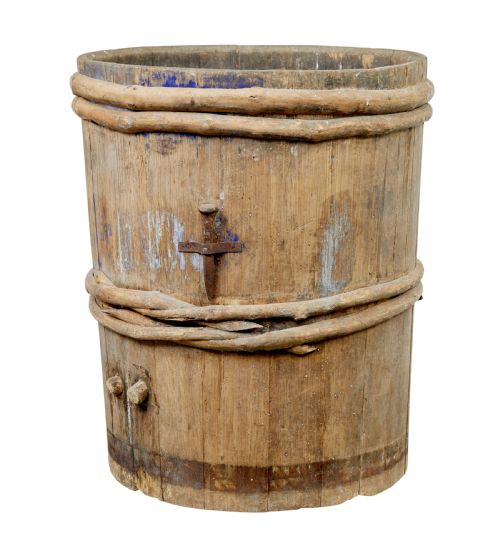


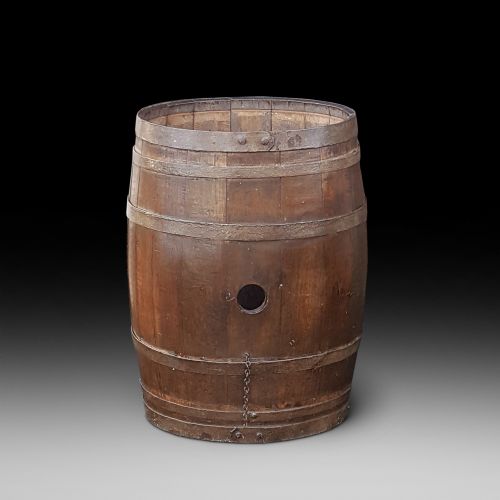
Wooden Barrel Planter
These wooden barrel planter examples bring genuine rustic utility and rich grain into a room or garden, making them sought-after architectural accents.
Wooden Barrel Planter
When you search for a wooden barrel planter, you are looking at sturdy coopered vessels adapted from casks and storage barrels into jardinieres, plant stands, and stick stands. These pieces span the Victorian, Edwardian, and early twentieth century periods, reflecting practical domestic and garden uses.
You are most likely to meet oak and pine versions on this page, styled in rustic country, Scandinavian country, or Arts and Crafts traditions. They range from compact tabletop jardinieres to large floor-standing storage vessels.
The form relies on traditional stave construction, where vertical wooden staves are held tightly together by exterior bands of metal. This robust heritage gives each piece its distinctive silhouette and enduring character.
How they were made
The construction of these pieces centres on cooperage, utilising shaped staves of solid oak or pine fitted closely together to form a watertight or structurally sound cylinder. Skilled artisans shaped each stave with bevelled edges so the vessel tapered gracefully from the centre to the rim.
Metal work forms an integral part of the fabrication, with bands of brass, iron, copper, or wood hoops secured tightly around the timber body to maintain tension. These metal bands are often fastened with neat rivets or clout nails, adding both structural integrity and decorative contrast.
Listings feature pieces from the Victorian and Edwardian eras alongside 1920s examples, constructed in oak and pine with brass, copper, and iron hardware.
What varies in quality
Quality in these pieces rests upon the selection of timber and the precision of the cooper's jointing. Dense, well-figured oak with tight, uniform staves represents the upper tier of manufacture, whereas simpler pine construction occupies a more utilitarian station.
The secondary metals and mounting details also distinguish finer examples. Heavy cast brass or hand-hammered copper bands, alongside thoughtful additions like integrated stands or maker-marked elements, elevate a standard vessel into a piece of notable distinction.
Lister and Co
The Wooden Barrel Planter Glossary
- Coopered
- Constructed from curved wooden staves bound together by hoops, following the traditional method of barrel making. This technique ensures the vessel remains stable and strong over centuries.
- Jardiniere
- An ornamental pot or stand for holding plants or flowers, often designed for interior display. They frequently feature decorative metal liners or mounts.
- Stave
- One of the narrow shaped strips of wood that form the sides of a barrel or cask. The careful bevelling of each stave is crucial to the vessel's shape.
- Hoop
- A circular band of metal or wood fitted tightly around a barrel to hold the staves in place. These can be plain iron, polished brass, or matching timber.
- Stick stand
- A tall vessel or piece of furniture used for holding walking sticks and umbrellas. Their deep proportions make them natural adaptations from smaller casks.
Wooden Barrel Planter: Frequently Asked Questions
What were wooden barrel planters originally used for?
Many of these vessels started life as storage casks, dry goods barrels, or small brewing vessels before being repurposed for horticulture or domestic display.
Over time, makers and owners recognised their sculptural qualities, adapting them into planters, jardiniere stands, and umbrella holders for hallways and parlours.
How do I date a wooden barrel planter?
Dating relies on examining the timber species, the style of the metal hoops, and the construction methods used on the staves.
Victorian and Edwardian pieces often display finer brass or copper work and polished oak, while earlier rustic pine examples show simpler iron or wood hoop bindings.
Can I use these planters outdoors?
While many are sturdy enough for garden use, historical wooden vessels require care to prevent the timber from drying out or rotting.
Using a protective internal liner helps preserve the original staves and metal hoops from constant moisture and soil contact.
What is the difference between a jardiniere and a planter?
A jardiniere typically refers to an ornamental pot designed for indoor display, often accompanied by a dedicated stand or decorative metal mounts.
Planters can be larger, heavier vessels intended for robust plant display both inside and outside the home.