





Wooden Balance Scales
These wooden balance scales are working implements and desktop objects that bring tactile weight and honest craftsmanship into any room.
Wooden Balance Scales
When you search for wooden balance scales, you enter a field that spans sturdy dairy equipment, delicate letter sorters, and precise scientific instruments. The items found here range from country treen to fitted postal boxes, reflecting both utilitarian work and domestic correspondence.
Victorian postal sets and nineteenth-century Welsh treen scales appear most frequently in this selection. You will also encounter seventeenth-century boxes and Georgian vernacular dairy pieces alongside Dutch colonial stick balances.
These instruments served practical roles in dairies, apothecaries, and writing desks before retiring to decorative duty. Their forms vary from simple beam scales mounted on boards to complex folding postal sorters with brass pans.
How they were made
Makers utilised dense hardwoods such as oak, mahogany, and walnut to construct the bases and boxes that support these mechanisms. Wrought iron and brass provide the pivot points, chains, and weighing pans, creating a durable contrast of warm timber and polished metal.
Fine velvet often lines the fitted compartments inside boxes to cushion delicate weights, while string and cord maintain the suspension of hanging pans. Carpenters and instrument makers shaped these materials by hand, joining box corners with traditional joints and mounting beams on sharp knife-edge fulcrums for accurate movement.
An egg grader ensures your morning toast is accompanied by eggs of strictly certified volume.
What varies in quality
Quality in these instruments depends upon the crispness of the timber turning and the precision of the brass work. Superior examples retain their original matching weights and unwarped wooden bases that allow the beam to swing true.
The degree of finish marks the distinction between rustic utility items and refined parlour pieces. Simple dairy scales show the straightforward marks of regional carpentry, whereas postal sets and scientific instruments display careful polishing and fitted storage.
De Grave Short And Co
The Wooden Balance Scales Glossary
- Treen
- Small wooden domestic objects carved by hand. This term covers functional items made in rural workshops.
- Beam scale
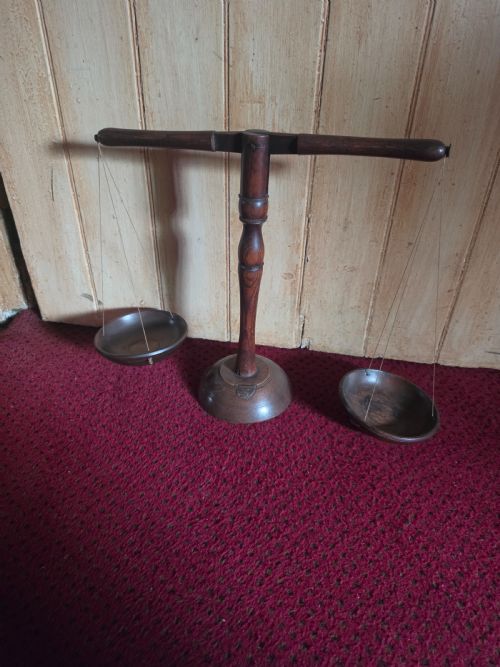
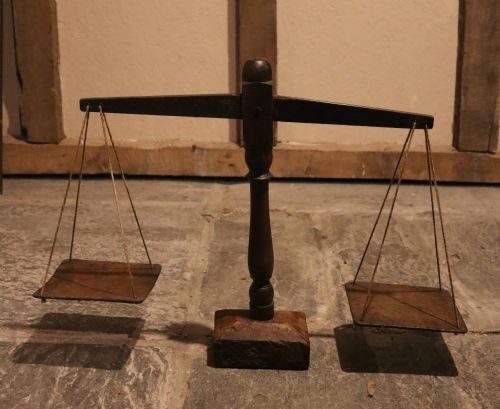
- A weighing device featuring a central horizontal lever suspended on a pivot. It balances an unknown mass against known standards.
- Postal scales
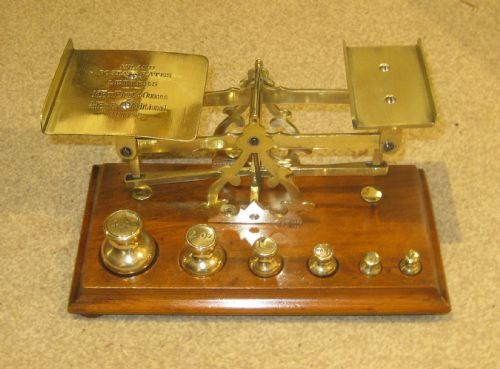
- Desktop weighing devices designed for letters and small parcels. They usually incorporate calibrated brass weights and a stepped wooden platform.
- Apothecary weights
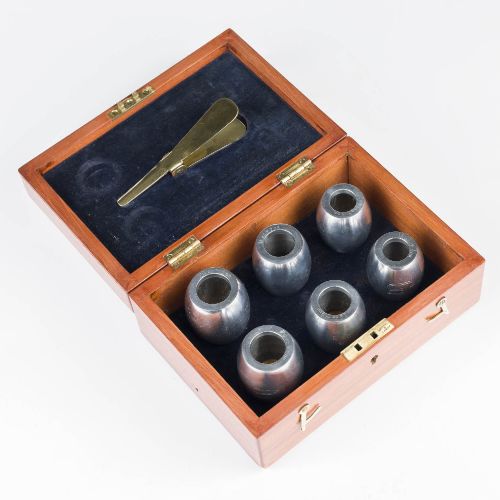
- Small standardised metal masses used for measuring medicine. They often survive housed in fitted wooden block stands.
Wooden Balance Scales: Frequently Asked Questions
How do wooden balance scales work?
These instruments rely on a central fulcrum and a balanced horizontal beam to compare an object's mass against standard weights. Placing an item on one pan causes the beam to tilt until equal mass restores the horizontal position.
Fine adjustments depend on the precise knife-edge pivot at the centre of the beam. Even slight wear on this pivot changes the sensitivity of the movement.
Were postal scales used in homes?
Victorian households utilised these small desktop scales to weigh letters and calculate proper postage before collection. They sat on writing desks alongside inkstands and stationery boxes.
Postal rates depended strictly on weight, making accurate desktop scales essential for everyday correspondence. Wealthy homes favoured polished walnut and brass sets that matched their library furniture.
How should I clean wooden balance scales?
Maintenance requires only a soft, dry cloth to remove dust from the timber and metal surfaces. Avoid harsh chemical polishes that can strip aged patination from hardwood bases.
Brass pans respond to gentle cleaning if you wish to reduce tarnish, though many collectors prefer undisturbed oxidation. Keep wooden components away from direct sunlight and damp conditions to prevent warping.
What is dairy treen?
Dairy treen refers to wooden utensils and working equipment carved for use in butter-making and milk processing. Welsh workshops produced robust oak scales and grading boards for rural agricultural life.
These utilitarian objects earned heavy use in damp farm environments before surviving as decorative antiques. Their simple construction highlights regional woodworking traditions of the eighteenth and nineteenth centuries.