

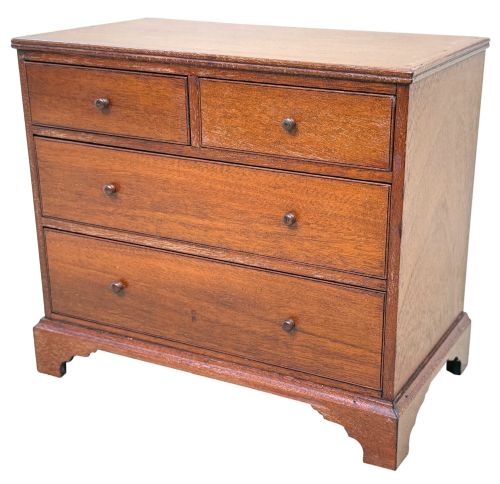
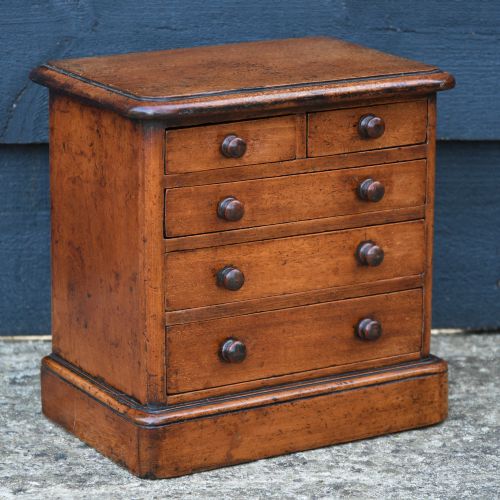
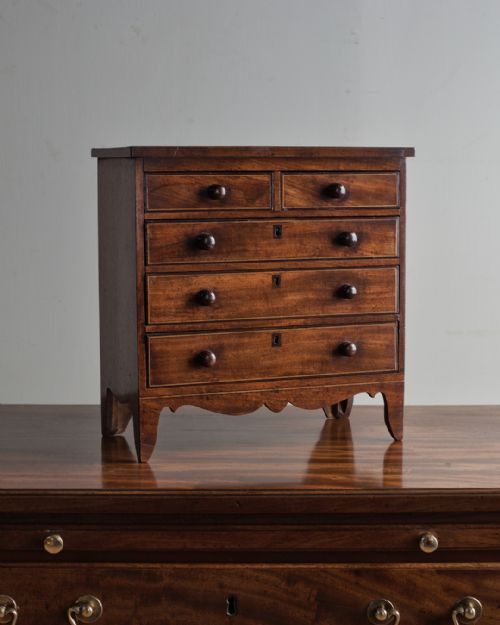
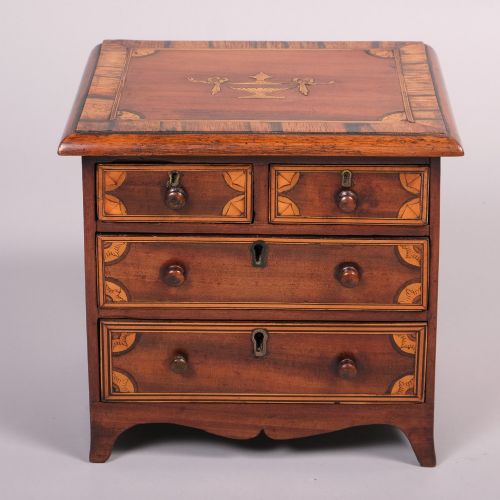
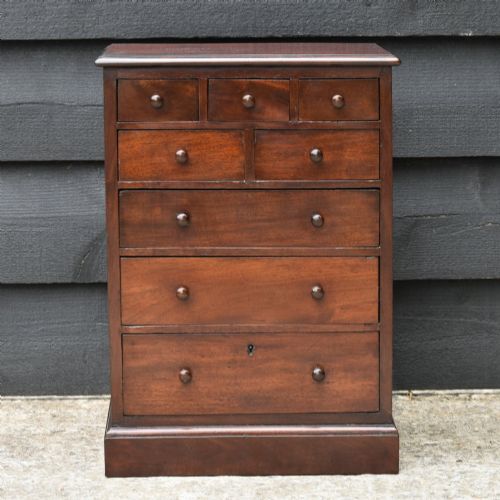
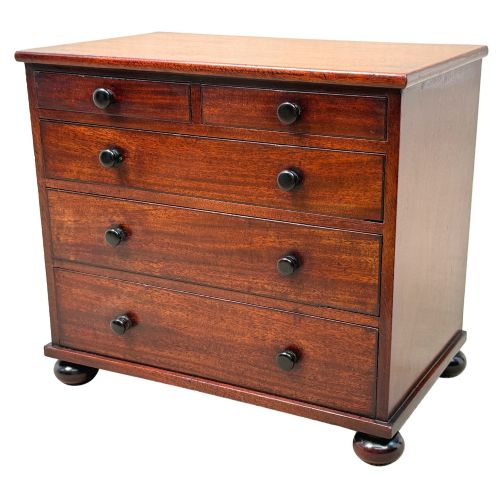
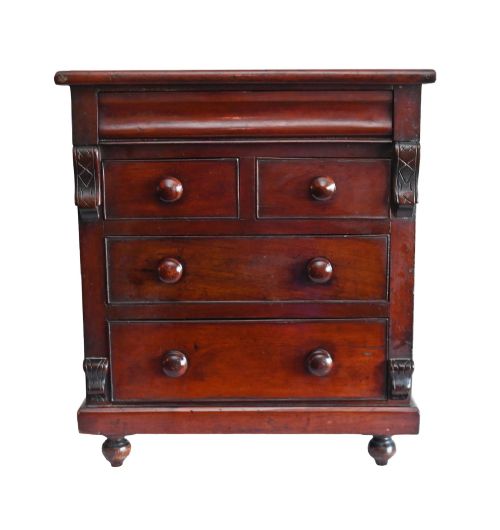
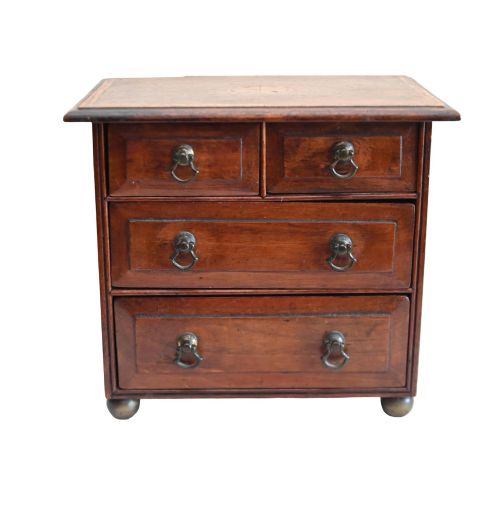
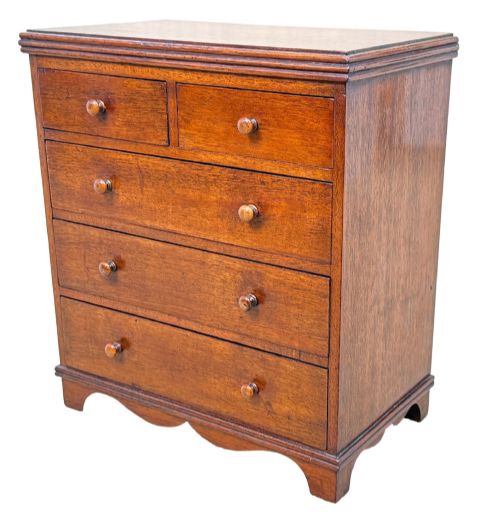
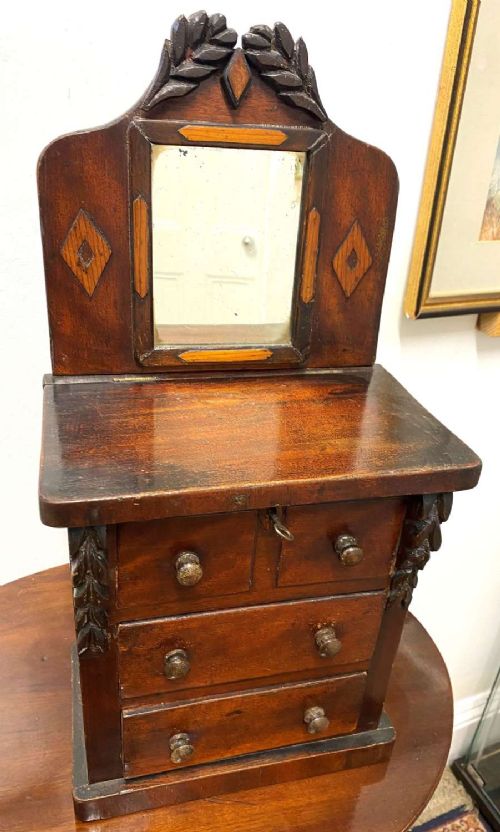
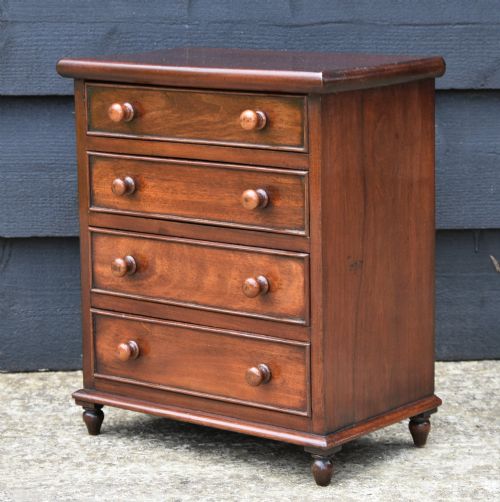
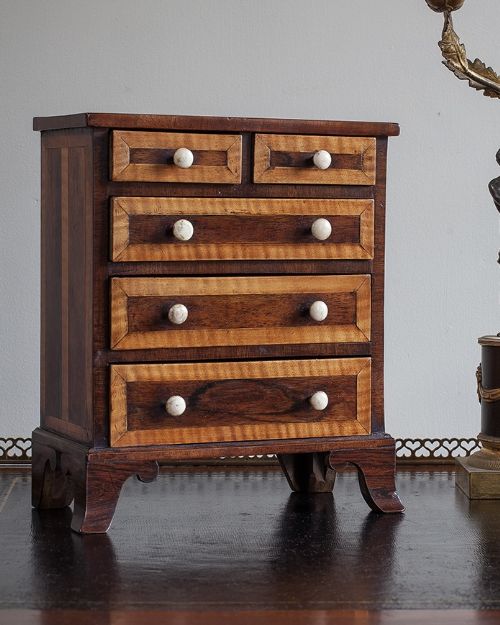
Wooden Apprentice Piece Chest
A wooden apprentice piece chest is a small scale model of full sized furniture crafted to demonstrate skill, frequently seen here in mahogany, oak, and walnut.
Wooden Apprentice Piece Chest
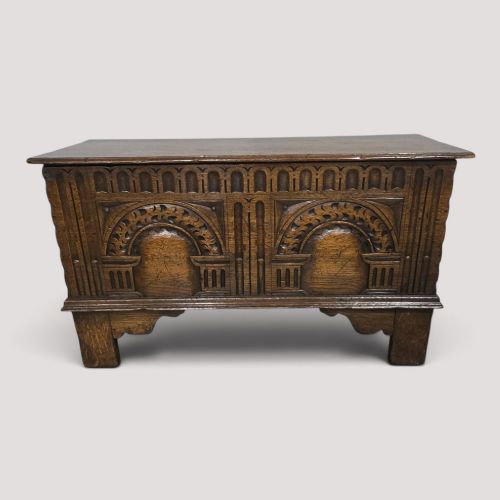
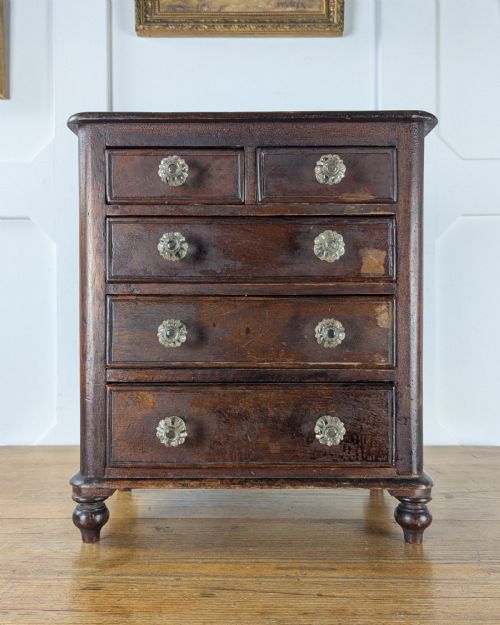
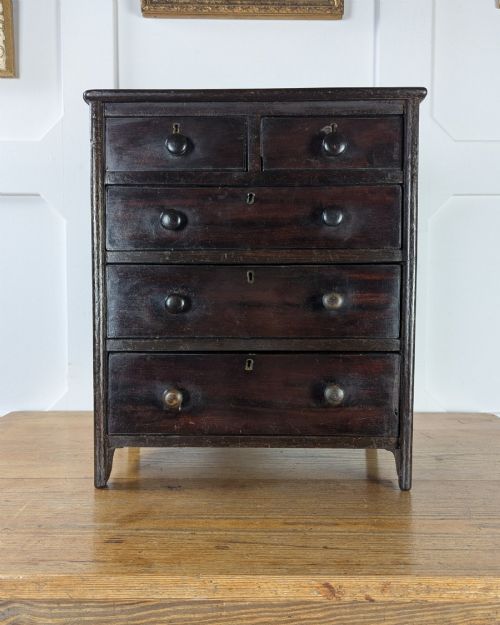
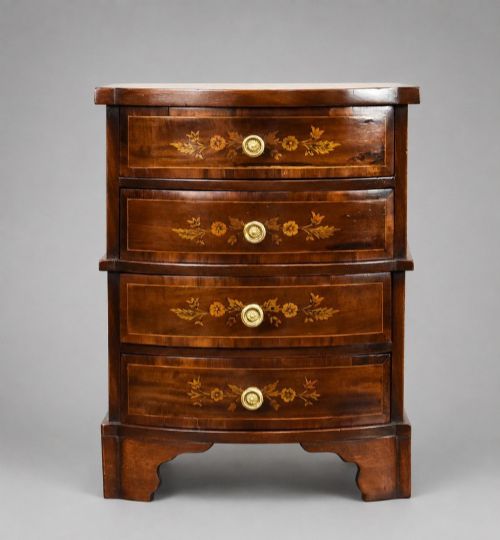
A wooden apprentice piece chest represents a compact scale version of full sized cabinetry, historically created to prove a maker's capability. These pieces appear on this page in forms ranging from miniature chests of drawers to mule chests and cabinets.
The selections span the Georgian, Victorian, and Edwardian periods, with nineteenth century iterations dominating the inventory. Buyers encounter variations including Scotch chests, bow front chests, and tabletop specimen cases.
Regional styles emerge across the listings, showing Scottish, English, and Dutch influences alongside vernacular folk art examples. Each item reflects the domestic forms of its era rendered in miniature proportions.
Materials and Construction Techniques
Cabinetmakers utilised hardwoods such as mahogany, walnut, oak, and yew alongside softer timbers like pine and elm. Decorative touches incorporated brass hardware, mother of pearl inlay, marquetry, and bone.
Joinery techniques mirrored those used for domestic furniture, adapting dovetails and turned feet to smaller scales. Surfaces often received polish or developed natural patinas over centuries of handling.
Wooden Apprentice Piece Chest Retail Price Guide 2026
Typical asking prices for wooden apprentice piece chest among the pieces listed under this phrase on Sellingantiques today, from the lower quarter to the upper quarter. They describe what is for sale here now, not the wider market.
Some miniature chests hide secret compartments behind false drawer fronts, offering tiny secure spaces for very small secrets.
Assessing Quality and Proportion
Quality rests on the fidelity of the miniature scale, where top tier examples maintain correct architectural proportions and precise joinery. The handling of secondary timbers and the crispness of turned feet or hidden drawers distinguish finer pieces from simpler utilitarian objects.
Materials dictate upper ranges, with burr yew, amboyna, and figured walnut demanding greater skill from the maker than painted pine or basic oak. The depth of the surface patina and the preservation of original brass fittings complete the distinction.
The Wooden Apprentice Piece Chest Glossary
- Apprentice piece
- A small scale furniture item traditionally made by a trainee to demonstrate proficiency to a guild or master. These objects replicate full sized pieces with functional drawers and compartments.
- Mule chest
- A traditional storage chest featuring one or more drawers at the base beneath a hinged lid. Miniature versions appear in oak and walnut.
- Marquetry
- Decorative veneer work arranged in geometric or floral patterns across the surface of the wood. Dutch and Edwardian examples frequently utilise this technique.
- Scotch chest
- A regional furniture style characterised by a large cushion drawer above the top row of smaller drawers. Miniature interpretations capture this bold architectural profile.
- Patina
- The surface sheen and coloration developed by wood over years of ageing and handling. A deep patina indicates unpolished or well maintained antique surfaces.
Wooden Apprentice Piece Chest: Frequently Asked Questions
What is an apprentice chest?
An apprentice chest is a small scale model of a chest of drawers or coffer made by a trainee cabinetmaker to prove skill.
These pieces served as desktop items or samples rather than toys for children.
How old are these miniature chests?
The pieces available date primarily from the eighteenth, nineteenth, and early twentieth centuries.
Georgian, Victorian, and Edwardian periods represent the main eras of production found in the listings.
What woods were used?
Cabinetmakers utilised dense hardwoods including mahogany, walnut, oak, yew, and rosewood.
Softer woods like pine and elm also appear, occasionally painted or finished with decorative veneers.
Were these used for jewellery?
While originally built as demonstrations of skill, many small chests functioned historically as receptacles for jewellery or small keepsakes.
Their compartment layouts made them suitable for desktop organisation by later owners.