



Wood Worktable
A wood worktable brings practical craft and domestic history together, offering functional storage, drop leaves or fitted compartments for sewing, writing and prep.
Wood Worktable
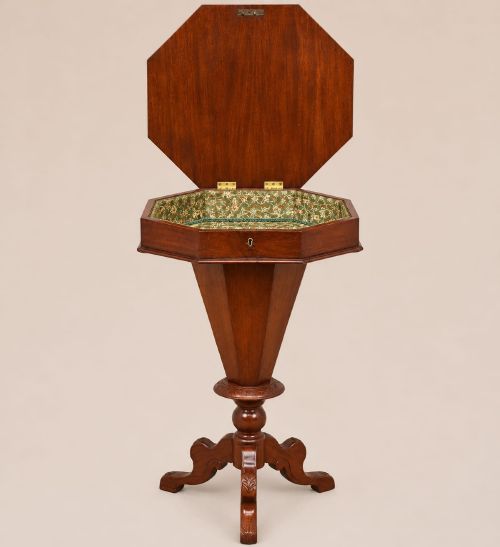
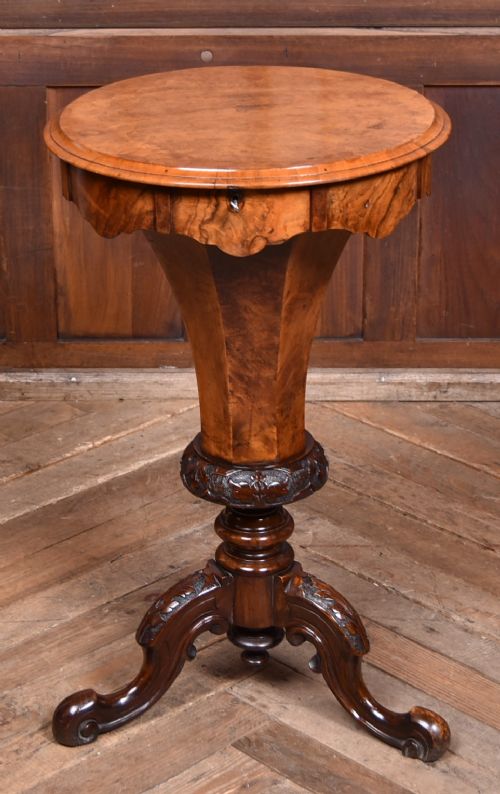
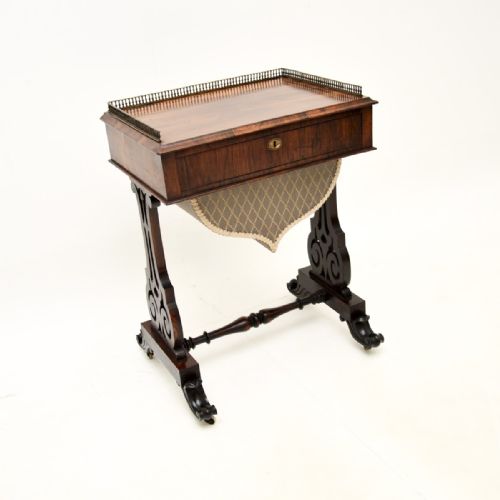
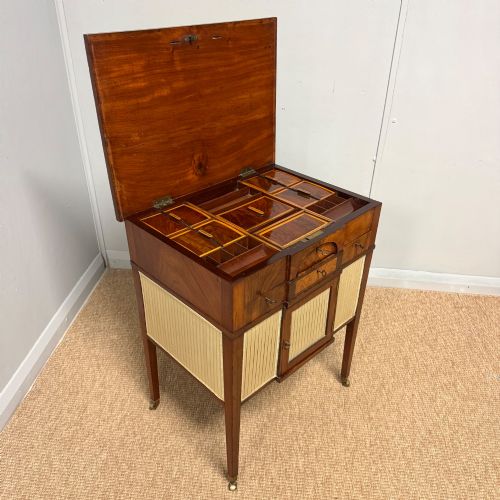
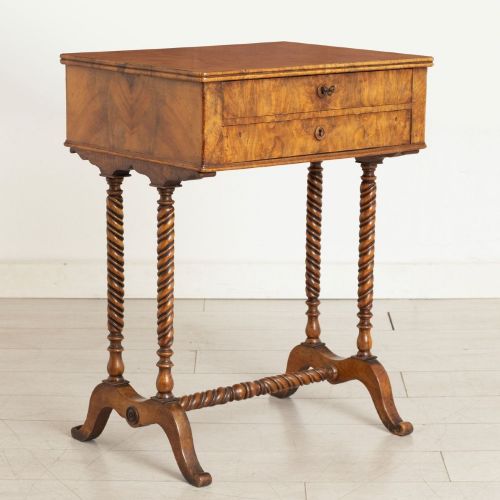
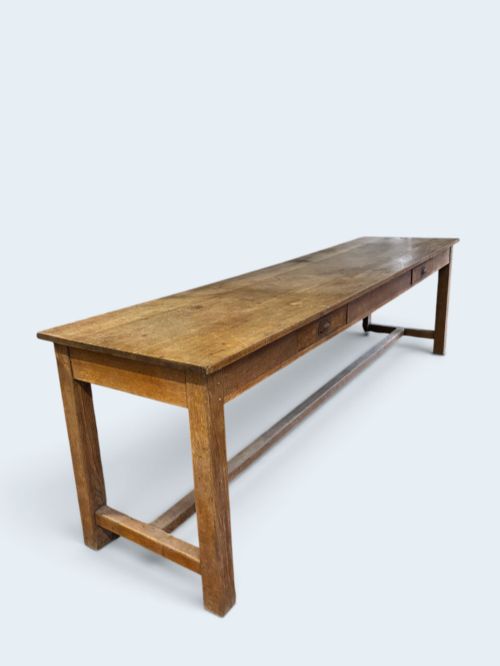
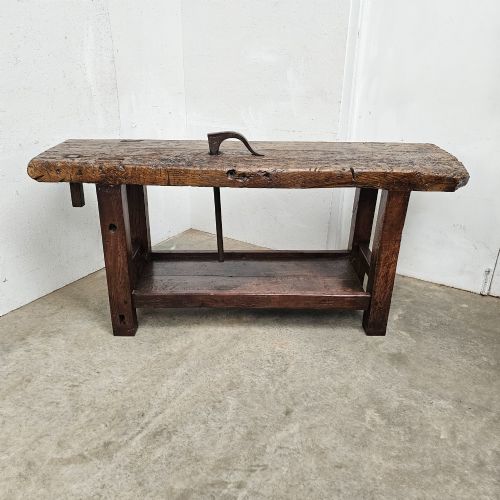
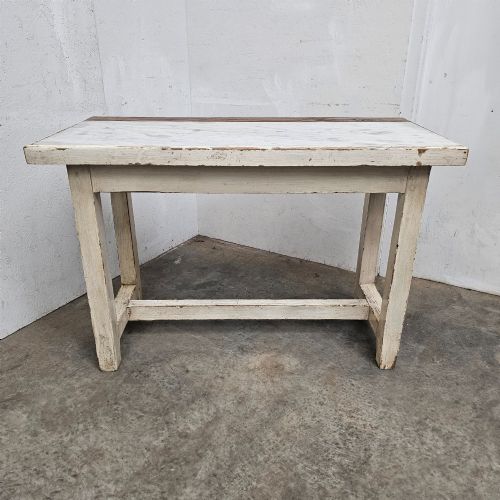
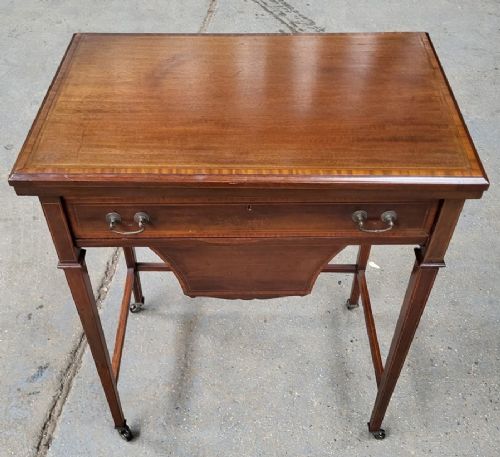
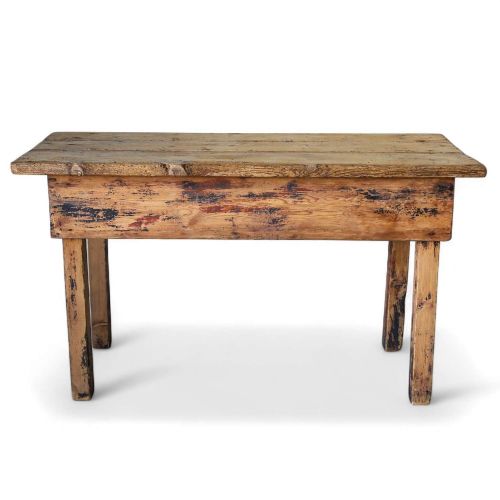
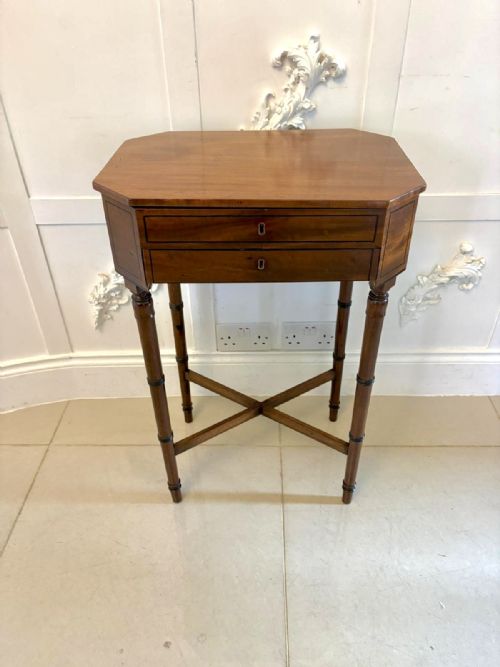
A wood worktable serves as a practical surface designed for specific domestic tasks such as sewing, writing, or food preparation. When searching for a wood worktable, buyers encounter forms ranging from refined Regency and Victorian sewing tables in mahogany and rosewood to sturdy pine, oak, and sycamore farmhouse and prep tables.
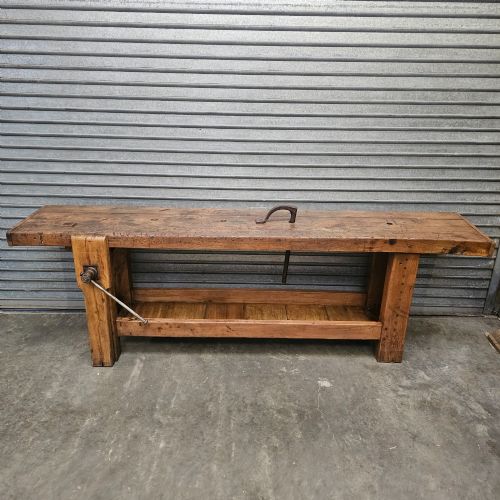
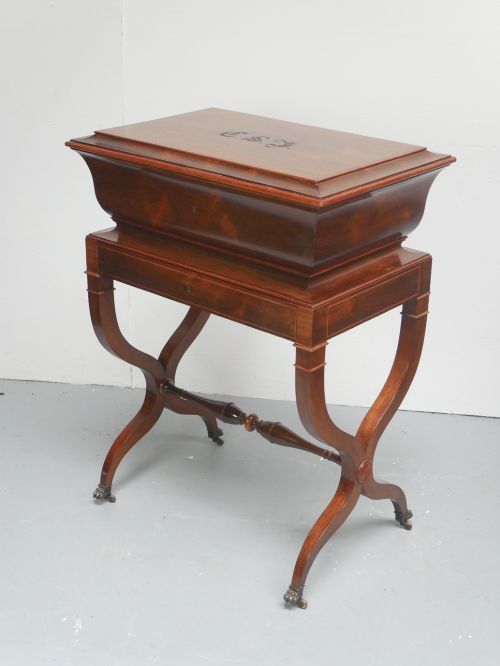
The selection includes specialised pieces featuring internal compartments, drawers, and removable baskets alongside industrial sorting tables and artisans' workbenches. These tables balance utility with decorative character, appearing in domestic spaces as occasional pieces, side tables, or kitchen consoles.
Materials and construction methods
Cabinetmakers utilised fine hardwoods like mahogany, walnut, and rosewood alongside softer timbers such as pine, oak, and sycamore for robust functional surfaces. Construction often involved precise dovetailing for drawers, cross banding for decorative borders, and the integration of brass mounts or clamping bars.
Finishes range from scrubbed timber tops and hand-stripped pine to lacquered surfaces and intricate veneer work. Artisans combined structural stability with refined detailing, incorporating specialised internal fittings for textiles, writing implements, or postal sorting.
Wood Worktable Retail Price Guide 2026
Typical asking prices for wood worktable among the pieces listed under this phrase on Sellingantiques today, from the lower quarter to the upper quarter. They describe what is for sale here now, not the wider market.
Post office sorting tables and butchers' blocks sit comfortably alongside delicate sewing boxes on stands.
Assessing quality in timber tables
Quality rests in the selection of timber, the integrity of the joinery, and the preservation of original fitted interiors or hardware. Tables featuring figured veneers, brass mounts, and well-executed cross banding demonstrate superior craftsmanship.
The distinction between standard utility items and finer pieces lies in the subtlety of the timber grain, the precision of internal storage compartments, and the survival of original patination on scrubbed or polished surfaces.
Lesage·Hennes France
The Wood Worktable Glossary
- Cross banded
- A border technique where thin strips of veneer are laid perpendicular to the grain of the main surface, creating a decorative frame.
- Poudreuse
- A type of dressing or work table featuring a mirror and compartments for cosmetics or sewing equipment.
- Scrub top
- A plain timber tabletop designed to be vigorously scrubbed clean, commonly found on pine and oak kitchen or prep tables.
- Burr walnut
- Timber taken from a tree growth that produces swirling, highly figured grain patterns prized for decorative veneer panels.
- Workbox
- A portable or stand-mounted box fitted with compartments for sewing tools, often elevated on legs to form an occasional table.
Wood Worktable: Frequently Asked Questions
What is a wood worktable used for?
These tables were originally built for specific tasks including sewing, writing, food preparation, and postal sorting. They incorporate internal compartments, drawers, or removable baskets designed to hold tools and materials.
Today, they function as versatile accent pieces in living areas, kitchens, and home offices, providing surface space combined with discreet storage.
How do I identify a Victorian work table?
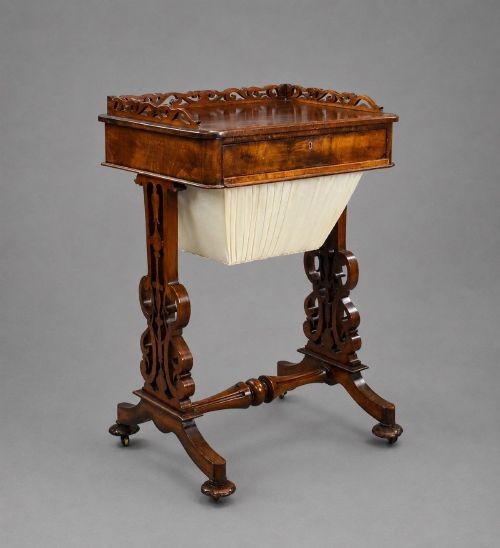
Victorian examples often feature rich timbers like mahogany or burr walnut, sometimes adorned with intricate inlay or drop-down fabric bags for sewing. They frequently date from the nineteenth century and display heavier proportions than earlier Georgian or Regency designs.
Look for functional details such as hinged lids, partitioned drawers, and mounted brass handles characteristic of mid-nineteenth-century domestic furniture.
Are farmhouse tables considered worktables?
Yes, heavy pine, oak, and sycamore tables built for kitchens, charcuterie prep, or craft work form a major category of these functional pieces. They prioritize sturdy construction, scrubbed timber tops, and practical lower shelves or drawers.
These utilitarian pieces offer a rustic aesthetic and robust surfaces suited to daily use in contemporary kitchens and dining spaces.
How should I care for a vintage work table?
Protect antique timber surfaces from excessive moisture, direct sunlight, and heat sources to preserve the original polish and prevent veneer warping. Regular dusting with a soft, dry cloth maintains the finish without chemical buildup.
For scrubbed pine or oak work surfaces, mild soap and water applied sparingly will clean the wood while retaining its historic patination.