

Wood Wine Cooler
A wood wine cooler brings the rich craftsmanship of the eighteenth and nineteenth centuries directly into the dining room.
Wood Wine Cooler
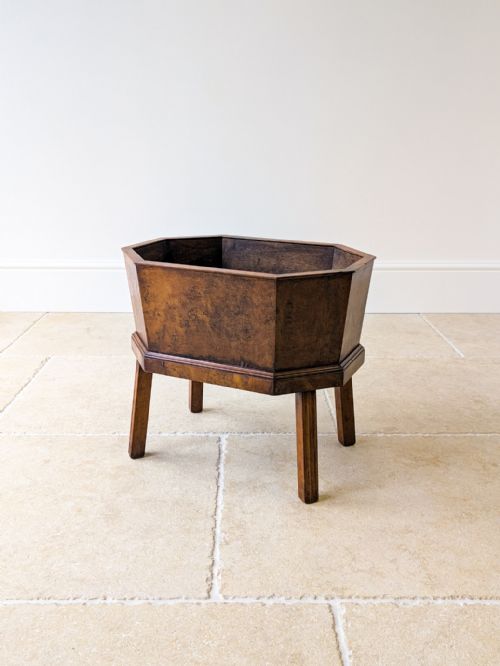
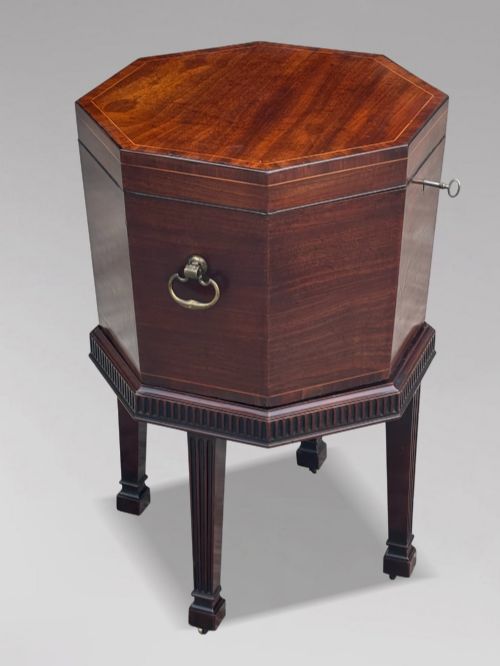
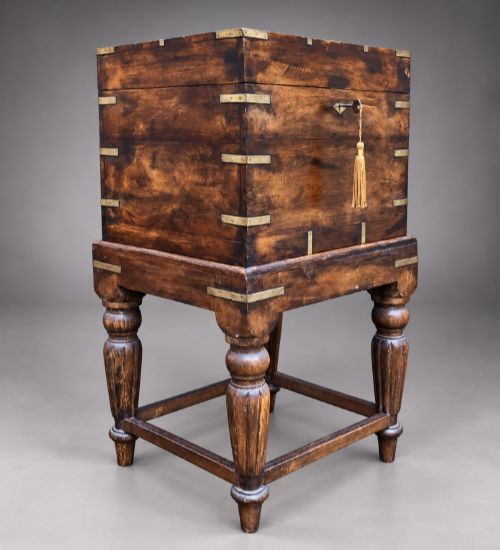
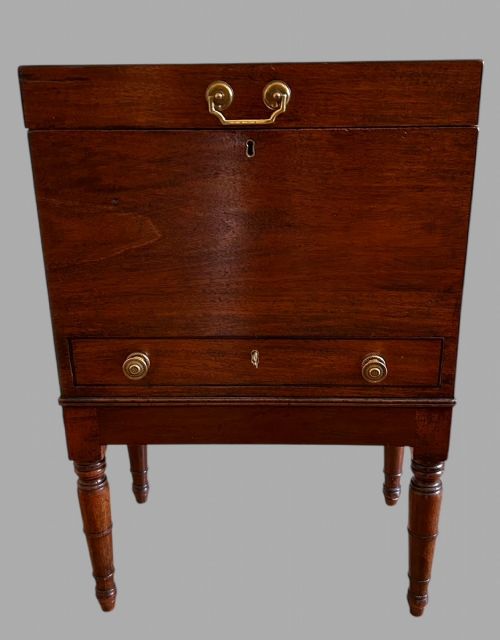
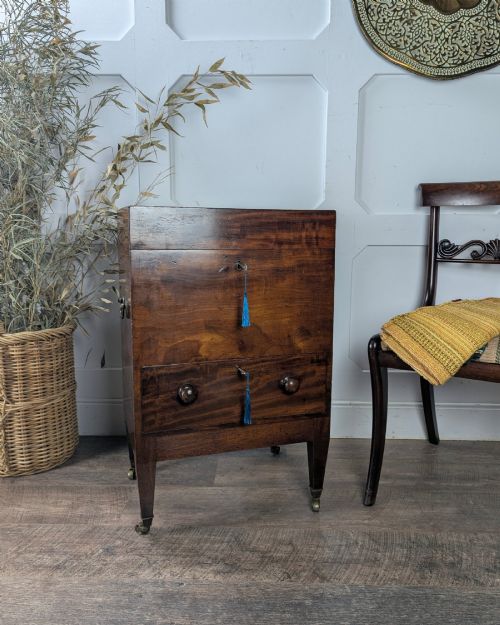
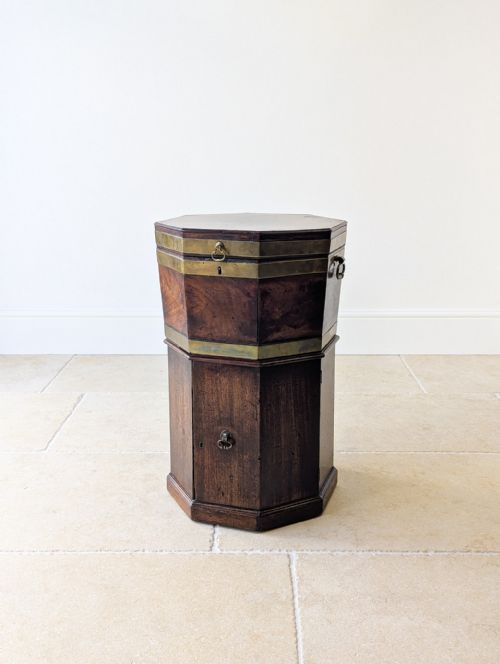
A wood wine cooler, often termed a cellarette, serves as a traditional vessel for chilling and storing bottles during formal dining. The pieces available span the Georgian, Regency, and Victorian eras, alongside Edwardian and later nineteenth-century examples.
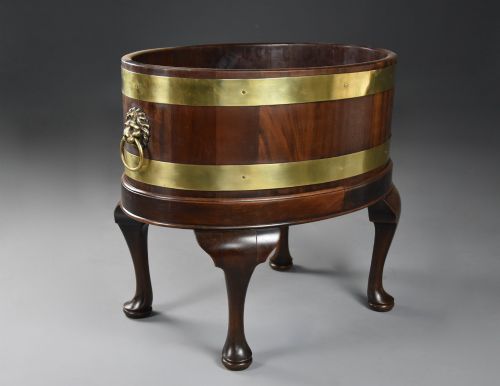
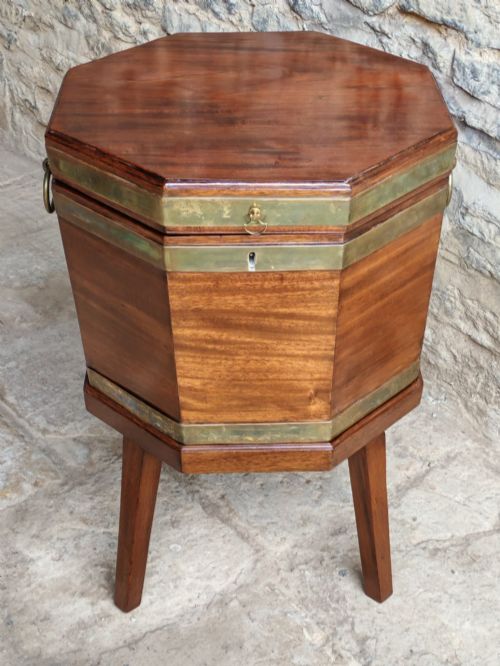
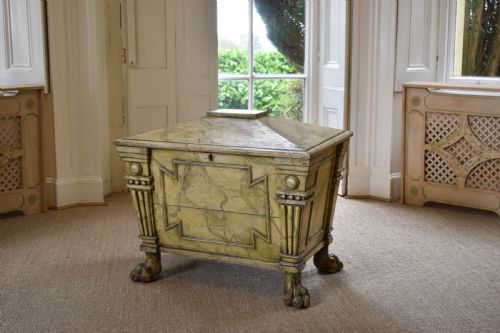
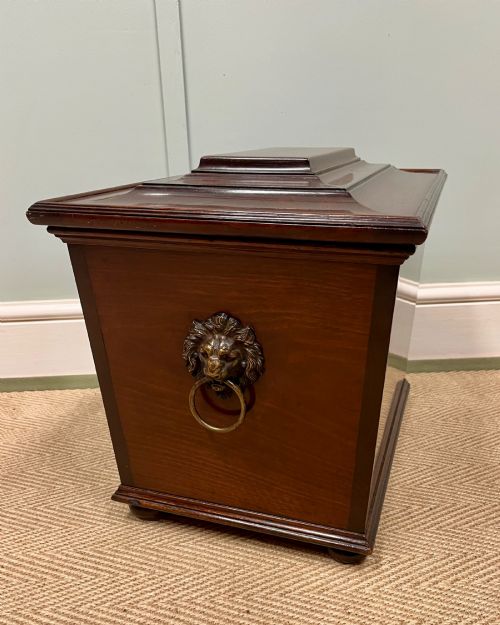
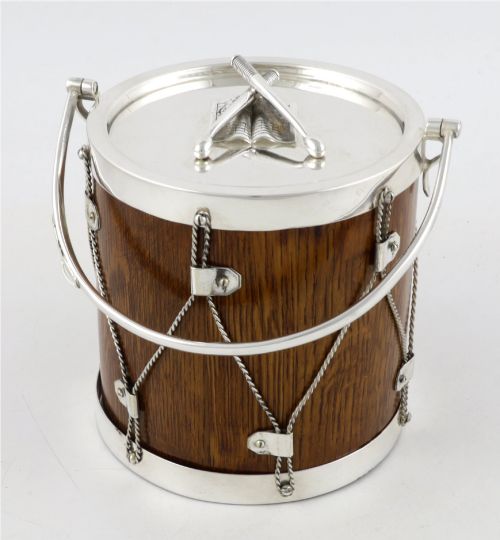
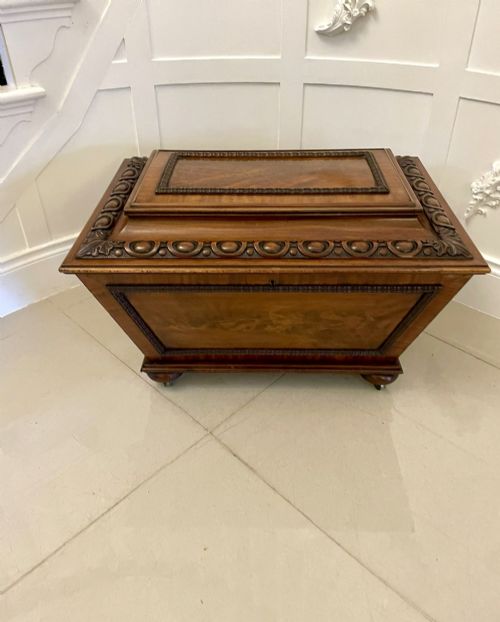
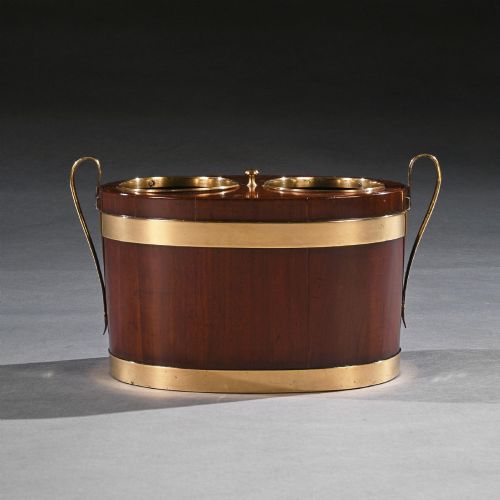
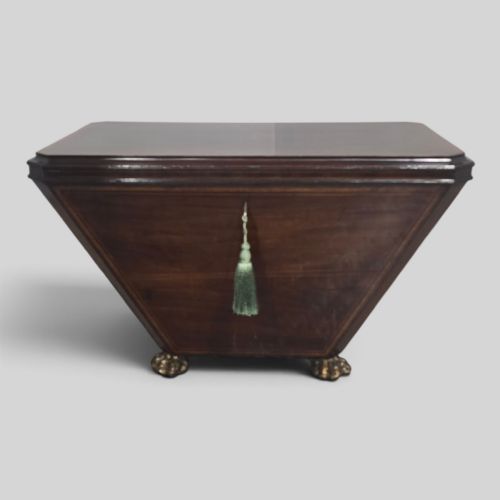
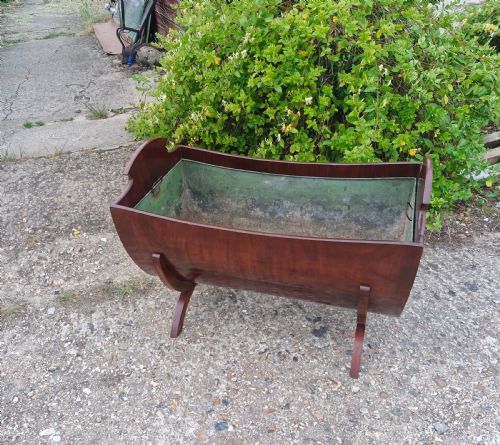
Makers designed these objects in distinct shapes, including octagonal, oval, boat-shaped, and sarcophagus forms, often supported on stands or fitted with drawers. Alongside standard wine storage, related utilitarian forms such as peat buckets, tea stoves, and log baskets appear in the selection.
Mahogany dominates the material record, frequently paired with contrasting timbers like walnut, satinwood, and boxwood inlay. Brass bands, metal liners, and silver plating complete the construction of these functional dining room furnishings.
Design and execution
Quality rests in the precision of the timber selection, where highly figured mahogany and skilful book-matching elevate a piece above standard utility items. The integration of complex joinery, such as tightly fitted coopered staves and dovetailed drawers, distinguishes superior workshops.
Hardware execution further defines the tier of a piece, with heavy cast brass bands, original handles, and intact metal liners indicating higher standards of production. Attributed makers and sophisticated inlay schemes demonstrate the elevated skill applied to select commissions.
Wood Wine Cooler Retail Price Guide 2026
Typical asking prices for wood wine cooler among the pieces listed under this phrase on Sellingantiques today, from the lower quarter to the upper quarter. They describe what is for sale here now, not the wider market.
The selection includes pieces spanning the Georgian, Regency, Victorian, and Edwardian periods, constructed primarily in mahogany, oak, and walnut.
Edwards and Roberts·Gillows·Freemans of Norwich
The Wood Wine Cooler Glossary
- Cellarette
- A lockable container used for holding wine bottles near the dining table. They frequently feature lead or zinc linings to hold ice.
- Coopered
- Built from vertical staves of wood bound together with metal or wood hoops, similar to barrel construction. This technique provided the watertight integrity needed for ice and bottle storage.
- Sarcophagus
- A monumental chest form with a domed lid, popular during the Regency and Georgian periods for large wine coolers. These pieces often rest on carved paw feet or plinth bases.
- Peat bucket
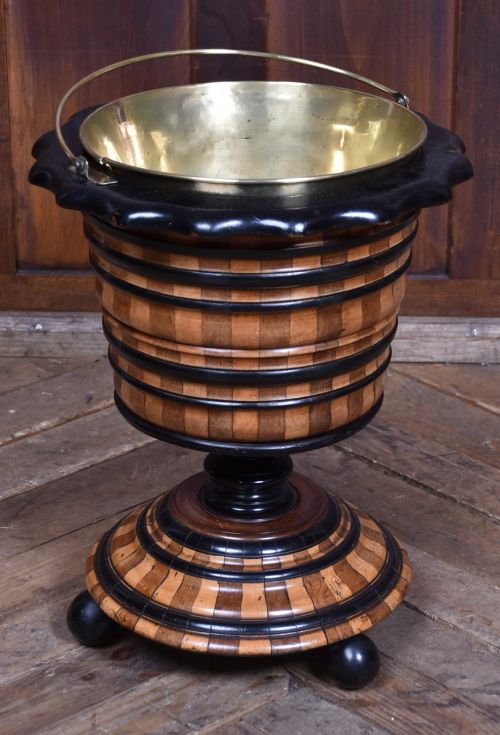
- A traditional wooden container designed to hold dried peat for fuel, constructed with stave work and brass carrying handles. They frequently share forms with contemporary wine coolers.
- Jardiniere
- An ornamental pot or stand designed to hold growing plants or flowers. In this context, coopered wooden buckets often served this secondary domestic function.
Wood Wine Cooler: Frequently Asked Questions
What is a wood wine cooler used for?
These pieces held wine bottles and ice close to the dining table during formal meals. Servants placed bottles inside the lined interior to keep them cool before serving.
Over time, owners adapted them for various domestic storage needs, including logs, blankets, or peat. Today, collectors utilise them as decorative side tables or freestanding focal points in reception rooms.
Where should I place a cellarette in my home?
A cellarette suits a dining room, hallway, or drawing room where its timber grain and brass details can be appreciated. Freestanding versions with stands work well positioned beside a sideboard or fireplace.
Because many examples include interior metal liners, they function practically as plant stands or drinks storage units. Keeping them away from direct heat sources protects the antique wood and historic joinery.
What are peat buckets and tea stoves?
Peat buckets are coopered wooden vessels originally made to transport and store peat fuel for household hearths. They share construction methods and materials with traditional wine coolers.
Tea stoves, or peat stoves, served to keep water warm or provide localized heat in domestic spaces. Their similar construction and appearance often lead to them being grouped with wine storage boxes.