

Wood Wine Chest
A wood wine chest is a heavy timber repository built to keep bottles cool and safe.
Wood Wine Chest
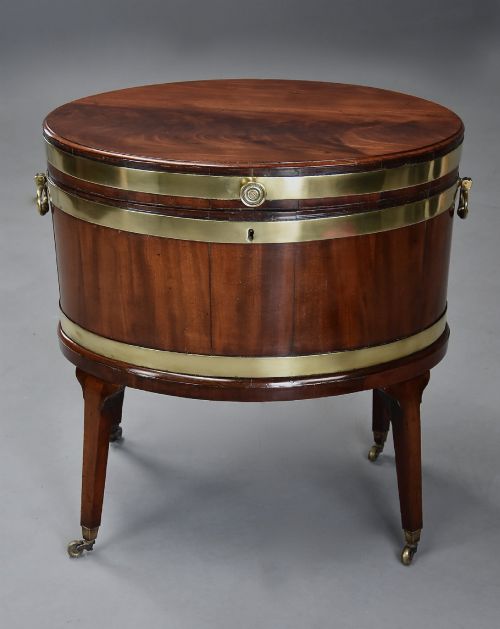
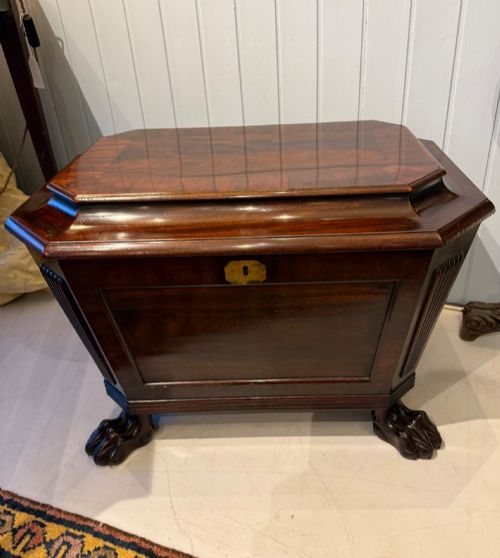
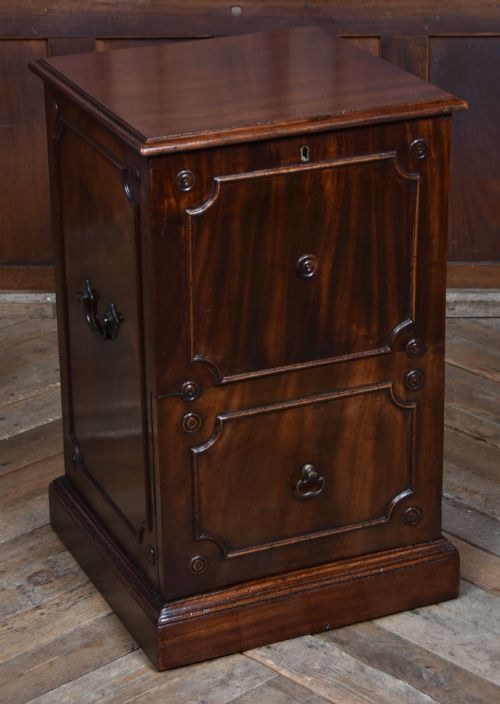
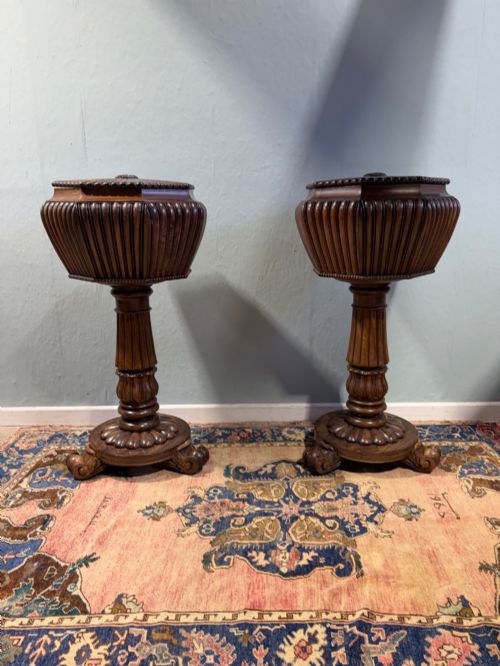
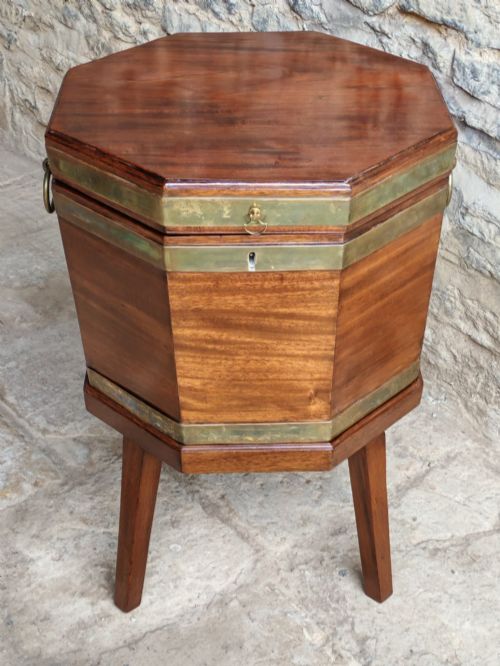
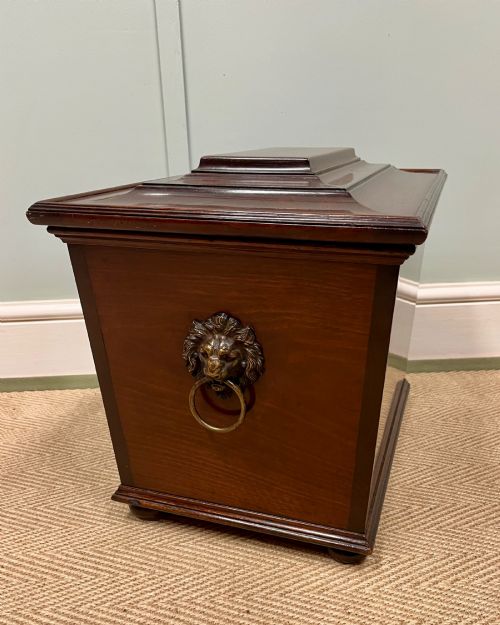
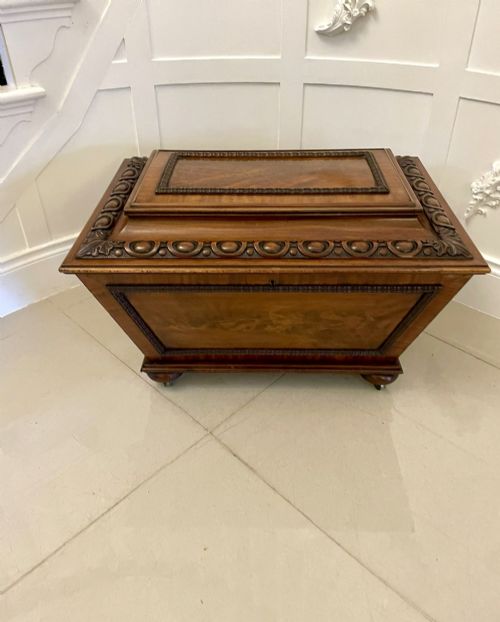
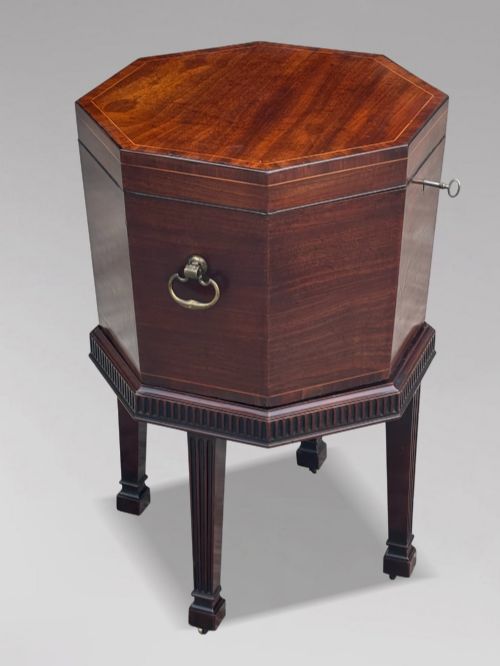
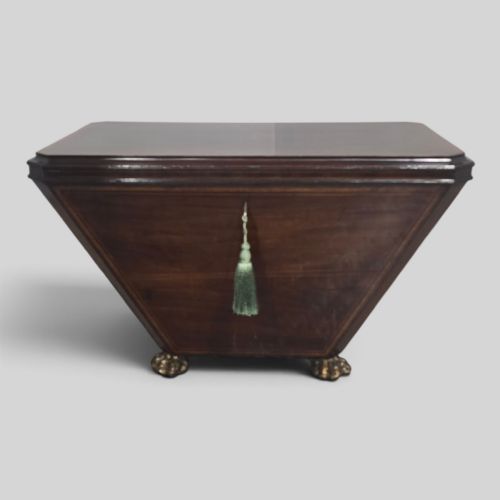
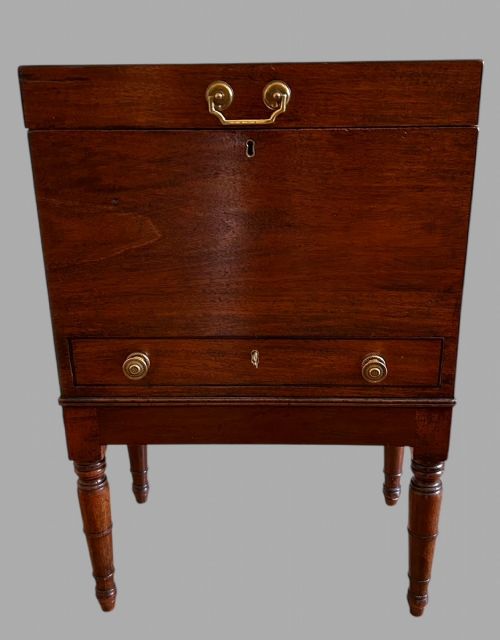
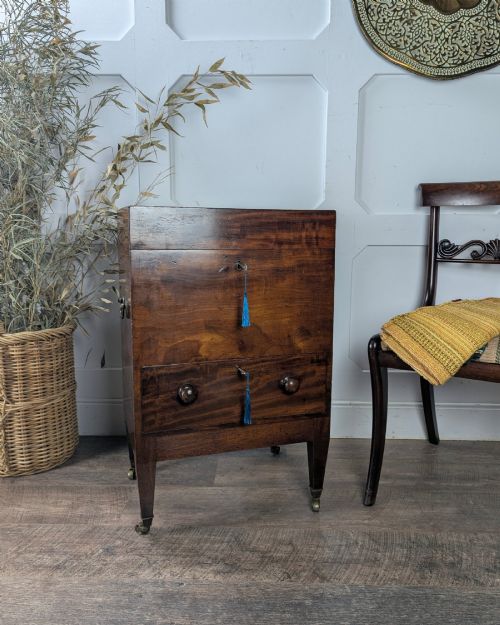
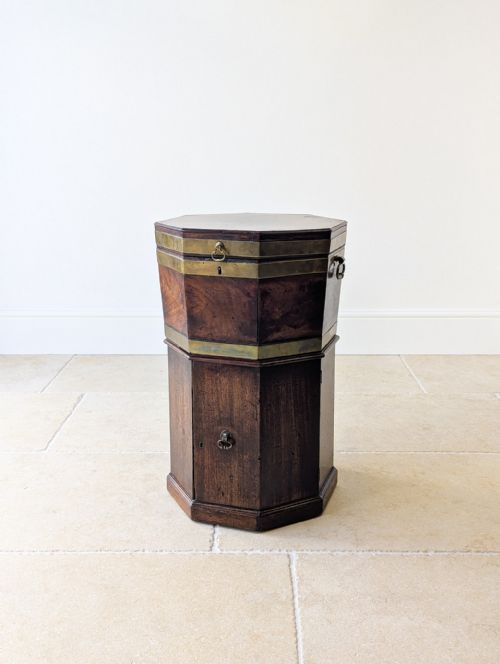
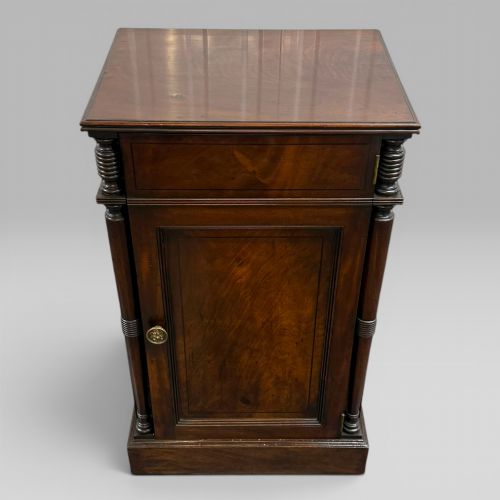
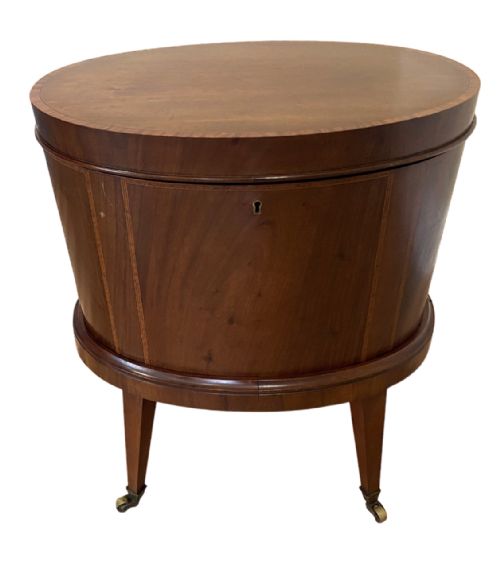
A wood wine chest is principally represented here by cellarettes and wine coolers originating across the Georgian, Regency, and Victorian eras. These containers take various geometric and classical profiles, including octagonal, oval, and sarcophagus forms.
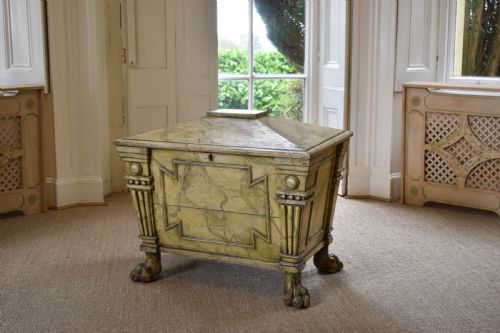
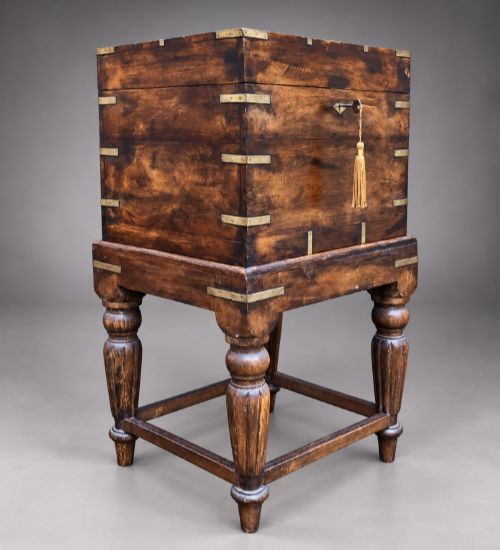
Makers constructed these pieces in mahogany, walnut, teak, and satinwood, frequently augmenting the timber with brass bands and boxwood stringing. Certain specimens arrive on dedicated stands or feature carved paw feet for floor placement.
The assortment spans traditional English cabinet-making alongside Anglo-Indian interpretations. Buyers encounter compact storage boxes as well as massive freestanding receptacles designed for formal dining rooms.
Materials and construction methods
Cabinet-makers relied heavily on figured and solid mahogany, framing the heavy timber with dovetail joints to withstand the weight of liquid and ice. Brass strapping and corner brackets were applied both for structural reinforcement and visual contrast.
Inlaid versions incorporate satinwood, boxwood, and various contrasting veneers to create geometric or floral patterns across the lid and sides. Interiors often retain lead linings or compartments intended to separate individual bottles.
Wood Wine Chest Retail Price Guide 2026
Typical asking prices for wood wine chest among the pieces listed under this phrase on Sellingantiques today, from the lower quarter to the upper quarter. They describe what is for sale here now, not the wider market.
Some nineteenth-century models double as plate-warmers or fireside storage boxes for restless evenings.
Assessing quality in timber and detail
Superior examples display exceptional figure in the mahogany or burr elm, where the grain runs smoothly and matches across the panels of the chest. The crispness of hand-carved details, such as paw feet or reeded mouldings, distinguishes master workshops from standard production.
The integrity of internal lead linings, original brass carrying handles, and functional locking mechanisms heavily influence the standing of a piece. Finer specimens retain their original fitted interiors rather than relying on later alterations.
Edwards and Roberts·Gillows·Gillingtons·Freemans of Norwich·Maples and Co
The Wood Wine Chest Glossary
- Cellarette
- A lockable timber chest or box designed to hold bottles of wine near the dining table. They frequently include internal divisions and metal linings for ice.
- Sarcophagus form
- A monumental container shape with a domed lid and tapered body, popular during the Regency period. This classical silhouette draws inspiration from ancient stone tombs.
- Brass bound
- A method of securing heavy wood containers using metal straps around the circumference. This technique adds structural strength and creates a distinct decorative contrast with dark timber.
- Boxwood inlay
- The practice of embedding thin strips of pale boxwood into contrasting darker wood surfaces. Cabinet-makers used this technique to outline panels and accentuate geometric shapes.
Wood Wine Chest: Frequently Asked Questions
What is a wood wine chest used for?
These pieces served as portable or freestanding bottle stores in dining rooms before built-in cellars became common.
Today they function as decorative storage boxes, side tables, or specialised holders for contemporary collections.
How do I identify a Georgian wood wine chest?
Georgian examples often feature octagonal or oval shapes with brass bands and straight tapered legs or simple plinths.
They rely on rich mahogany timbers and restrained classical proportions rather than the heavy ornamentation seen later in the century.
Are original interiors common?
Many pieces retain their original lead linings, lead-lined divisions, or fitted wooden trays designed to cradle individual bottles.
Subsequent alterations or missing internal components occur frequently due to the damp conditions these containers endured.
How do I care for antique mahogany?
Keep timber pieces away from direct heat sources and extreme humidity fluctuations to prevent the wood from splitting.
Apply a traditional wax polish occasionally to nourish the grain and maintain the natural sheen of the surface.