

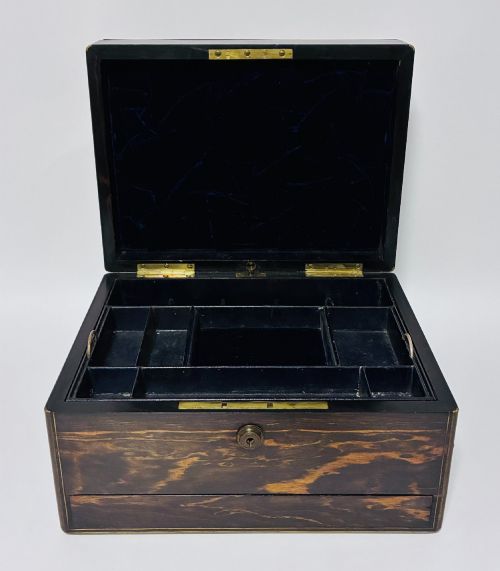
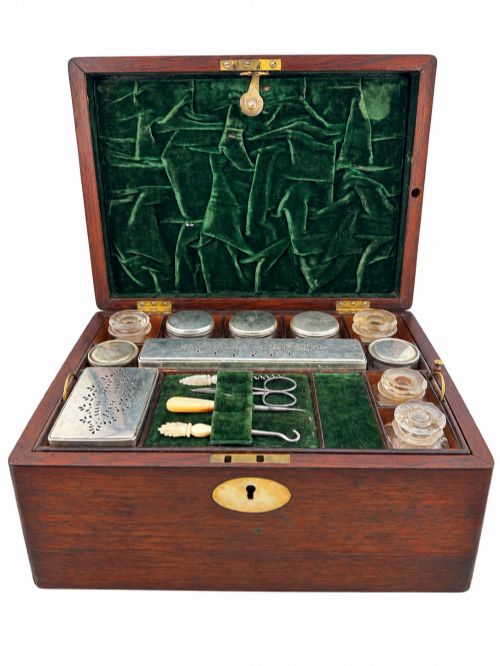
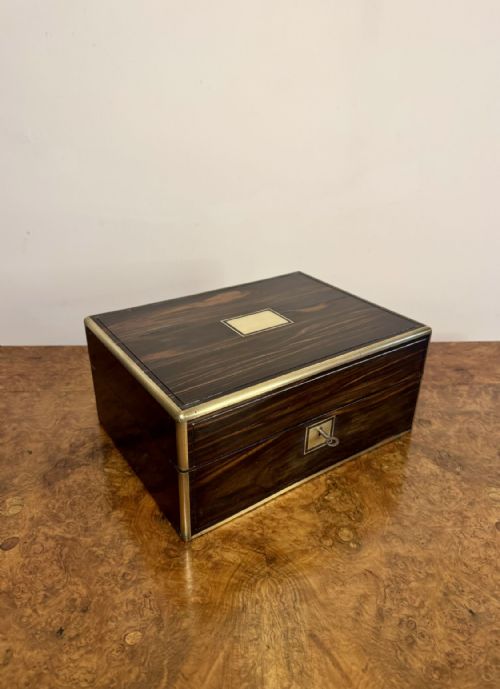


Wood Vanity Case
These wood vanity cases are heavy, fitted travelling boxes from the nineteenth century in coromandel and rosewood, built to hold personal treasures.
Wood Vanity Case
A wood vanity case is a substantial nineteenth-century box designed for personal grooming items, jewellery, and scent bottles during travel or home use. When exploring these pieces, a buyer is looking at sophisticated containers from the Victorian era alongside select Chinese Export and Qing Dynasty examples.
The most common version met on this page is the Victorian coromandel or rosewood vanity box, often featuring brass stringing and a fitted interior with glass bottles. These pieces combine practical storage with decorative presence, functioning as dressing boxes, jewellery caskets, and scent bottle cases.
Origins span English workshops, French makers, and Chinese production, reflecting the global reach of nineteenth-century craftsmanship. The forms range from simple keepsake cases to elaborate combinations containing secret drawers and crystal cut bottles.
How they were made
Construction relies heavily on dense exotic hardwoods such as coromandel and rosewood, chosen for their rich grain and durability. Artisans paired these timbers with brass mounts, locks, and stringing to reinforce the corners and edges of the carcass.
Interiors required meticulous carpentry to create fitted compartments, secret drawers, and dedicated recesses for glass scent bottles and silver plated fittings. Linings of velvet completed the interior architecture, protecting delicate items during transit.
Wood Vanity Case Retail Price Guide 2026
Typical asking prices for wood vanity case among the pieces listed under this phrase on Sellingantiques today, from the lower quarter to the upper quarter. They describe what is for sale here now, not the wider market.
Listings feature Victorian pieces predominantly, spanning the 1860s to the 1880s, alongside Chinese Qing Dynasty and French fruitwood examples.
What varies in quality
The standard of a wood vanity case is determined by the selection of timber and the precision of the internal fittings. Dense coromandel grain and complex internal arrangements with original crystal cut bottles and working keys mark out the superior examples.
Maker attribution elevates a piece significantly, particularly when associated with established London firms like Asprey, H Mitchell, or Edwards. The integration of secret drawers and intact velvet linings further distinguishes fine workshop output from standard commercial boxes.
H Mitchell·Asprey·Edwards
The Wood Vanity Case Glossary
- Coromandel wood
- A dense, heavily figured timber from Asia, prized in the nineteenth century for luxury boxes and dressing cases. Its dark brown colour and striking black grain make it highly distinctive.
- Rosewood
- A heavy, durable timber with a deep reddish-brown hue and dark figuring, frequently utilised for Victorian jewellery and vanity boxes. It takes a high polish and provides a stable carcass.
- Tantalus
- A locking beverage or scent bottle holder that displays the contents while preventing unauthorised access. In these listings, it appears as a combination scent bottle and jewellery casket.
- Hongmu
- A traditional Chinese term for dense, dark hardwoods, seen in nineteenth-century travelling boxes. It describes durable exotic timbers used in Qing Dynasty cabinet work.
- Scent bottle casket
- A specialist fitted box designed specifically to secure glass perfume bottles and crystal containers during travel. These often include matching stoppers and cut glass bodies.
Wood Vanity Case: Frequently Asked Questions
What is inside a wood vanity case?
These boxes typically contain fitted interiors with compartments for jewellery, grooming tools, and cut glass bottles. Many include secret drawers and removable trays.
Some examples also incorporate spaces for writing implements or sewing gear, reflecting their multi-purpose use on nineteenth-century journeys.
How do I date a wood vanity case?
Dating relies on timber choices, brass hardware styles, and construction techniques characteristic of the nineteenth century. Victorian examples often feature stamped brass locks and meticulous coromandel or rosewood veneers.
Makers' marks or engraved brass plaques inside the lid provide more precise chronological anchors when present.
Were these boxes meant for travel?
Travelling vanity cases were built robustly with heavy timber carcasses and brass carrying handles or corner mounts to withstand movement. Their secure locks and fitted bottles ensured personal items remained safe on coaches and trains.
Despite their travel function, many spent their lives stationed on dressing tables in grand bedrooms.
What is coromandel wood?
Coromandel is an Asian hardwood known for its dramatic dark stripes against a rich brown background. It was favoured by nineteenth-century box makers for high-end luxury pieces.
Its scarcity and difficult working properties meant it was reserved for the finest dressing boxes and caskets.