



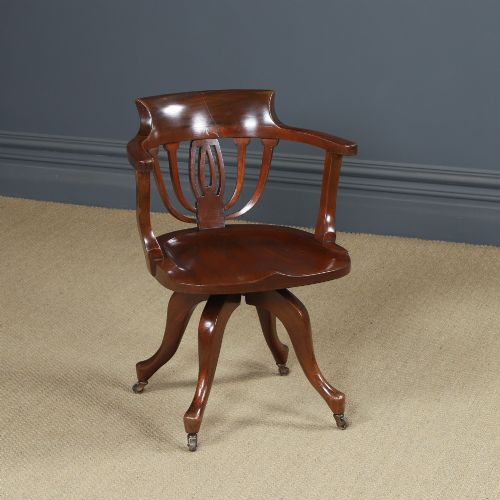

Wood Swivel Chair
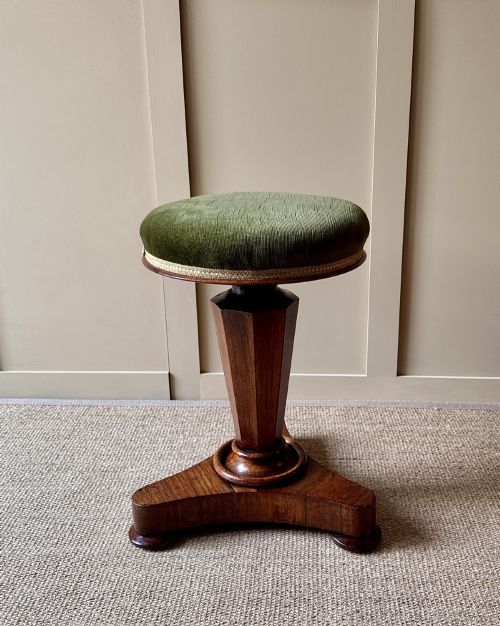
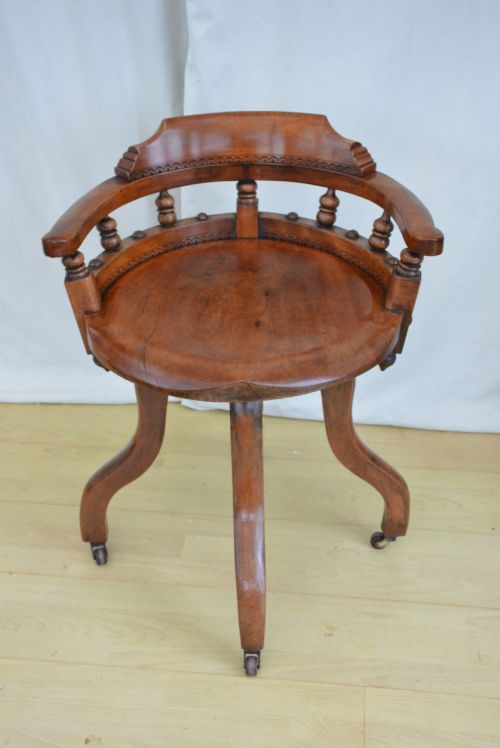
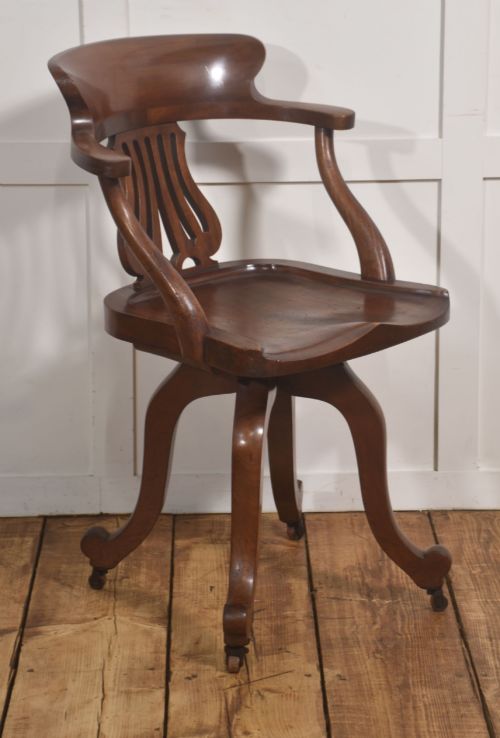
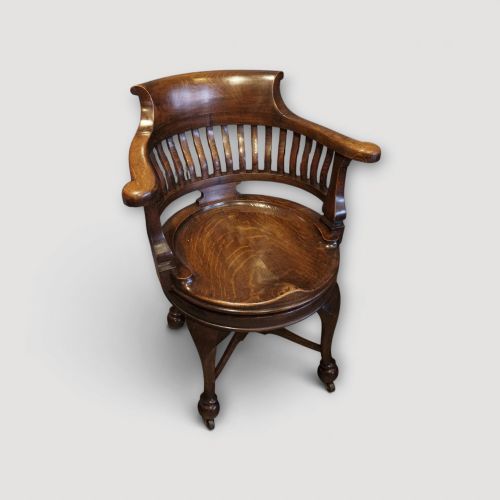
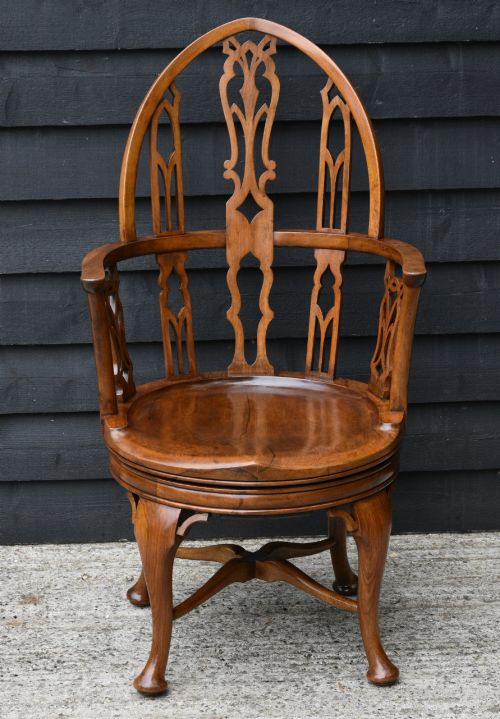
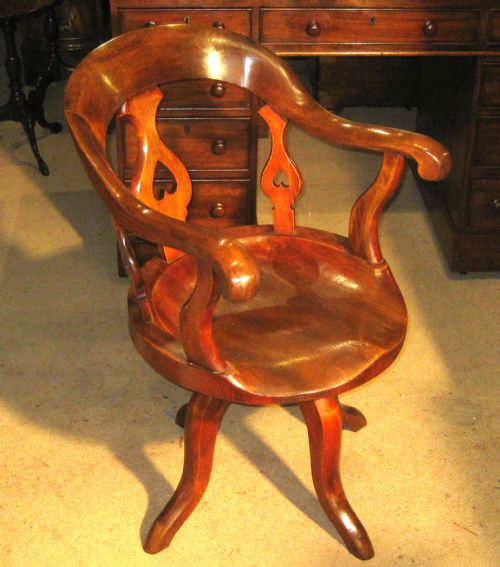
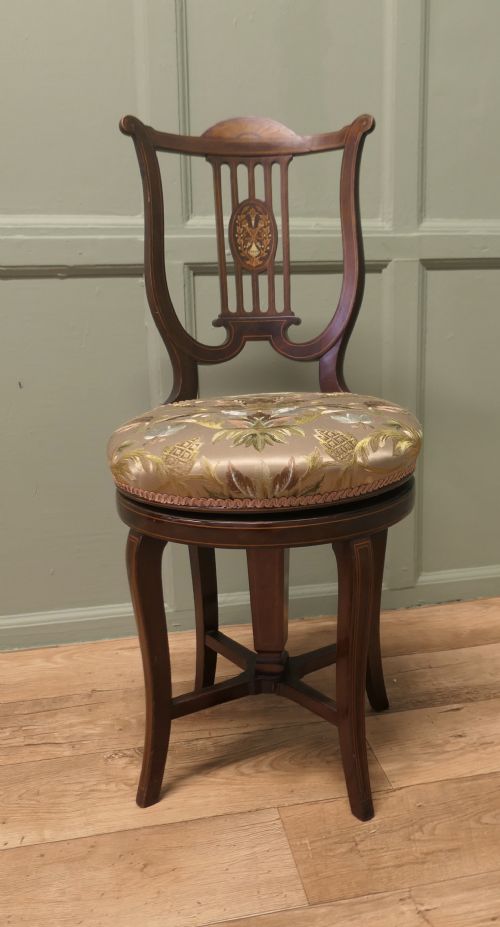
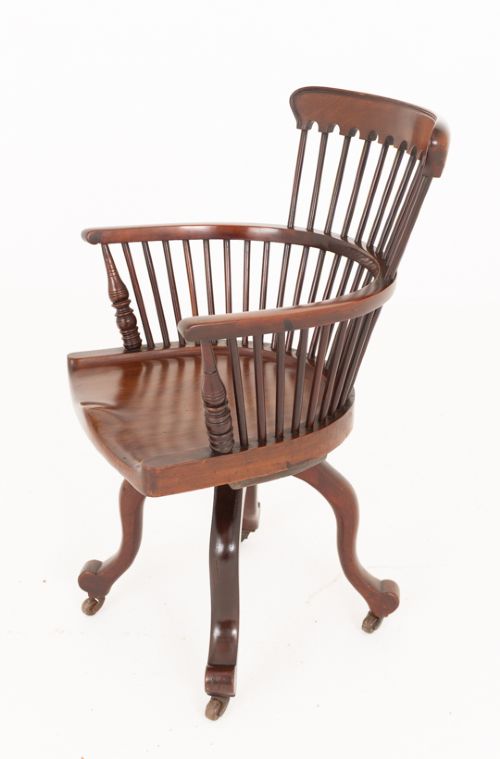
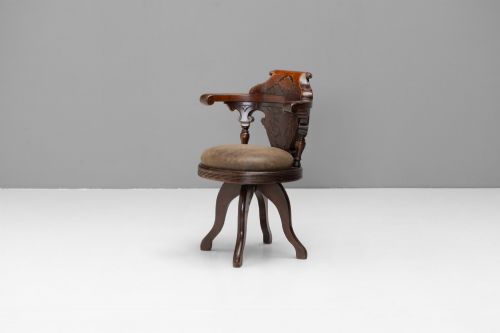
A wood swivel chair provides an adjustable and responsive seat, combining functional mobility with period character for the study or music room.
Wood Swivel Chair
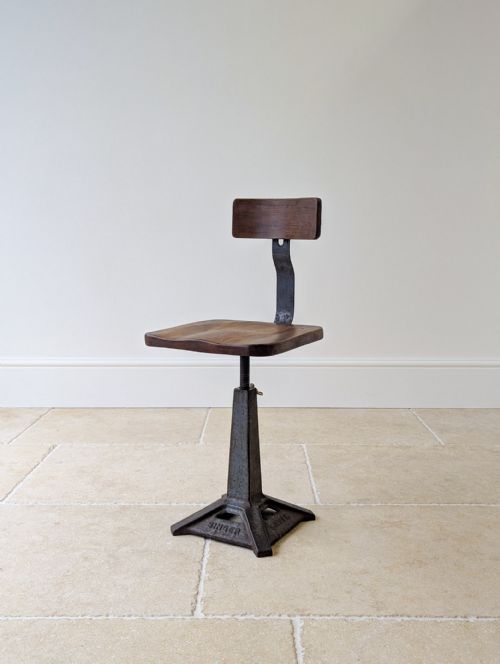
The selection ranges from robust mahogany office seating and oak revolving desk chairs to rosewood, walnut, and elm piano stools designed with adjustable mechanisms. Industrial machinist stools and bar stools also appear, alongside specialised forms such as harpist chairs and ships chairs.
These pieces draw on periods including the Regency, Victorian, and Edwardian eras, as well as later Art Deco and industrial designs. Such seating reflects the evolving demands for comfort and utility in both domestic parlours and commercial offices during the nineteenth and early twentieth centuries.
Materials and Construction
Makers utilised dense hardwoods such as mahogany, oak, walnut, and rosewood for the primary frames and revolving mechanisms of the desk chairs and music stools. Elm and padouk also feature alongside papier-mâché, ebonised finishes, and bentwood in specific stylistic examples.
Structural stability relied on iron, brass, and cast iron components, particularly within the swivel mechanisms, rise-and-fall adjustments, and industrial stool bases. Seating surfaces frequently incorporate leather, fabric, or cane work such as bergere to complement the turned and carved wood structures.
Wood Swivel Chair Retail Price Guide 2026
Typical asking prices for wood swivel chair among the pieces listed under this phrase on Sellingantiques today, from the lower quarter to the upper quarter. They describe what is for sale here now, not the wider market.
Assessing the Craftsmanship
Quality rests in the precision of the turning, the carving detail of the woodwork, and the mechanical integrity of the swivel or adjustable height mechanism. Pieces by established makers exhibit superior joinery and refined proportions compared to standard utilitarian workshop output.
The choice of primary timber and secondary materials dictates the refinement of the piece, with figured mahogany, rosewood, and walnut marking out the finer examples. Original brass hardware, smooth-operating iron pivots, and intact leather or fabric upholstery further distinguish the upper tier of surviving chairs.
Jennens & Bettridge·Thonet·Gillows·James Shoolbred
The Wood Swivel Chair Glossary
- Revolving desk chair
- A revolving desk chair is a seat fitted with a central pivot that allows the upper portion to turn full circle while supporting the user at a writing table.
- Rise and fall piano stool
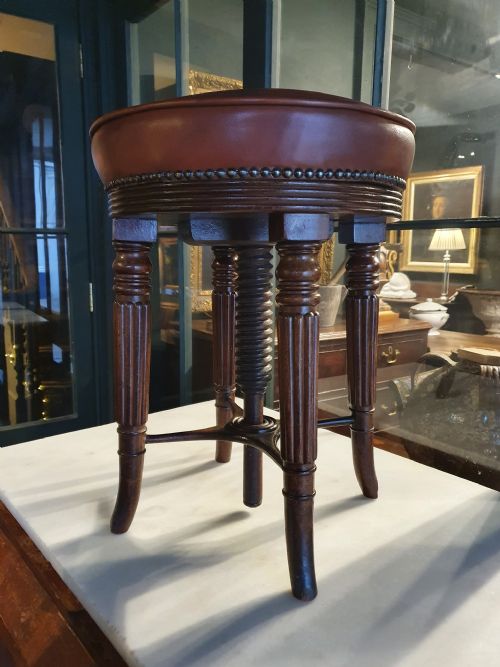
- A rise and fall piano stool is an adjustable seat that employs a threaded wooden screw or mechanical scissor action to alter the height for the musician.
- Machinist chair
- A machinist chair is an industrial seat combining a cast iron base with a wooden top, built for factory or workshop use during the early twentieth century.
- Bentwood
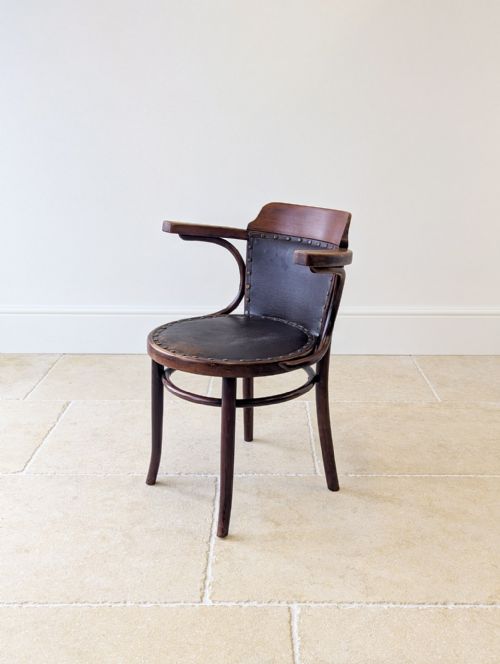
- Bentwood refers to furniture shaped by steaming or soaking timber until flexible, then bending it into curved forms as seen in Edwardian desk seating.
- Bergere
- Bergere denotes a wooden-framed chair or stool featuring woven cane panels inset into the back or seat frame.
Wood Swivel Chair: Frequently Asked Questions
How do I adjust the height on an antique piano stool?
Many antique piano stools utilise a central wooden screw mechanism that raises or lowers the seat when turned by hand. Others employ side levers or rack-and-pinion systems concealed beneath the upholstered top.
Care should be taken not to force the mechanism past its maximum extension. Regular gentle use and occasional lubrication of the moving parts keep the adjustment smooth.
What is the difference between a desk chair and a music stool?
Desk chairs typically feature a supportive backrest and arms designed for prolonged sitting at a writing surface. Music stools and piano stools are generally backless or feature low harpist rests, prioritising freedom of movement for the arms while playing.
Both forms often share swivel actions, but their proportions and ergonomic designs reflect their distinct original functions in the Victorian home.
Can I use an antique swivel chair at a modern desk?
Many antique revolving desk chairs fit standard modern desk heights, though older seats can sit lower than contemporary office furniture. Checking the exact clearance from the floor to the underside of the chair arms is advisable.
Adding discreet floor glides or ensuring the castors roll properly helps protect modern flooring while integrating the chair into a daily workspace.
How do I date a wood swivel chair?
Dating relies on identifying the prevailing style, timber choices, and mechanical patent types visible in the construction. Victorian and Edwardian examples often display characteristic turning, upholstery tacks, or cast iron base stamps.
Comparing the joinery methods and hardware against known period production helps narrow the manufacture down to a specific decade or era.