



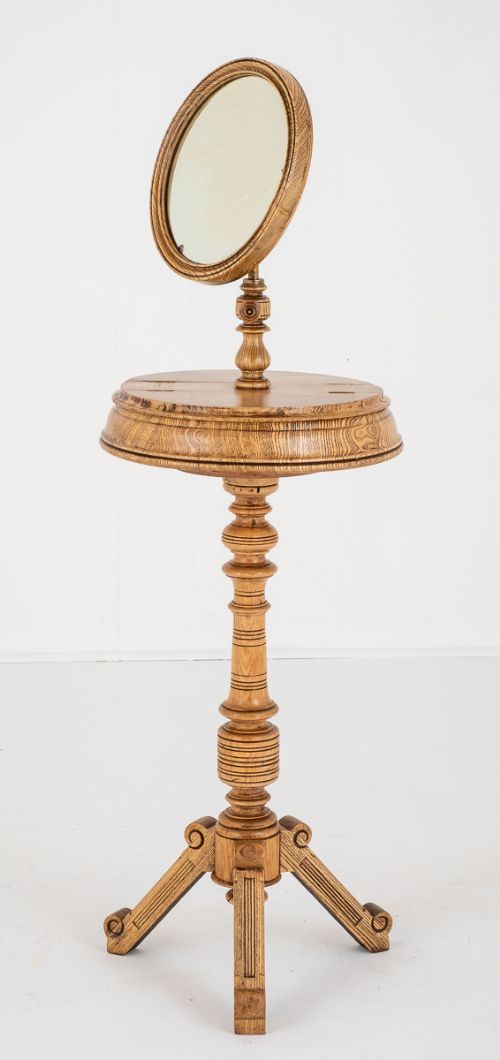

Wood Shaving Mirror
A wood shaving mirror is a practical piece of personal grooming furniture that brings period character to a modern bathroom or bedroom.
Wood Shaving Mirror
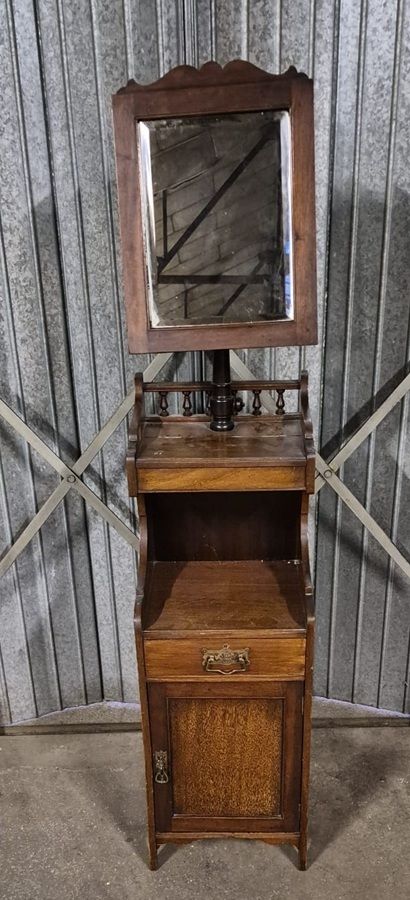
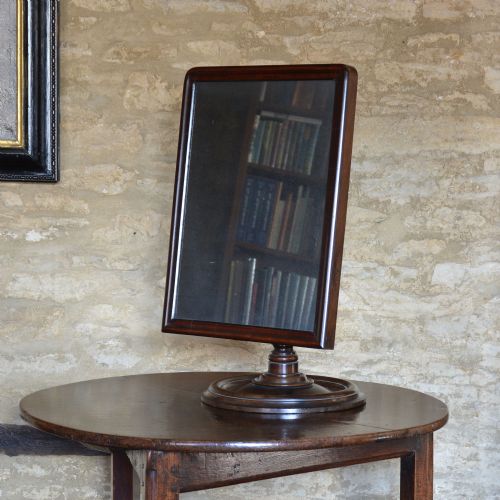
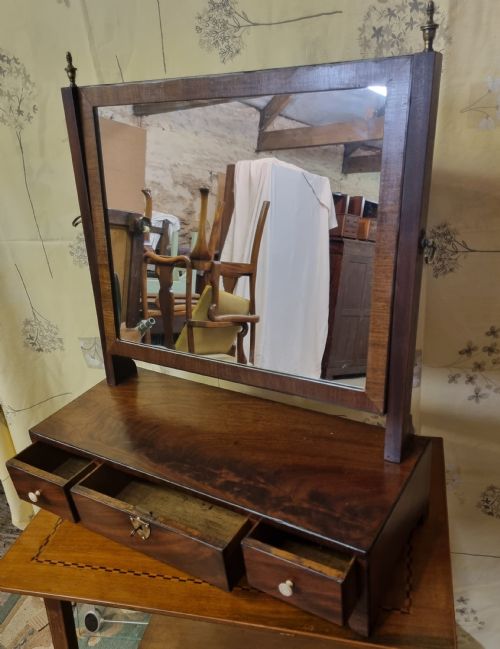
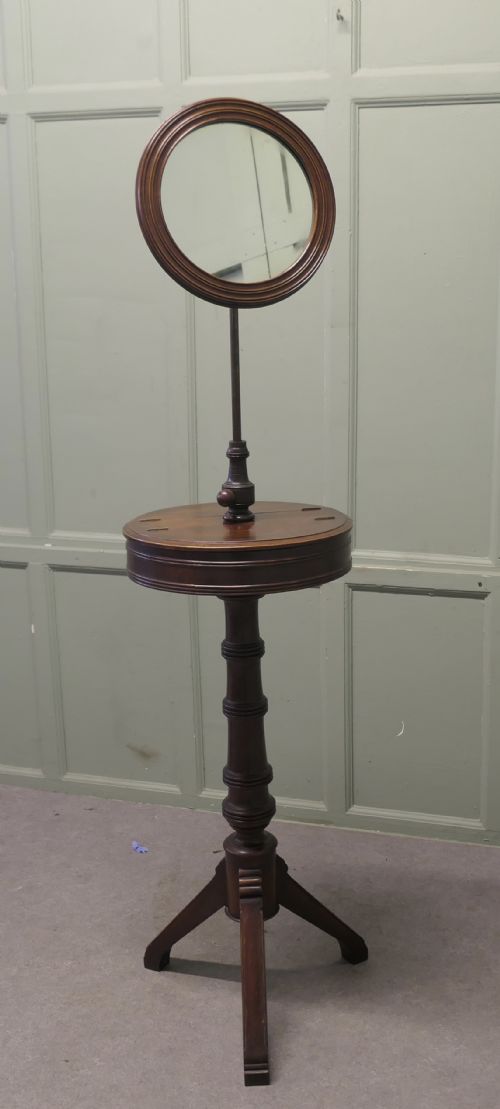
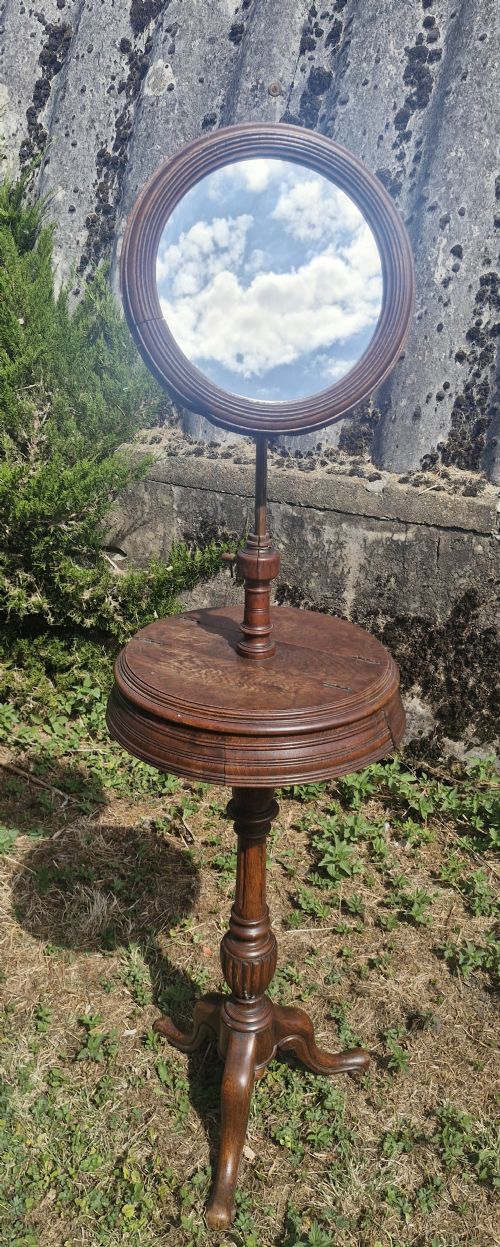
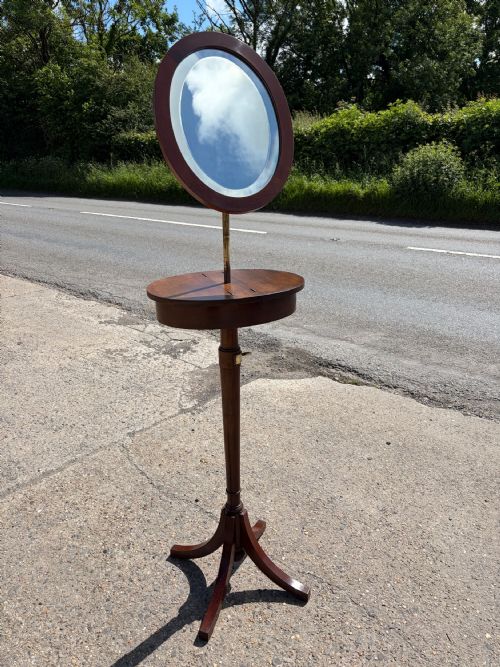
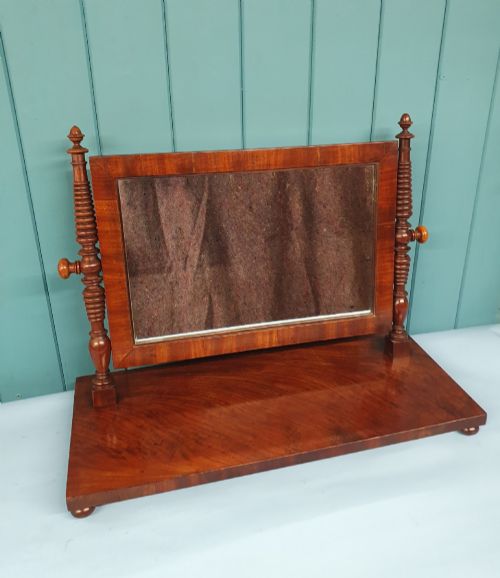
A wood shaving mirror is designed for daily grooming, combining a reflective glass plate with a wooden frame, stand, or cabinet. When you search for a wood shaving mirror, you encounter forms ranging from portable campaign kits to tall standing stands and tabletop toilet mirrors.
The selections span several centuries, with pieces originating from the Georgian, Victorian, and Edwardian eras. You are most likely to meet mahogany table mirrors and adjustable stands constructed during the nineteenth century on this page.
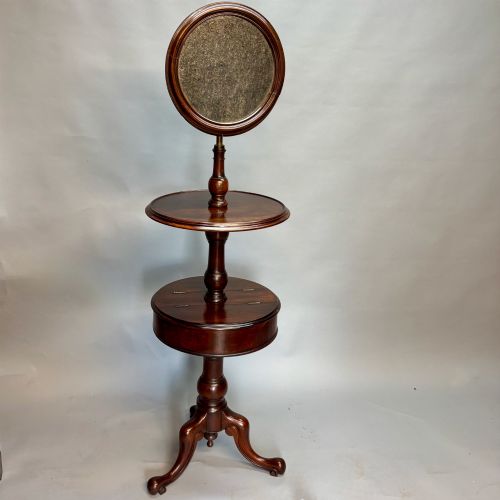
Variations in object types include wall-hanging bathroom cabinets, tabletop dressing mirrors, and tripod-based telescopic designs. Each format serves the specific function of positioning glass at a workable height for shaving or dressing.
Materials and construction methods
Cabinet makers utilised dense hardwoods such as mahogany, walnut, and oak to construct the frames, stands, and box bases. These timbers were selected for their stability and capacity to take a fine polish.
Secondary materials such as boxwood stringing, bone escutcheons, and brass pivoting hardware provide functional articulation and subtle decoration. Mirror glass is housed within frames that frequently feature adjustable tilt mechanisms.
Wood Shaving Mirror Retail Price Guide 2026
Typical asking prices for wood shaving mirror among the pieces listed under this phrase on Sellingantiques today, from the lower quarter to the upper quarter. They describe what is for sale here now, not the wider market.
Listings feature woods including mahogany, oak, walnut, birch, ash, and boxwood.
Assessing quality and execution
Quality rests in the precision of the joinery and the integrity of the timber selection. Superior examples display thoughtful grain matching and robust mechanical fittings that allow smooth adjustment without loosening over time.
The refinement of secondary details, such as inlaid boxwood stringing, well-turned uprights, and original brass screw knobs, separates standard utilitarian items from finer examples produced by established makers.
James Shoolbred
The Wood Shaving Mirror Glossary
- Toilet mirror
- A small mirror designed to sit on top of a dressing table or chest, typically incorporating a box base with small drawers.
- Telescopic
- A mechanism that allows the height of the mirror plate to be adjusted vertically on a central stem or rod.
- Campaign mirror
- A portable mirror constructed for travel, often folding into its own protective wooden box or case.
- Box base
- The lower plinth section of a tabletop mirror, frequently fitted with one or more small compartments or drawers.
- Stringing
- Narrow inlaid lines of a contrasting wood, such as boxwood, used to outline panels and drawer fronts.
Wood Shaving Mirror: Frequently Asked Questions
What is a wood shaving mirror?
A wood shaving mirror is a traditional piece of furniture built to hold an adjustable glass plate for grooming. These items range from compact tabletop toilet mirrors to tall standing floor models.
Cabinet makers produced them in various timbers, incorporating drawers, pivoting frames, and telescopic stems to suit the user.
How do I date a wood shaving mirror?
Dating relies on examining the timber species, construction joints, and hardware styles. Georgian pieces often feature slender proportions and mahogany box bases, while Victorian versions introduce telescopic brass mechanisms and tripod bases.
Edwardian examples frequently show lighter woods, inlaid decoration, and occasional combination with wall cabinets or shelves.
Where should I place a shaving mirror?
These mirrors suit dressing rooms, bathrooms, and bedroom tabletops where directional light assists with grooming. Tabletop versions require a sturdy surface of appropriate height.
Floor-standing and tripod models occupy a small footprint and sit well beside a chest of drawers or in a corner.
How do adjustable shaving mirrors work?
Adjustable mirrors use pivot pins, brass thumbscrews, or telescopic stems to alter the angle and height of the glass. The pivoting frame lets the user tilt the reflection up or down.
Telescopic stands raise the entire mirror plate vertically on a central shaft secured by a tightening collar.