



Wood Music Chest
A wood music chest holds your scores and sheet music neatly inside a compact cabinet designed specifically for the parlour.
Wood Music Chest
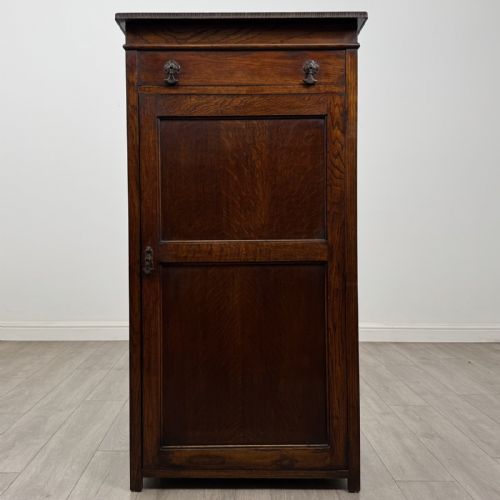
A wood music chest is a purpose-built cabinet created to store sheet music, folios, and scores within the home. Most examples on this page date from the Victorian and Edwardian periods, featuring upright proportions designed to fit tight spaces in period parlours and drawing rooms.
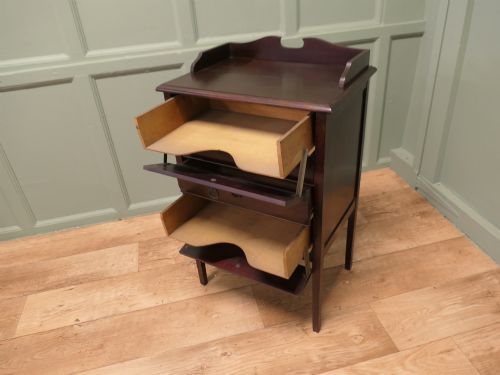
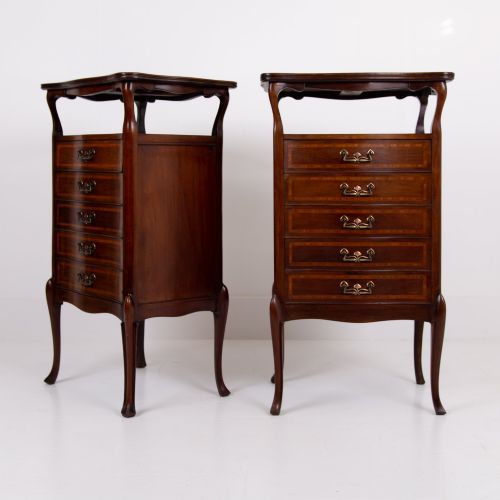
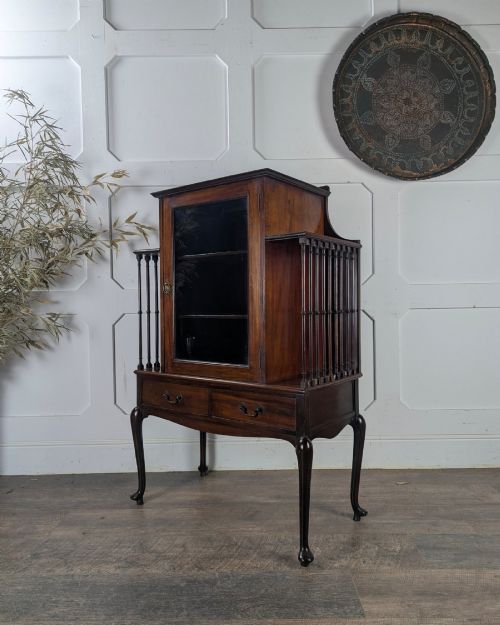
The form typically incorporates a series of shallow internal sliding trays or drop-front drawers to keep delicate paper sheets flat and organised. You will regularly encounter mahogany and rosewood constructions, often enhanced with satinwood inlay, glass doors, or raised galleries.
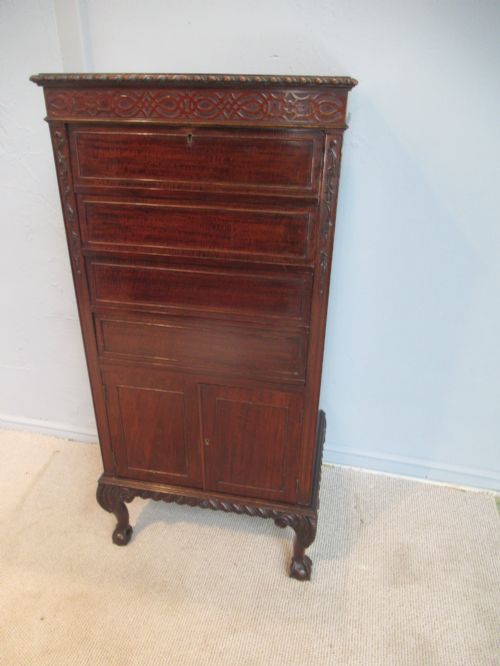
While many retain their original internal divisions for music sheets, some later adaptations function effectively as general filing or specimen cabinets. The styles span from plain Edwardian mahogany models to elaborate French Art Nouveau and Chippendale revival pieces.
How they were made
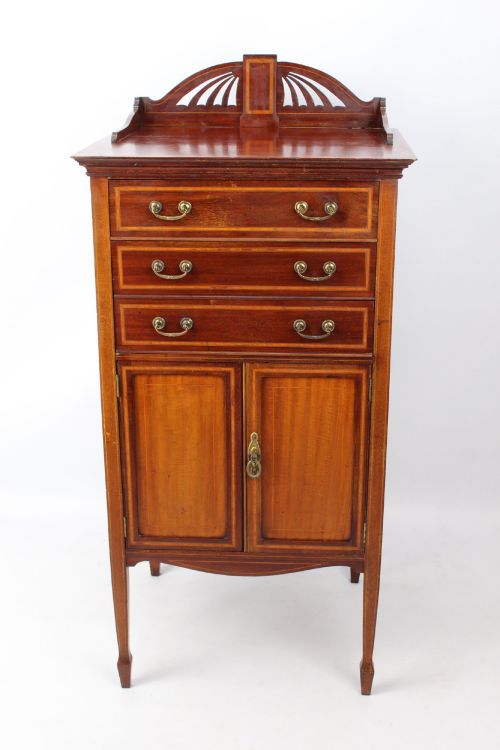
Cabinet makers utilised dense hardwoods such as mahogany, walnut, and rosewood for the primary carcases, providing the structural stability needed for heavy internal sliding drawers. Satinwood inlay and marquetry were frequently applied to the exterior surfaces to create contrasting decorative panels and borders.
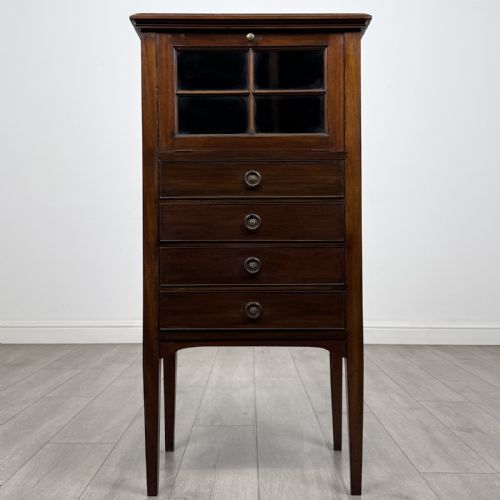
Brass fittings appear regularly on handles, hinges, and gallery rails, adding functional durability alongside visual contrast. Glazed doors incorporate glass panes within timber frames to showcase contents while protecting paper documents from dust.
Wood Music Chest Retail Price Guide 2026
Typical asking prices for wood music chest among the pieces listed under this phrase on Sellingantiques today, from the lower quarter to the upper quarter. They describe what is for sale here now, not the wider market.
Some Edwardian music chests include lift-up lids that reveal velvet-lined compartments designed for hidden melodies.
What varies in quality
The standard of timber selection and complexity of inlay work largely distinguish standard production pieces from finer examples. Cabinets featuring detailed marquetry, burr yew woods, or sophisticated brass hardware demonstrate a higher grade of craftsmanship.
Internal engineering also dictates the tier of the piece, particularly the smooth operation of sliding music trays, drop-front mechanisms, and fitted document drawers. Refined proportions and integrated raised galleries indicate a more ambitious original commission.
Keeble London
The Wood Music Chest Glossary
- Slide
- A shallow internal shelf or tray designed specifically to hold sheet music flat without bending. These pull out individually for easy sorting.
- Marquetry
- Decorative patterns created by fitting different wood veneers onto a structural carcase. It often depicts floral or symmetrical motifs.
- Gallery
- A raised ornamental border surrounding the top surface of a cabinet. It prevents small decorative items from sliding off the edge.
- Folio cabinet
- A tall storage unit built to accommodate oversized paper portfolios and unbound documents. They share similar proportions to standard music chests.
- Satinwood inlay
- Contrasting pale timber inserted into darker woods such as mahogany or rosewood to create fine borders. This technique highlights the geometric lines of Edwardian furniture.
Wood Music Chest: Frequently Asked Questions
What is a wood music chest used for?
These cabinets were originally designed to organise and store sheet music, folios, and scores in domestic music rooms. The shallow interior slides kept delicate paper sheets flat and easy to browse.
Today, they function well as small storage units for documents, crafts, or general paperwork in modern homes.
How do I date a music cabinet?
Dating relies on observing the primary timber, decorative style, and hardware conventions of the piece. Victorian models frequently utilise rosewood or walnut with heavier proportions, while Edwardian pieces often feature inlaid mahogany and lighter frames.
Construction methods on internal sliding trays and drawer dovetails also provide clear chronological clues.
Can these cabinets hold modern records?
Certain variations offer sufficient internal depth or width to accommodate modern vinyl LPs or specialised media. You should check the exact interior drawer dimensions against your specific collection before purchasing.
Many period cabinets were built purely for paper folios and may require careful assessment for alternative uses.
What styles are common for music chests?
Edwardian and Victorian designs dominate the selection, ranging from plain functional timber to decorative revival styles. You will frequently find Chippendale revival details, Arts and Crafts simplicity, and occasional Art Nouveau flourishes.
Inlay work and glazed doors are common stylistic additions across these periods.