



Wood Music Cabinet
A wood music cabinet organises sheet scores with tailored internal shelving or drop fronts, bringing period charm to any room.
Wood Music Cabinet
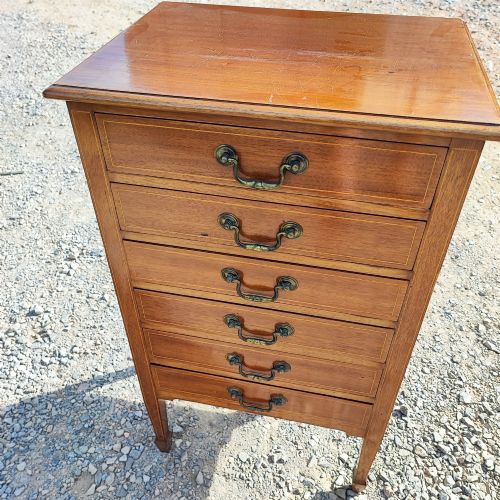
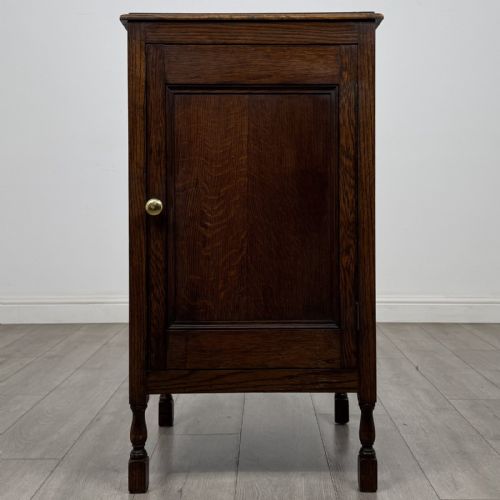
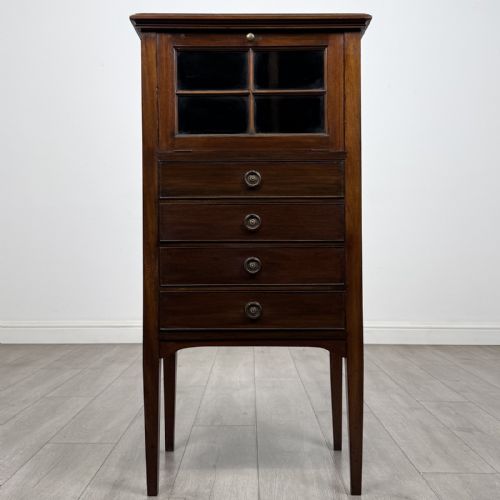
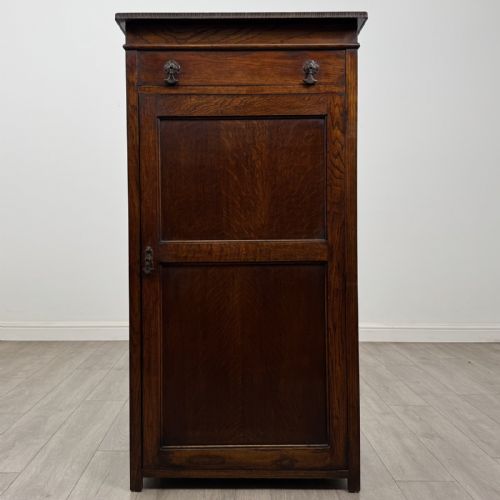
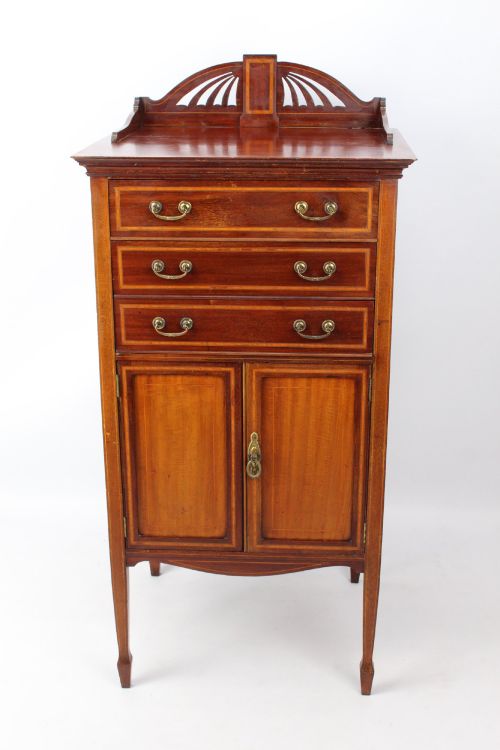
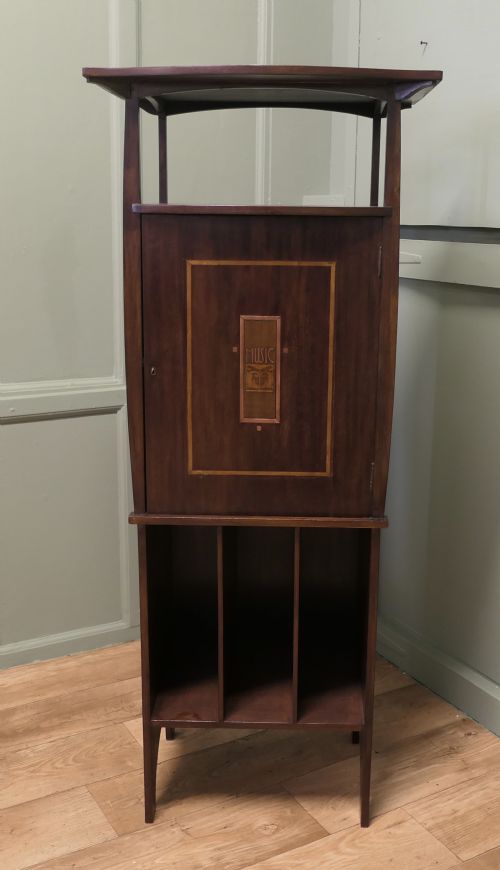
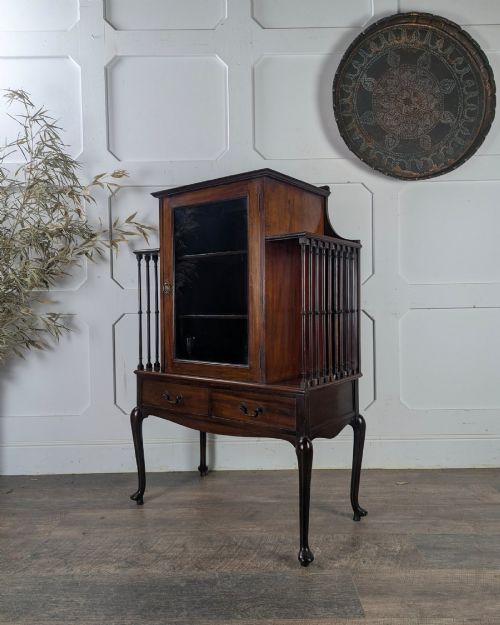
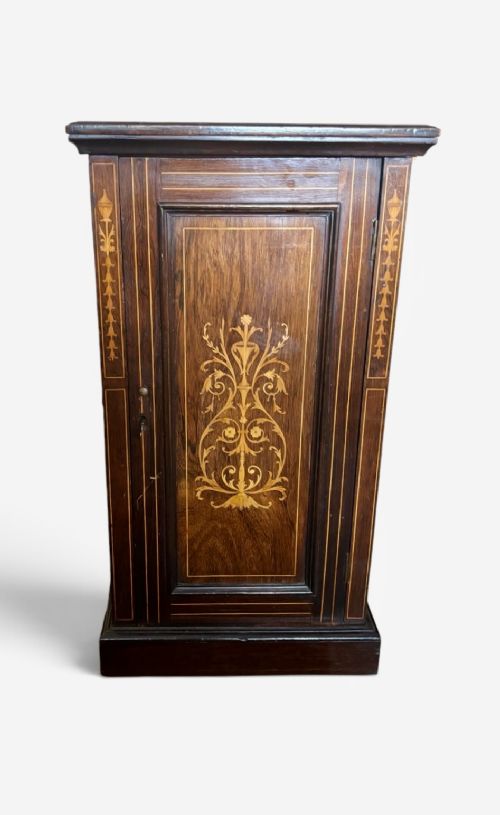
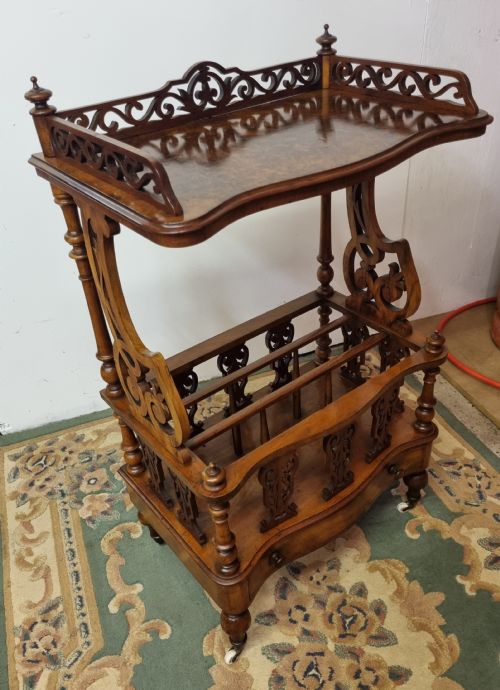
A wood music cabinet is a dedicated piece of furniture designed to store sheet music, folios and scores within domestic parlours. These items emerge most frequently from the Victorian and Edwardian eras, taking the form of upright cupboards, open canterburys or narrow display pieces.
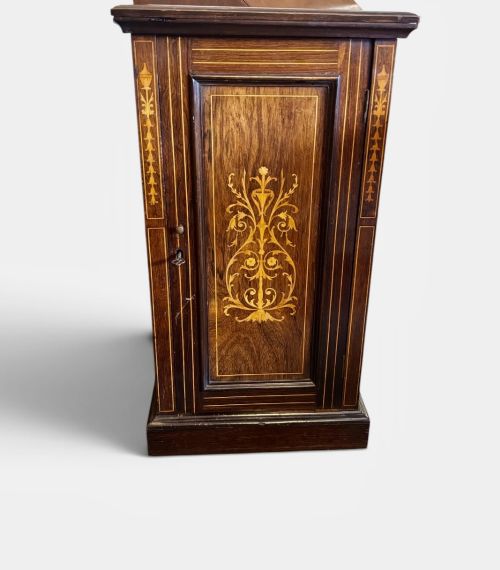
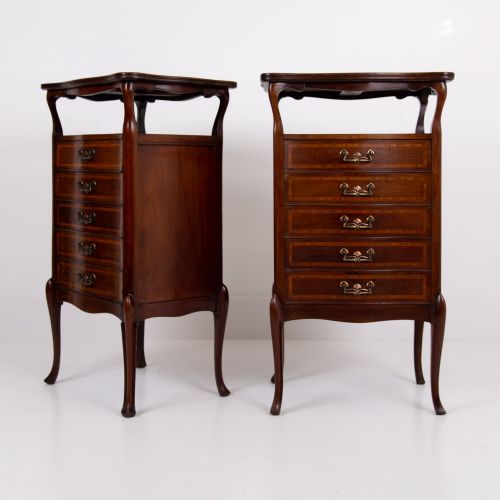
Buyers meet variations spanning from simple mahogany drawer units to intricately inlaid rosewood and satinwood designs. The form overlaps with filing cabinets and magazine racks, reflecting how domestic storage needs shifted through the nineteenth and early twentieth centuries.
How they were made
Cabinet makers utilised dense hardwoods such as mahogany, walnut and rosewood to construct the primary carcase and upright framing. Burr walnut and satinwood veneers added decorative contrast, frequently paired with delicate brass hardware and glass doors.
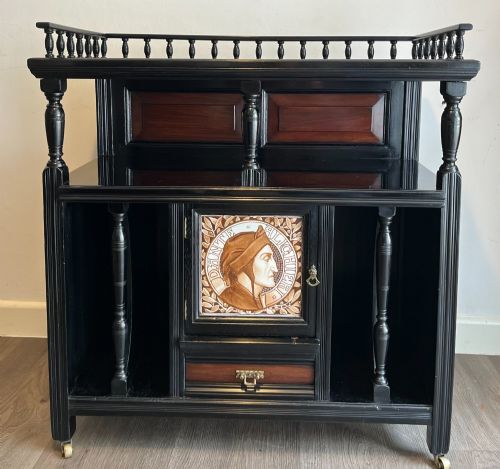
Surface ornamentation relies heavily on contrasting wood inlays, marquetry and raised galleries. Joinery techniques from the period ensured stability in tall, narrow proportions designed to fit compact parlour spaces.
Wood Music Cabinet Retail Price Guide 2026
Typical asking prices for wood music cabinet among the pieces listed under this phrase on Sellingantiques today, from the lower quarter to the upper quarter. They describe what is for sale here now, not the wider market.
Listings span multiple decades, incorporating Victorian, Edwardian, Arts and Crafts, and Art Deco design movements.
What varies in quality
Quality rests upon the selection of timber veneers and the precision of the marquetry or inlay work. Cabinets featuring figured mahogany, burr walnut or fine satinwood display a higher degree of initial craftsmanship than plain utilitarian equivalents.
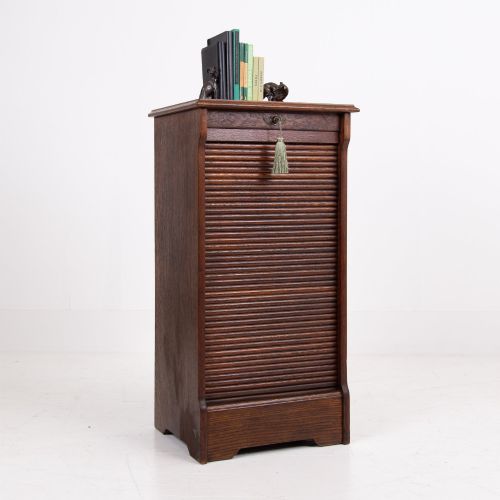
The sophistication of the internal configuration also distinguishes the tier of execution. Pieces incorporating purpose-built sheet music dividers, smooth drop-front drawers or tambour doors demonstrate superior internal design.
GM Elwood for JS Henry·Gabriel Viardot·Keeble London·U Phone of Leeds
The Wood Music Cabinet Glossary
- Canterbury
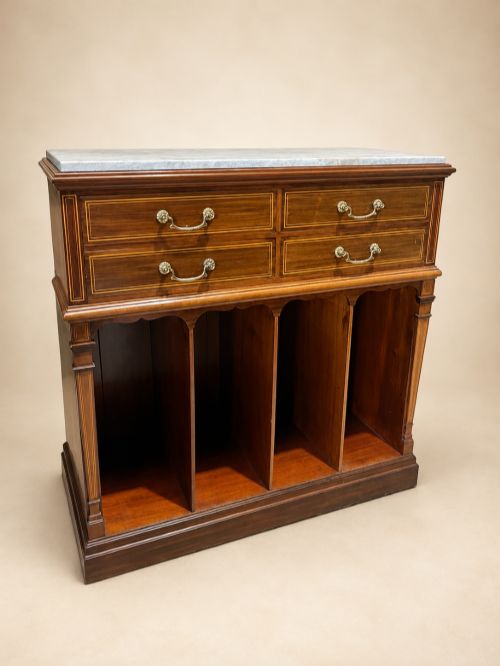
- A low stand or cabinet fitted with upright divisions for holding sheet music, newspapers or folios. Originating in the late eighteenth century, the form frequently includes a low drawer beneath.
- Marquetry
- Decorative patterns formed by fitting together thin slices of wood veneer onto a structural surface. Craftsmen utilise contrasting timbers to create floral or geometric motifs.
- Tambour
- A flexible door constructed from narrow vertical strips of wood glued to a canvas backing. This allows the door to slide smoothly around a curved track.
- Gallery
- A raised ornamental rail running along the upper edge of a cabinet or table. It prevents small items from sliding off the top surface.
- Folio
- A large-format book or collection of unbound sheets designed to hold music. Storage cabinets often feature wide, shallow drawers specifically scaled to accommodate these items.
Wood Music Cabinet: Frequently Asked Questions
What is a wood music cabinet used for?
These cabinets were built to store sheet music, folios and scores neatly in Victorian and Edwardian drawing rooms. The internal shelving and drop-front drawers kept paper sheets flat and organised.
Today, they function well as compact storage units for documents, craft supplies or modern media. Their narrow proportions allow them to fit into tight spaces where standard furniture will not go.
How do I date a wood music cabinet?
Dating relies on observing the primary timber, hardware and decorative style of the piece. Victorian examples often feature rosewood or burr walnut with heavy marquetry, whilst Edwardian pieces tend to utilise lighter mahogany with satinwood inlay.
Construction methods inside the drawers and the presence of specific hardware also provide clues. Comparing the styling to documented pieces from the nineteenth and early twentieth centuries narrows the period of manufacture.
What is the difference between a music cabinet and a canterbury?
A music cabinet is typically an enclosed upright cupboard with doors or multiple internal drop drawers. It conceals the contents entirely behind timber or glass panels.
A canterbury is usually an open-framed rack with vertical partitions designed to hold folios upright within easy reach. Some hybrid designs combine the open rack structure with a small enclosed drawer below.
How do I care for a antique wood cabinet?
Maintain these pieces by keeping them away from direct heat sources and strong sunlight, which can dry out timber and fade veneers. Regular dusting with a soft, dry cloth preserves the polished surface.
Applying a quality beeswax periodically nourishes hardwood finishes like mahogany and rosewood. Avoid using modern silicone sprays that can penetrate and damage historic wood finishes.