




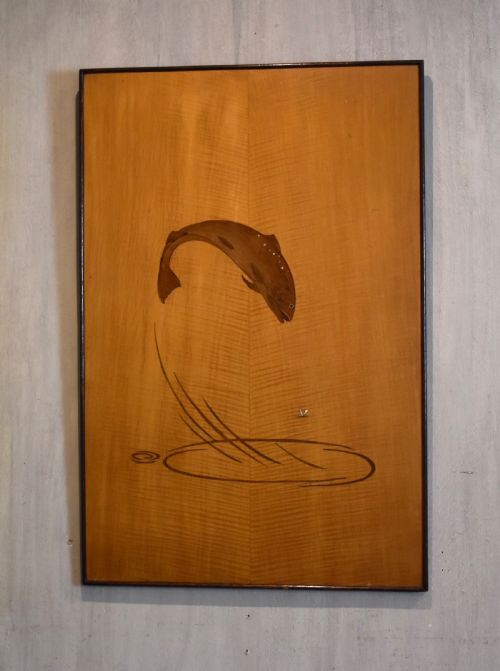


Wood Marquetry Panel
A wood marquetry panel brings together fine veneers and cabinet-making skill to create pictorial wall art and fitted furniture.
Wood Marquetry Panel
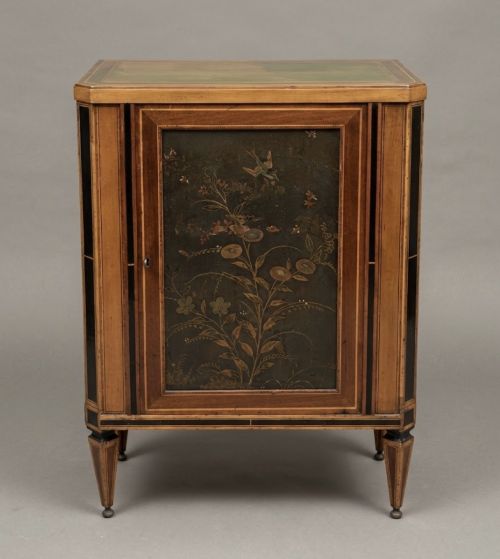
When you search for a wood marquetry panel, you encounter a diverse selection of wall art, architectural dioramas, and mirrors alongside functional furniture like cabinets and cupboards. These pieces span from the mid-nineteenth century through the Edwardian era into the Art Deco and Mid-Century Modern periods.
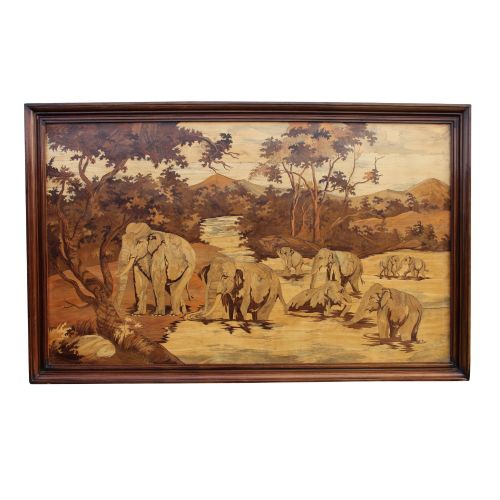
The objects take many forms, including wall plaques, framed artwork, overmantel mirrors, and side cabinets featuring inlaid decoration. Styles range from Victorian and Arts & Crafts to Moorish Revival and Anglo-Indian designs.
You are most likely to meet wall-hanging panels and inlaid mirrors on this page, reflecting the popularity of decorative wood mosaics and picture frames from makers associated with the Scottish School and Tunbridge Wells.
What varies in quality
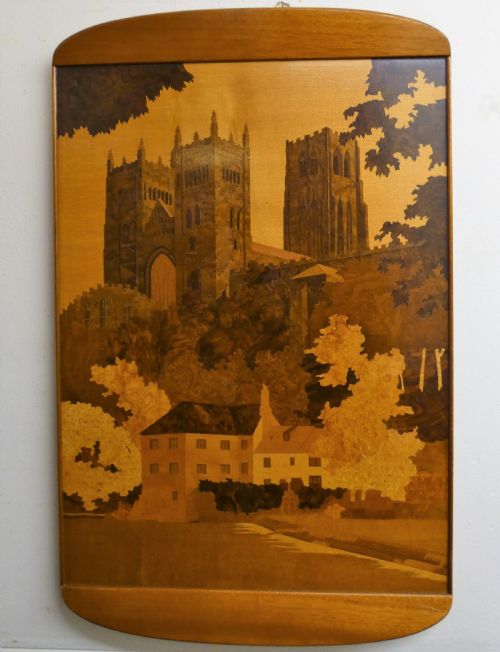
The standard of a wood marquetry panel depends upon the precision of the veneer cutting and the subtle choice of contrasting timbers to create depth and perspective. Superior examples display tight joints between individual veneer pieces and a sophisticated handling of light and shade.
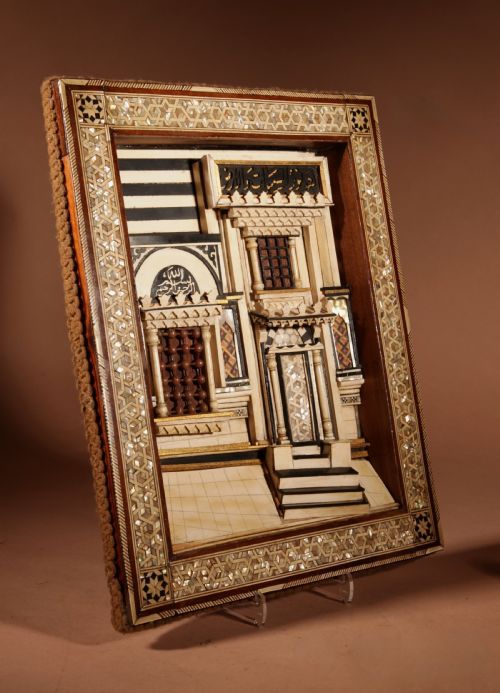
Design ambition also separates the ordinary from the exceptional, as seen in complex architectural dioramas, pictorial scenes of animals or landscapes, and pieces bearing attribution to notable workshops like the Rowley Gallery.
Wood Marquetry Panel Retail Price Guide 2026
Typical asking prices for wood marquetry panel among the pieces listed under this phrase on Sellingantiques today, from the lower quarter to the upper quarter. They describe what is for sale here now, not the wider market.
Listings span from eighteen-fifty to nineteen-thirty, encompassing Victorian, Edwardian, Arts & Crafts, and Mid-Century Modern aesthetics.
Rowley Gallery·A.J Rowley
The Wood Marquetry Panel Glossary
- Marquetry veneers
- Thin slices of decorative wood applied to a structure to form pictorial patterns or designs. These veneers provide the varied tones and grains necessary for detailed imagery.
- Specimen wood
- Timbers chosen for their distinct natural colours and markings, frequently used in geometric mosaics. This technique highlights the variety of British and exotic woods available to the maker.
- Architectural diorama
- A three-dimensional representation of a building front or scene constructed in relief. These pieces combine carpentry and marquetry to achieve depth and perspective.
- Overmantel mirror
- A large looking glass designed to hang above a fireplace, often incorporating inlaid panels or decorative frames. They frequently feature in Victorian and Edwardian domestic interiors.
Wood Marquetry Panel: Frequently Asked Questions
What is a wood marquetry panel?
A wood marquetry panel is a decorative piece of wall art or furniture formed by fitting together thin slices of various timbers to create a picture or pattern.
These panels utilise the natural grain and colour of woods like satinwood, rosewood, and mahogany to build up detailed imagery without paint.
How do I tell Victorian from Edwardian panels?
Victorian panels often display heavier proportions and formal academic subjects, dating from the mid to late nineteenth century.
Edwardian and later pieces frequently show lighter satinwood grounds, Arts & Crafts influences, or modernist pictorial styles from the nineteen-twenties.
How were Tunbridge ware panels made?
Tunbridge ware panels are constructed from thousands of tiny blocks of coloured specimen wood arranged to form a mosaic picture.
Craftsmen sliced these geometric arrangements from assembled blocks of timber to create precise pictorial wall plaques and frames.