

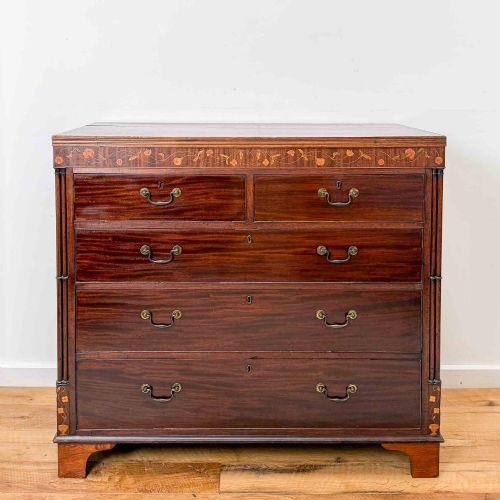


Wood Marquetry Dresser
A wood marquetry dresser brings centuries of patterned timber craft into a room, offering patterned storage shaped by period cabinet-makers.
Wood Marquetry Dresser
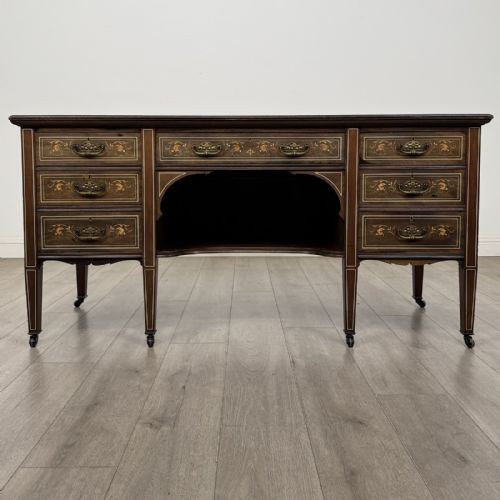
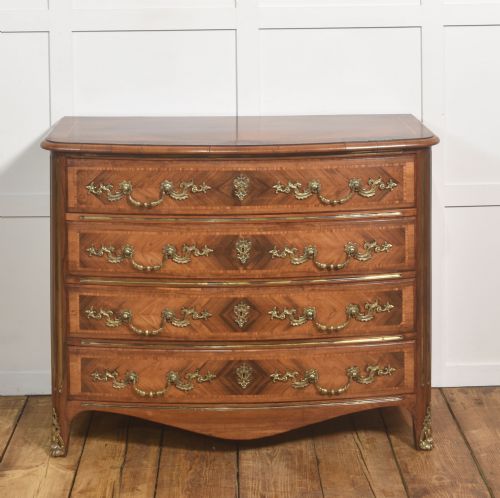
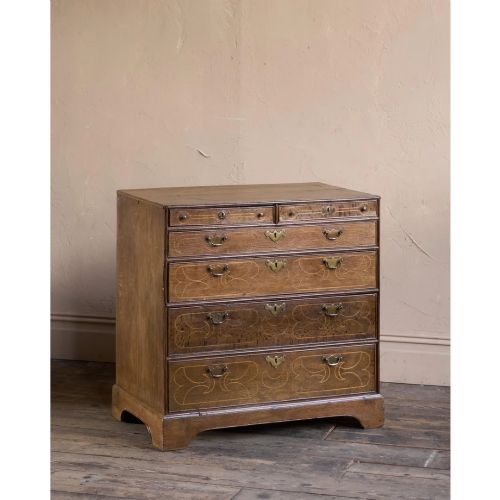
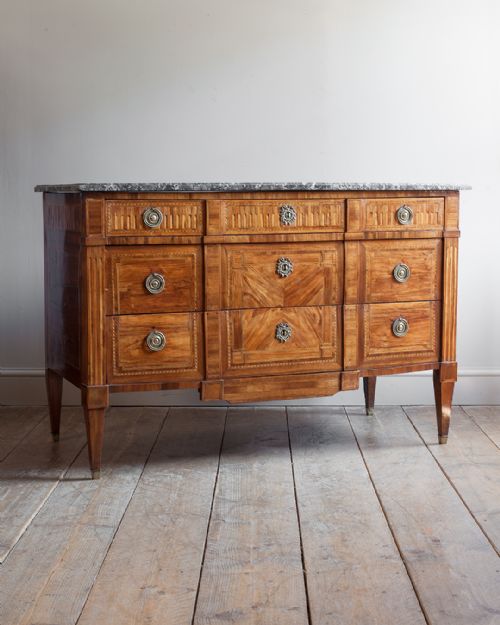
A wood marquetry dresser or chest of drawers displays patterned veneer work across its primary surfaces, drawing the eye through contrasting natural timbers.
The selections span from seventeenth-century walnut and oak pieces up to Victorian sideboards and nineteenth-century commodes.
Buyers encounter forms ranging from serpentine fronts and bombe profiles to rectilinear drawer banks and mirror-back sideboards.
How they were made
Cabinet-makers laid fine veneers of walnut, mahogany, kingwood, and fruitwood over foundational timbers like oak, cutting delicate floral or geometric motifs to fit together tightly.
Craftsmen utilised contrasting natural grains and occasional brass mounts to define the outlines of drawers, panels, and tops.
Surfaces were finished with traditional polishes that allowed the varied tones of burr elm, satin birch, and rosewood to show their depth.
Wood Marquetry Dresser Retail Price Guide 2026
Typical asking prices for wood marquetry dresser among the pieces listed under this phrase on Sellingantiques today, from the lower quarter to the upper quarter. They describe what is for sale here now, not the wider market.
The listings span from seventeenth-century oyster walnut chests to nineteenth-century mahogany sideboards and French-style commodes.
What varies in quality
Quality rests in the precision of the veneer cutting and how securely the intricate wooden inlays sit within their surrounding ground timber.
The sophistication of the silhouette, from restrained William and Mary rectangles to sweeping Swedish Rococo bombe curves, dictates the visual weight of the piece.
The choice of secondary woods and the preservation of the original surface patina distinguish standard utility pieces from masterworks.
The Wood Marquetry Dresser Glossary
- Marquetry
- Decorative veneer work arranged in pictorial or geometric patterns across a furniture surface. This technique uses thin slices of diverse timbers to create contrast and imagery.
- Oyster veneer
- Circular cross-sections sliced from small branches or roots, showing concentric growth rings. This method was favoured in seventeenth-century English cabinet-making.
- Bombe
- A swelling, outward-curving profile found on case furniture such as commodes. The form demands advanced timber-shaping skills from the maker.
- Serpentine
- A front contour curving inward centrally and outward at the ends in a continuous wave line. It provides a fluid movement to heavy chests of drawers.
Wood Marquetry Dresser: Frequently Asked Questions
How do I care for a marquetry surface?
Keep wooden furniture away from direct sunlight and sudden temperature shifts to prevent the delicate veneer from lifting.
Apply a traditional wax polish occasionally and buff gently with a soft cloth to maintain the timber lustre.
What is an oyster veneer?
Oyster veneer consists of small branch sections cut transversely to display circular growth rings resembling oyster shells.
Cabinet-makers arranged these slices closely together to create patterned surfaces on seventeenth-century pieces.
Where were these chests used?
These storage pieces served in principal rooms and bedrooms for linens, garments, and valuables.
Sideboards and commodes also provided display surfaces for silver and ceramics in formal dining spaces.