





Wood Makeup Desk
These wood makeup desk pieces offer the classic utility of antique dressing tables, bringing period character and practical surface space to a modern room.
Wood Makeup Desk
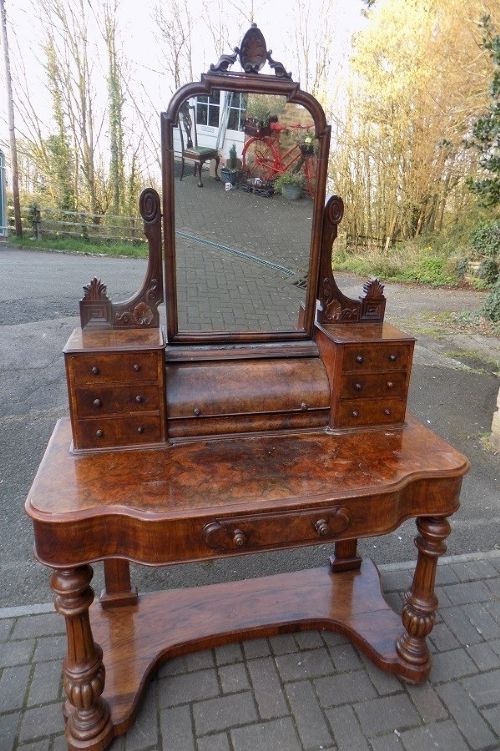
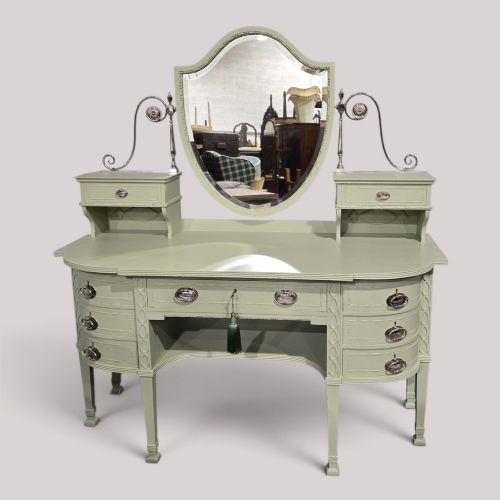
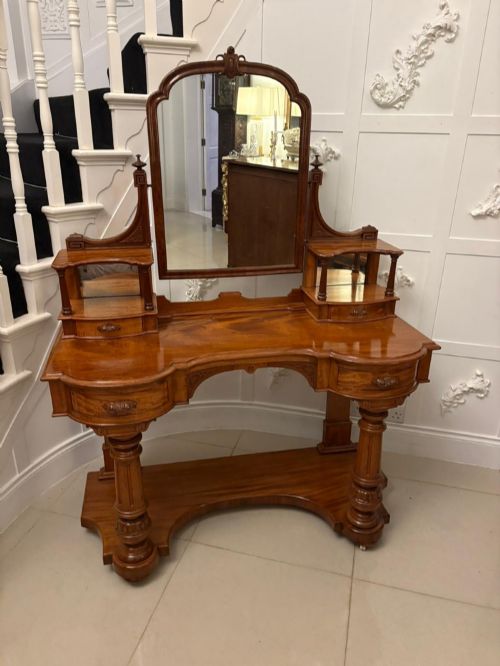
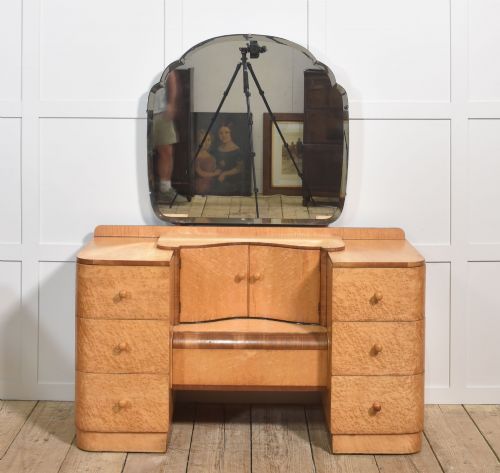
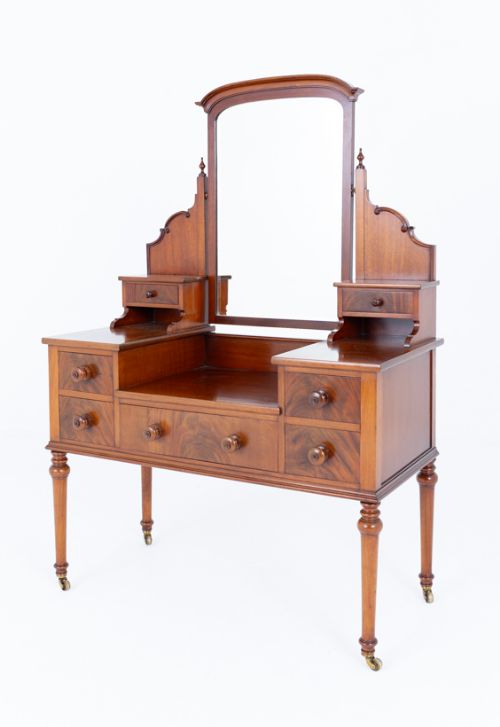
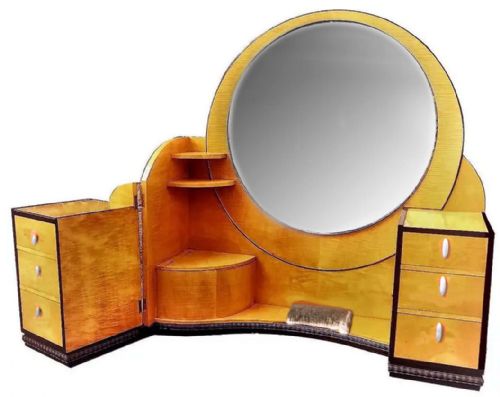
A wood makeup desk, catalogued historically as a dressing table, provides a dedicated surface for grooming and personal preparation. The examples appearing on this page span several distinct eras, originating from periods such as the Georgian, Victorian, and Art Deco epochs.
The most common form encountered here is the Victorian dressing table, often constructed in rich timbers like mahogany, burr walnut, or satinwood. These frequently incorporate adjustable mirrors and smaller storage drawers for personal items.
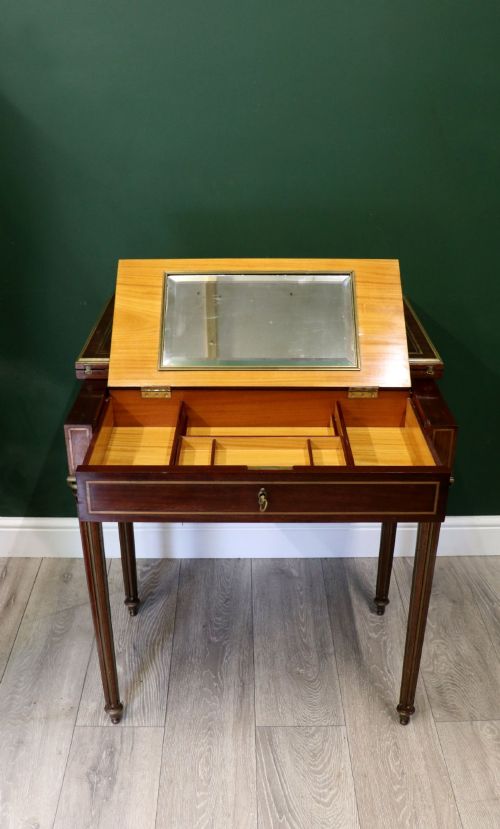
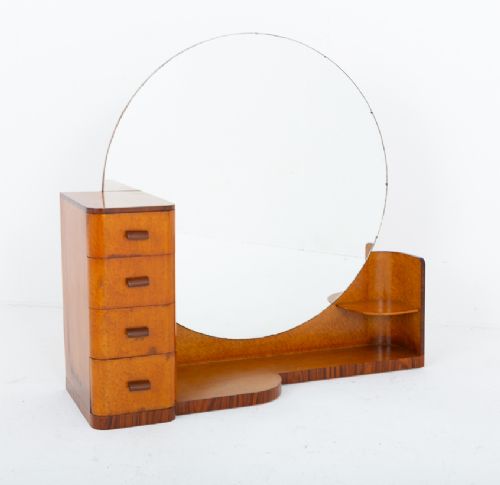
Later twentieth-century examples shift towards the clean lines of the Art Deco style, utilising exotic maples and streamlined shapes. Occasional French revival and marquetry-inlaid pieces also appear among the selection, offering more ornate decorative schemes.
How they were made
Construction relies heavily on cabinet-making traditions using solid timbers and decorative veneers. Mahogany and walnut provide sturdy carcases, whilst burr walnut and satinwood furnish striking figured grain patterns across drawer fronts and top surfaces.
Decorative elements involve intricate marquetry inlay, hand-carved mahogany details, and painted finishes. Glass mirrors, ranging from fixed plates to pivoting cheval frames, integrate directly into the superstructure of the tables.
Wood Makeup Desk Retail Price Guide 2026
Typical asking prices for wood makeup desk among the pieces listed under this phrase on Sellingantiques today, from the lower quarter to the upper quarter. They describe what is for sale here now, not the wider market.
The listings span from Georgian and Victorian eras through to nineteen-thirties Art Deco designs.
What varies in quality
Quality rests in the selection of timber veneers and the precision of the cabinetwork. Pieces featuring highly figured burr walnut, birds-eye maple, or detailed marquetry inlay represent more ambitious workshop production than plain timber equivalents.
The sophistication of the hardware, the integrity of the integrated mirrors, and the refinement of any carved or inlaid ornamentation distinguish standard domestic examples from finer cabinet-maker pieces.
John Taylor of Edinburgh·Betty Joel
The Wood Makeup Desk Glossary
- Burr walnut
- A veneer taken from the knotted growth of a walnut tree, yielding a swirling, highly decorative grain pattern. It appears frequently on finer Victorian furniture surfaces.
- Marquetry
- The art of applying pieces of veneer to a structure to form decorative patterns and pictures. This technique often employs contrasting woods like kingwood.
- Satinwood
- A durable, yellowish timber prized for its lustrous sheen and smooth texture. It is utilised extensively in high-status cabinet-making.
- Duchess dressing table
- A large Victorian dressing table style featuring a central mirror flanked by small drawers, mounted on a curved or pedestal base.
Wood Makeup Desk: Frequently Asked Questions
How do I date a wood makeup desk?
Dating relies on identifying stylistic markers, construction methods, and primary timbers. Georgian and Victorian pieces show traditional joinery and heavier timber use, whilst nineteen-thirties examples adopt streamlined Art Deco geometries.
Secondary indicators include the treatment of mirror fixings, drawer linings, and the presence of specific decorative revivals like French Louis XVI or Art Nouveau.
Where should I place a dressing table?
Positioning depends primarily on natural light sources to ensure the mirror surface functions effectively for grooming. Bedrooms and dressing rooms remain the traditional placement for these pieces.
Ensure adequate clearance around the table for seating and for operating any pivoting mirror frames or opening drawers.
Are mirrors original to the tables?
Many surviving dressing tables retain their original glass and mirror frames, particularly where the superstructure forms an integral part of the cabinet design. Silvering degradation on antique mirror glass is a common characteristic of age.
Slight foxing or spotting on the mirror plate often confirms original age, whilst completely clear glass in an antique frame may suggest a later replacement.
How do I maintain wood surfaces?
Routine care involves dusting with a soft, dry cloth and avoiding modern silicone-based polishes that can build up on historic timber finishes. Traditional beeswax applied sparingly helps nourish antique mahogany and walnut.
Keep wooden furniture away from direct heat sources and strong sunlight to prevent timber shrinkage and veneer lifting.