




Wood Escritoire
A wood escritoire combines a lockable writing surface with private compartments, offering a refined workspace that suits period interiors.
Wood Escritoire
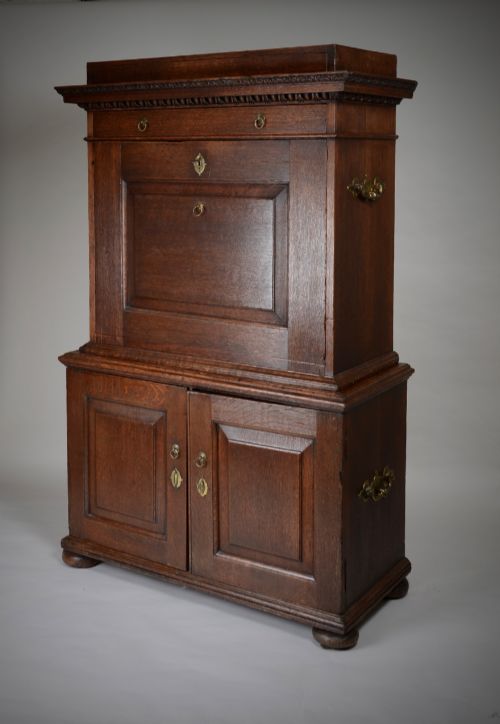
When you search for wood escritoire, you encounter a specialised form of antique writing furniture encompassing drop-front cabinets, cylinder desks, and bureau bookcases. These pieces originate across diverse eras, from the eighteenth century through the Victorian and Edwardian periods.
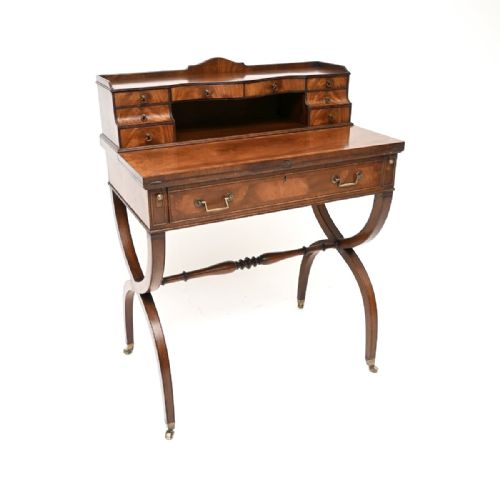
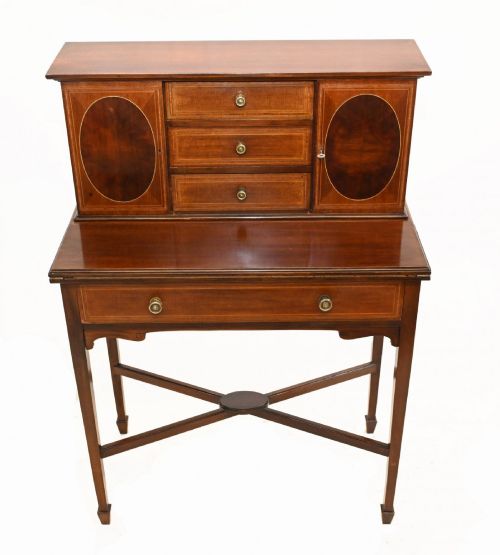
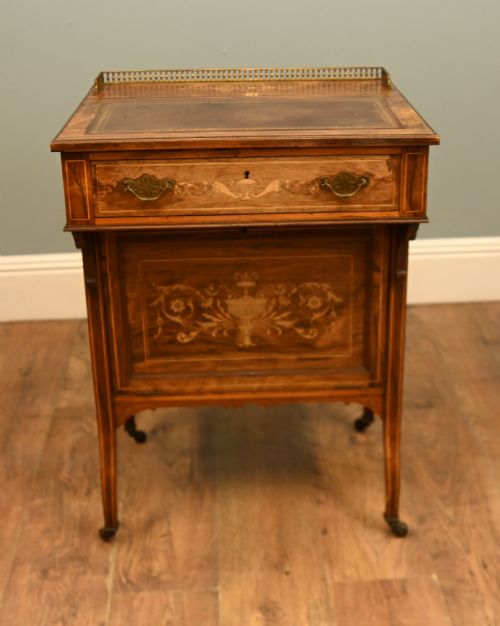
The selections on this page most frequently present mahogany, walnut, and satinwood construction, often incorporating fitted drawers and internal compartments. Formats range from large bureau bookcases to compact tabletop cabinets and metamorphic writing tables.
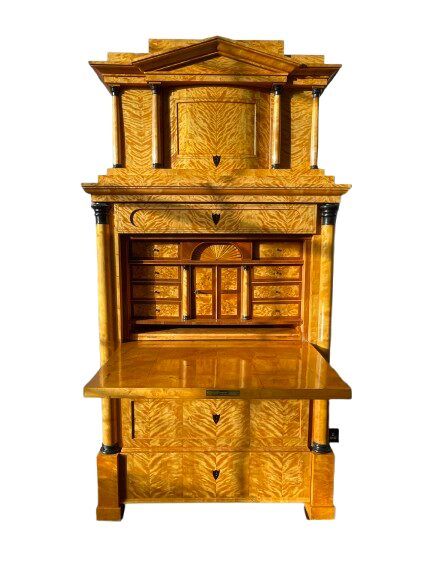
Regional variations span English Georgian designs, Biedermeier interpretations, and French or Italian walnut cabinets. Each piece provides a dedicated surface for correspondence while concealing private papers behind fitted doors or cylinders.
Materials and construction methods
Cabinetmakers utilised dense timbers like mahogany and walnut as primary structures, applying boxwood, satinwood, and marquetry for decorative contrast. Brass handles, hinges, and ormolu mounts secure the functional elements.
Surfaces frequently feature hand-tooled leather writing inserts alongside intricate wood veneers and inlay work. Secondary woods provide structural stability inside drawers and carcases.
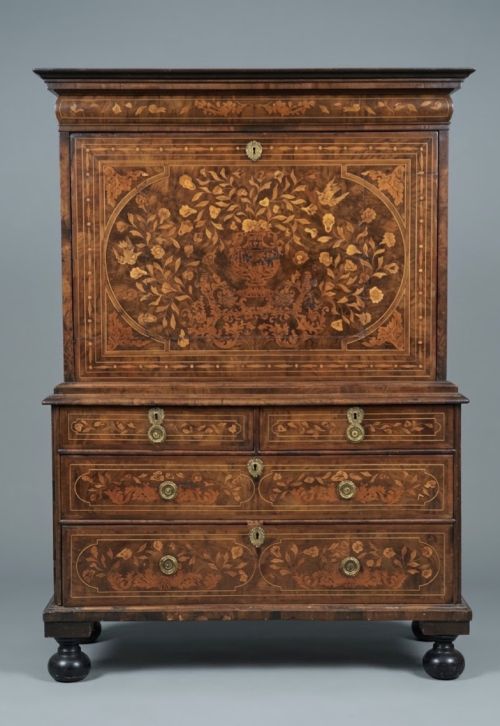
Joinery methods rely on traditional dovetailing for drawer construction and precise veneering techniques to achieve geometric or floral marquetry patterns across fall fronts and cabinet doors.
Wood Escritoire Retail Price Guide 2026
Typical asking prices for wood escritoire among the pieces listed under this phrase on Sellingantiques today, from the lower quarter to the upper quarter. They describe what is for sale here now, not the wider market.
Some nineteenth-century writers required a revolving tabernacle inside their cabinet to reach their ink without standing up.
Distinctions in craftsmanship
Quality rests in the precision of the internal cabinetwork and the subtlety of the timber figure selected for the exterior surfaces. Superior examples demonstrate meticulous marquetry inlay and well-balanced proportions.
The integration of working mechanisms, such as revolving tabernacles, tambour fronts, or metamorphic actions, distinguishes exceptional pieces from standard utility furniture. Original brass hardware and intact leather writing surfaces elevate a piece's standing.
George Faulkner Armitage·Gregory and Co of London
The Wood Escritoire Glossary
- Escritoire
- A writing cabinet featuring a fall-down front or sloping lid that conceals pigeonholes and small drawers. This form evolved to provide both a writing surface and secure storage.
- Marquetry
- Decorative patterns formed by fitting together thin veneers of various wood types. Cabinetmakers use this technique to create elaborate floral or geometric designs on desk surfaces.
- Davenport desk
- A compact writing desk featuring a sloped, hinged writing surface with drawers accessed from the side. The form gained popularity during the nineteenth century.
- Bonheur du jour
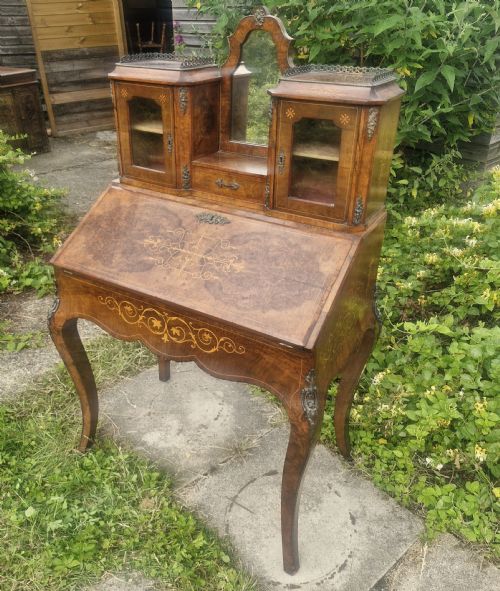
- A light lady's writing desk featuring a small cabinet or set of shelves upon the upper surface. These pieces typically date from the nineteenth century.
- Tambour
- A sliding surface constructed from narrow strips of wood glued to a canvas backing. This mechanism conceals the interior compartments of cylinder desks and writing cabinets.
Wood Escritoire: Frequently Asked Questions
How do I use a wood escritoire?
Lower the fall-front or open the cylinder to reveal the fitted interior and create a stable writing surface. The internal compartments and small drawers provide dedicated storage for stationery and correspondence.
Keep the writing surface clear when not in use to protect the leather insert and polished timber. Ensure the cabinet is locked if you wish to secure private items within the internal pigeonholes.
What periods do these desks cover?
The listings span from the eighteenth century through the Georgian and Regency eras, extending into the Victorian, Edwardian, and Arts and Crafts periods. Each era brings distinct proportions and decorative vocabulary.
Georgian and Regency pieces tend to feature clean architectural lines and rich mahogany, whereas Victorian and Edwardian examples often showcase marquetry inlay, satinwood, or walnut.
Where were these pieces made?
Makers across England, France, Italy, Holland, and Russia produced these writing cabinets. Regional workshops utilised native timbers alongside imported exotic woods.
English cabinetmakers favoured mahogany and walnut, while continental workshops frequently employed maple, fruitwoods, and elaborate marquetry to distinguish their regional styles.
How do I identify a bureau bookcase?
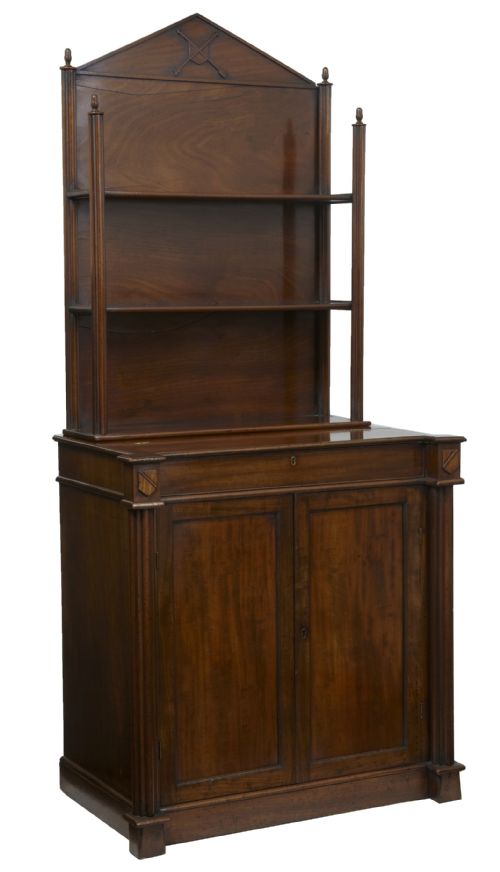
A bureau bookcase combines a lower writing desk section with an upper shelving or cabinet enclosure enclosed by glass or timber doors. The drop-front desk section opens above lower storage drawers.
These taller forms provide substantial display and storage space while maintaining a functional writing desk at counter height.