
Wood Bookcase with Doors
A wood bookcase with doors keeps dust from settling on your volumes while bringing rich timber grain into the room.
Wood Bookcase with Doors
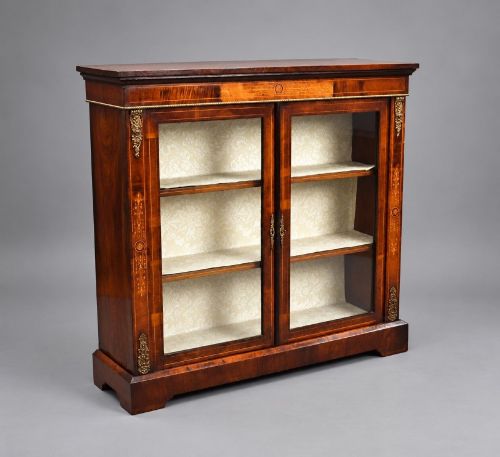
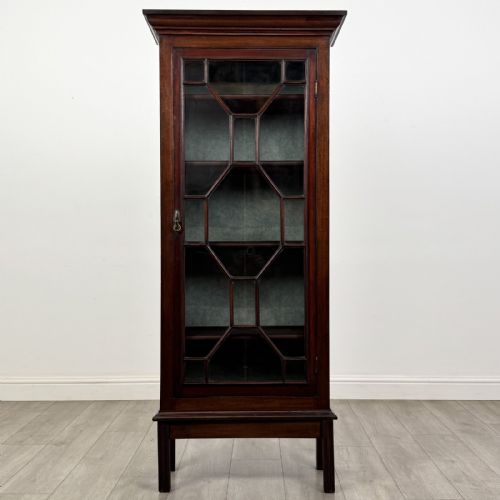
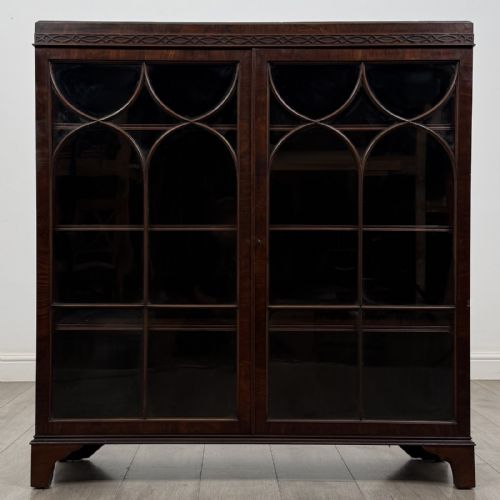
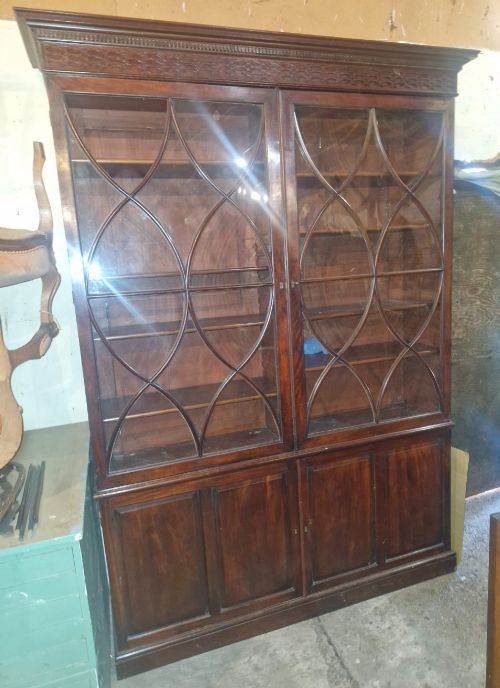
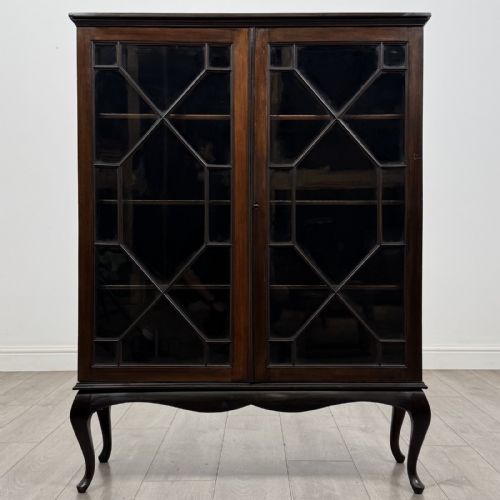
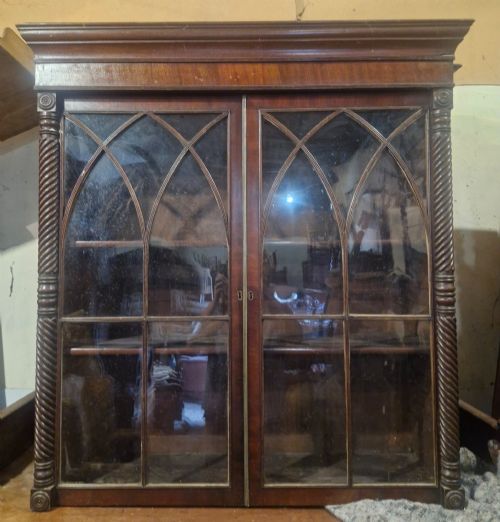
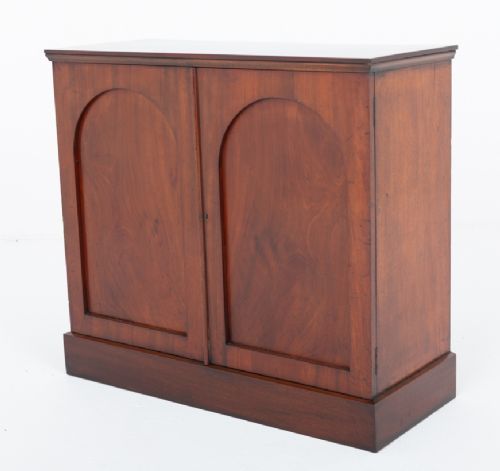
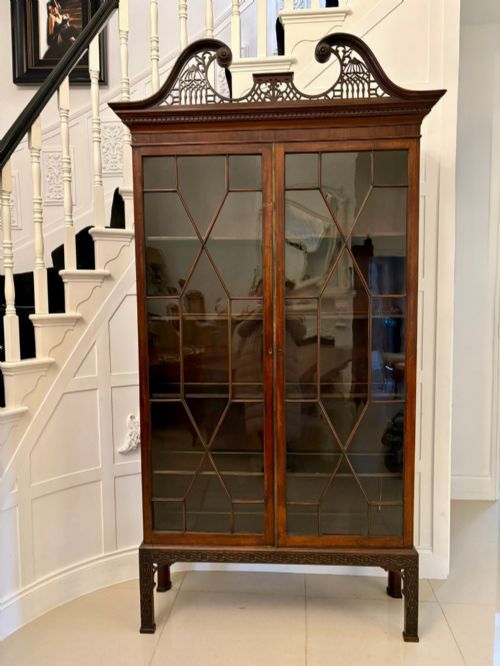
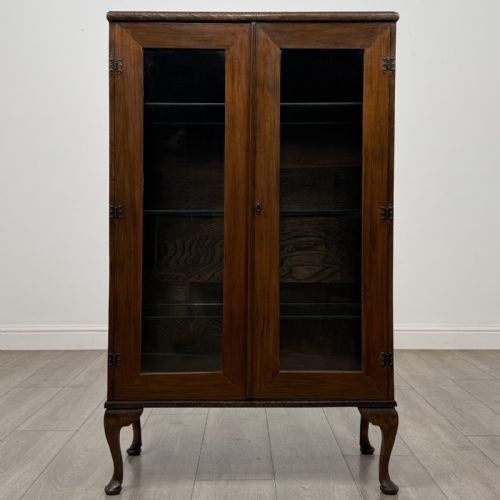
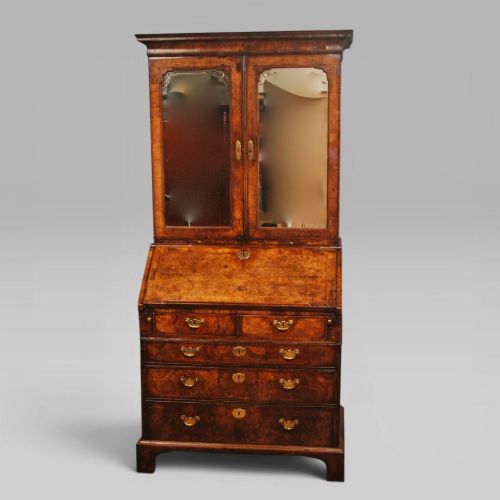
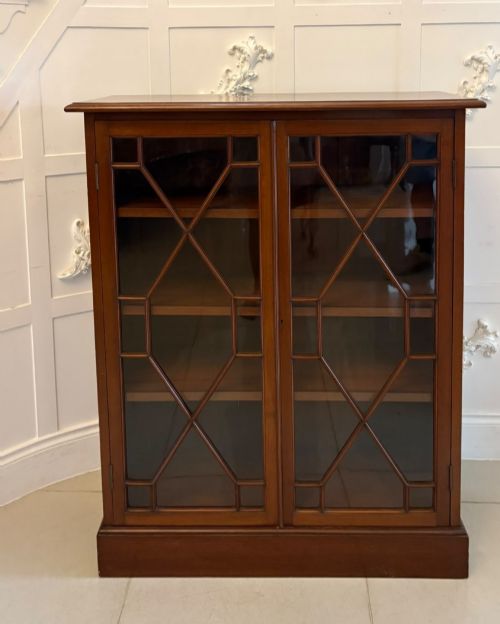
A wood bookcase with doors serves to house a library or display cherished items behind glazed or panelled barriers. The pieces found here span centuries of British cabinet making, ranging from formal Georgian designs to practical Edwardian editions.
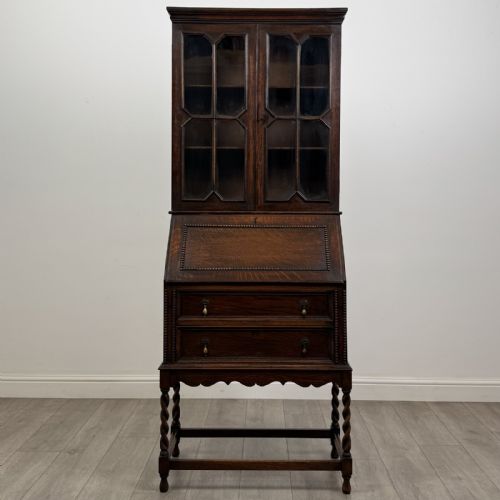
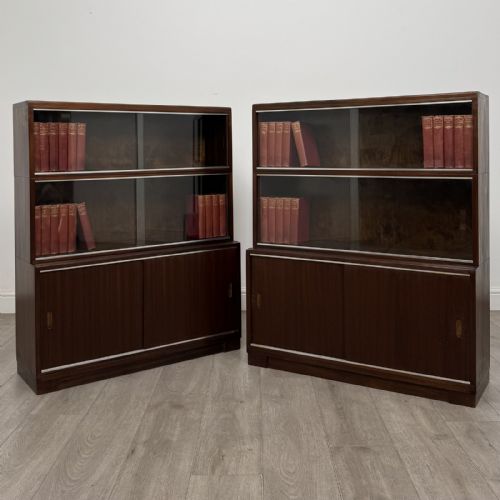
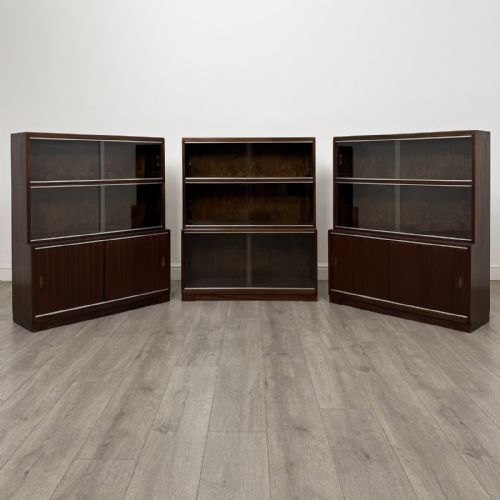
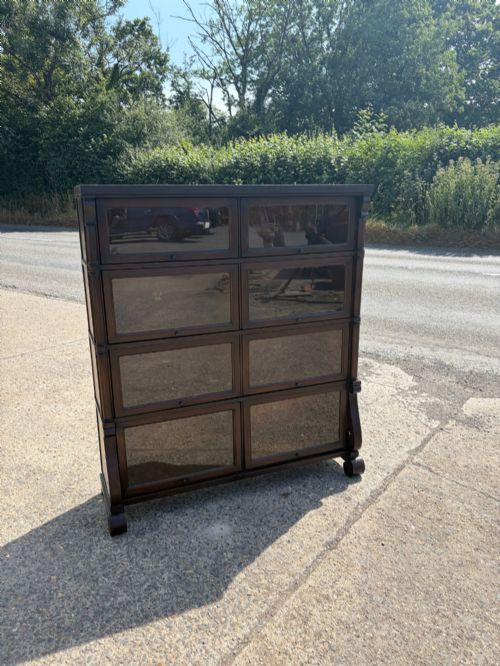
Most examples appearing in this selection are constructed from mahogany or oak, often arranged with glazed upper sections above lower wooden cupboards. Bureau bookcases and sectional variants also feature, providing drop-down writing surfaces or modular stacking sections.
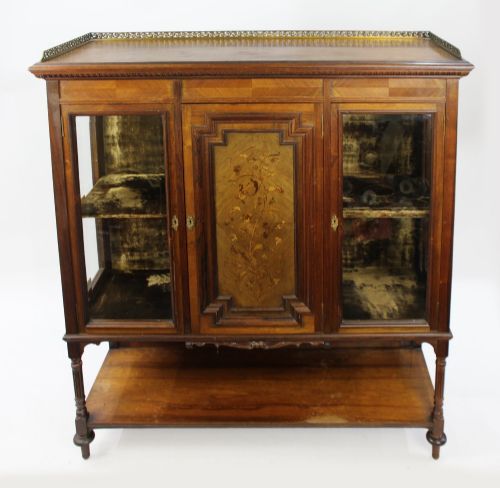
Victorian and Edwardian iterations dominate the current selection, offering everything from tall multi-shelf display cabinets to compact floor-standing cupboards with delicate inlay.
Materials and Construction
Makers utilised solid timbers such as mahogany, oak, walnut, and rosewood, frequently applying fine veneers over secondary woods to create decorative surfaces. Brass fittings secure doors and drawers, whilst glass panes are held within timber frames or delicate astragal bars.
Joinery methods rely on traditional hand-cut dovetails for drawer construction and sturdy mortise and tenon joints for the main carcass. Later 1920s examples introduce mechanical innovation, seen in the up-and-down door mechanisms of sectional lawyer bookcases.
The listings show a strong presence of mahogany and oak, alongside occasional rosewood and walnut examples dating from the Georgian era through to the 1920s.
Judging Quality
Quality rests upon the selection of timber figures, the crispness of inlaid details, and the integrity of the original glass. Pieces featuring figured mahogany or well-matched walnut veneers demonstrate superior craftsmanship.
The balance of proportions and the refinement of internal fittings, such as adjustable shelving and original brass hardware, separate standard commercial pieces from workshop commissions.
Macey·Robert Strahan·James Winter & Sons
The Wood Bookcase with Doors Glossary
- Astragal
- A moulding profile used to divide glass panes within a door frame, often forming a delicate lattice pattern. These bars support the individual small panes characteristic of Georgian and Edwardian glazed doors.
- Secretaire
- A cabinet incorporating a fitted writing drawer with a drop-down front that conceals small pigeonholes and letter compartments. This dual-purpose form allows a bookcase to double as a desk.
- Chiffonier
- A low sideboard or cabinet featuring enclosed cupboards beneath a shelf or upper display area. In this selection, such pieces often incorporate glazed or panelled doors.
- Sectional
- A modular bookcase built in stacked tiers with independent glass-fronted compartments that lift and slide back. This American-invented format became popular in Britain during the early twentieth century.
- Crenelated
- A decorative architectural cornice resembling battlements, featuring alternating notched patterns along the top edge. This detail appears on select nineteenth-century cabinet tops.
Wood Bookcase with Doors: Frequently Asked Questions
How do I clean the glass doors?
Use a soft cloth and a mild glass cleaning solution applied to the cloth rather than directly onto the wood. This prevents moisture from damaging antique timber frames and surrounding finishes.
Take care around delicate astragal bars and vintage glass, which may have bubbles or uneven thickness from early manufacturing methods.
Are the shelves adjustable?
Many nineteenth and twentieth-century bookcases feature adjustable wooden shelves supported on wooden racks or metal pins. This allows you to alter the interior layout for different book heights.
Earlier Georgian pieces sometimes have fixed shelving integral to the structural stability of the main carcass.
How do I care for the mahogany finish?
Apply a traditional beeswax polish sparingly with a soft cloth and buff gently to maintain the natural lustre of the timber. Avoid silicone sprays and keep the cabinet away from direct heat sources to prevent veneer lifting.
Periodic waxing nourishes the dry wood and helps protect the surface from everyday wear.