

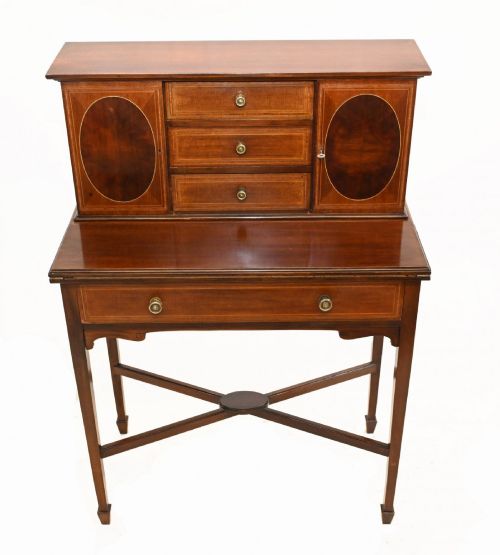
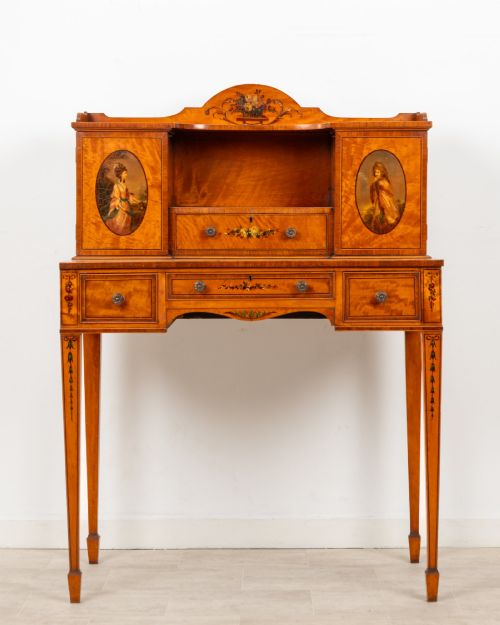
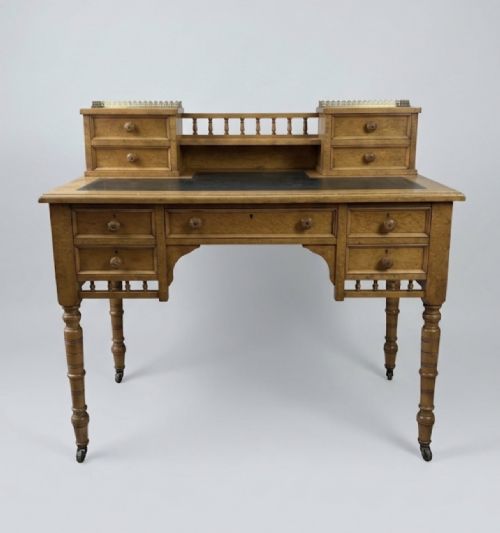
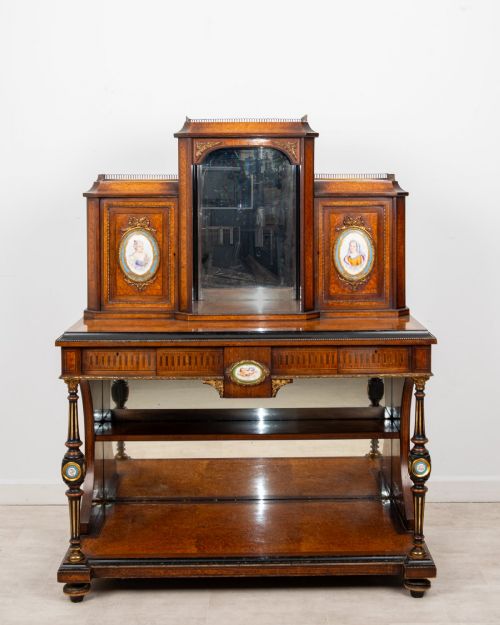



Wood Bonheur Du Jour
A wood bonheur du jour is a small, elegant writing cabinet designed for ladies, offering intimate storage and a refined writing surface.
Wood Bonheur Du Jour
A wood bonheur du jour combines a writing surface with a raised superstructure of small drawers, compartments, or a cabinet, creating a versatile desk for correspondence and keeping keepsakes.
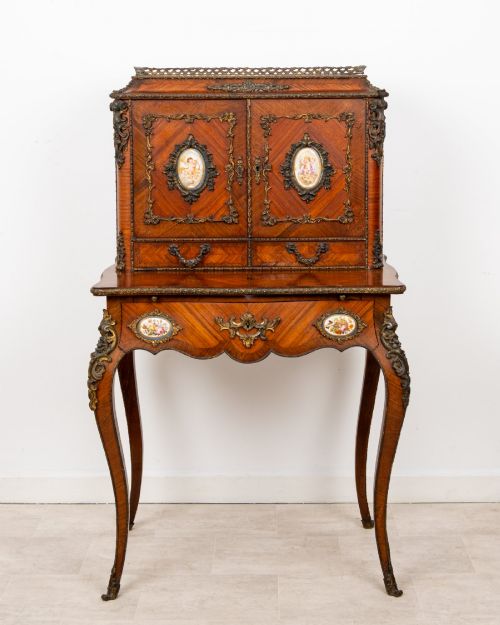
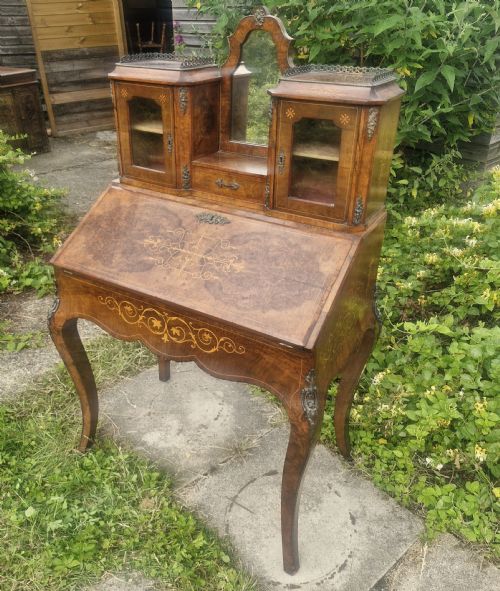
These pieces appear across several eras, with nineteenth-century French examples featuring marquetry, ormolu mounts, and porcelain plaques alongside Edwardian satinwood and Victorian inlaid rosewood versions.
The form suits smaller sitting rooms and boudoirs, providing a dedicated space for writing without the heavy presence of a traditional library desk.
Materials and construction
Cabinet makers utilised choice timbers including mahogany, satinwood, kingwood, rosewood, and birds-eye maple, often applying intricate marquetry patterns and contrasting veneers to the surfaces.
Many French examples incorporate decorative bronze or ormolu mounts, porcelain plaques, and brass accents, which frame the doors and drawers of the upper superstructure.
Writing surfaces frequently integrate inset leather panels, whilst interiors conceal small drawers and compartments designed for stationery and correspondence.
Wood Bonheur Du Jour Retail Price Guide 2026
Typical asking prices for wood bonheur du jour among the pieces listed under this phrase on Sellingantiques today, from the lower quarter to the upper quarter. They describe what is for sale here now, not the wider market.
Listings feature eighteenth-century pieces alongside nineteenth-century French interpretations and Edwardian Sheraton Revival designs.
Assessing quality and craftsmanship
The choice and figuring of the timber dictate much of the visual appeal, with flame mahogany, patterned satinwood, and detailed marquetry standing apart from plain or heavily stained surfaces.
The precision of the brass ormolu mounts and the integration of porcelain plaques reveal the skill of the original workshop, particularly in French nineteenth-century pieces.
Interior fittings, such as small secret drawers, finely dovetailed joints, and original leather writing surfaces, separate standard production pieces from finer cabinet work.
Edwards and Roberts
The Wood Bonheur Du Jour Glossary
- Bonheur du jour
- A small ladies writing desk with a raised superstructure of drawers and shelves, popular from the eighteenth century onwards. The name translates from French as day's delight.
- Superstructure
- The raised cabinet work, drawers, or pigeonholes fixed to the top surface of the main desk. It provides compact storage for letters and small items.
- Marquetry
- Decorative patterns formed by fitting together thin slices of various coloured woods and veneers onto a solid background. Craftsmen use this technique to create floral or geometric designs.
- Ormolu
- Gilded bronze mounts and decorative trimmings applied to furniture. It provides bright metallic contrast against dark timbers like kingwood and rosewood.
- Cylinder bookcase
- A writing cabinet featuring a rolling curved wooden shutter that conceals the desk interior and pigeonholes when closed.
Wood Bonheur Du Jour: Frequently Asked Questions
What is a bonheur du jour?
A bonheur du jour is a small, light writing desk featuring a raised set of drawers or a cabinet on the top surface. It was originally created in France for elite ladies to write letters and keep personal papers.
Today, the form remains popular for modern interiors due to its compact proportions and decorative character, combining a practical pull-out or fixed writing area with compartmentalised storage.
How do I date a wooden bonheur du jour?
Dating relies on identifying the prevailing style, timber choices, and construction methods used by cabinet makers. Pieces range from Georgian and Victorian eras through to Edwardian Sheraton Revival revivals.
French examples often feature nineteenth-century ormolu mounts and marquetry, whilst English versions from around nineteen hundred favour satinwood and subtle inlaid borders.
Where should I place this desk?
Because these desks are finished on all sides or designed to stand against a wall in smaller rooms, they fit well in living rooms, studies, or bedrooms. Their modest scale means they do not dominate a space.
Keep the piece away from direct sunlight and strong heat sources to protect delicate veneers like rosewood and satinwood, and to prevent the leather writing surface from drying out.
What is the difference between French and English styles?
French versions frequently employ exotic timbers such as kingwood and amboyna, enhanced by elaborate marquetry, porcelain plaques, and cast ormolu mounts. They often reflect Louis XV revival tastes.
English interpretations, particularly from the Edwardian period or Sheraton Revival, tend to use mahogany or satinwood with delicate stringing and hand-painted floral details.