



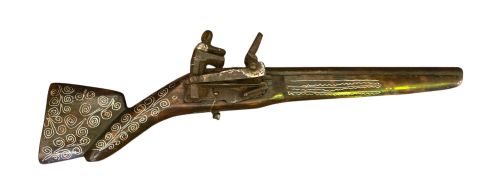


Wood and Steel Pistol
These wood and steel pistol examples span military service arms and civilian pocket pieces, offering tangible links to centuries of tactical and personal defence.
Wood and Steel Pistol
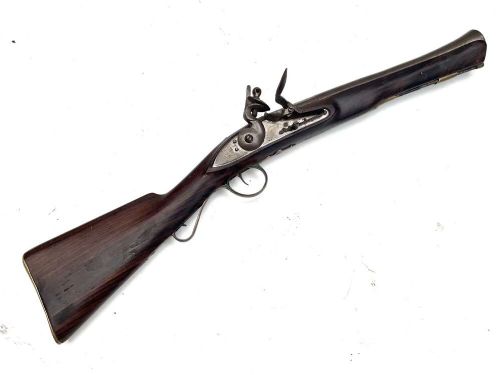
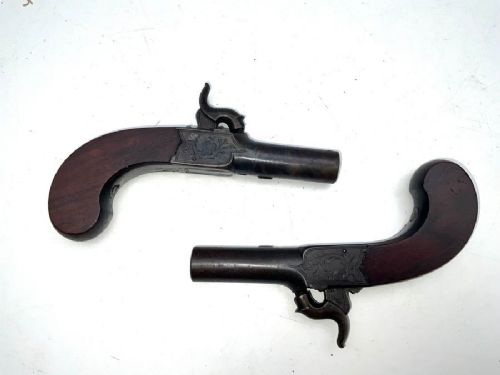
Buyers seeking a wood and steel pistol encounter various configurations ranging from compact pocket pocket arms to full-sized cavalry and sea service pieces. Flintlock and percussion mechanisms dominate the selection, spanning from the Georgian and Victorian military eras.
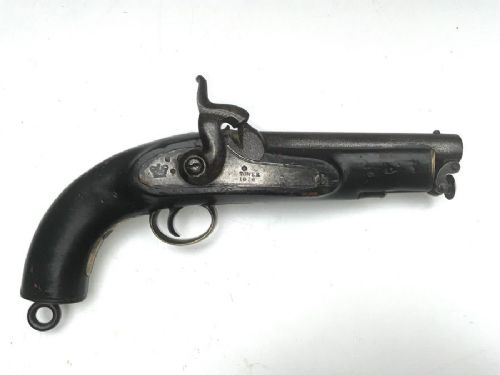
Origin points stretch across British workshops, Belgian sea service suppliers, and Ottoman Empire regional centres. The listings present both regulation military ordnance carrying London proofs and civilian or continental variants adapted for belt wear.
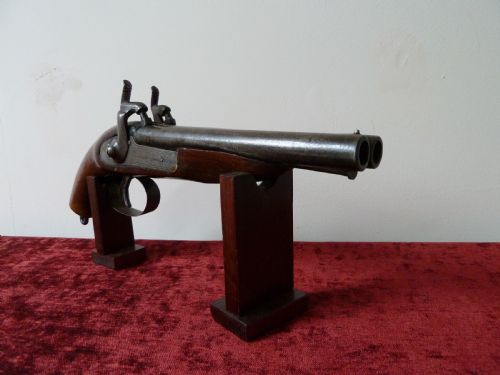
Pocket pistols and holster pistols appear alongside double-barrel and pinfire formats, illustrating the evolution of firearm mechanics. Collectors can find specific maker-stamped examples alongside service-issued pieces bearing Tower inspection marks.
Materials and construction methods
Construction relies primarily on robust steel and iron for barrels and locks, paired with stocks fashioned from walnut, hardwood, and occasionally embellished with mother-of-pearl or silver inlay. Brass furniture frequently accents the trigger guards and butt caps of military specimens.
Lock mechanisms transition from flintlock ignition systems to percussion cap designs, reflecting technological advancements across the eighteenth and nineteenth centuries. Barrel construction incorporates smoothbore and grooved configurations paired with foldaway bayonets or captive ramrods.
Wood and Steel Pistol Retail Price Guide 2026
Typical asking prices for wood and steel pistol among the pieces listed under this phrase on Sellingantiques today, from the lower quarter to the upper quarter. They describe what is for sale here now, not the wider market.
The listings span the eighteenth and nineteenth centuries, incorporating walnut, hardwood, brass, iron, steel, and silver.
Factors of distinction
Quality diverges between utilitarian military contracts and bespoke civilian pieces carrying named maker signatures and London proof marks. Crispness of metal engraving, depth of maker stamping, and the preservation of original stock wood define the upper tier.
The integrity of the lock mechanism and the alignment of brass or silver furniture dictate overall desirability. Untouched condition specimens retain historical patination that heavily influences collector preference over heavily restored examples.
T Potts London·George Sherwood of Portsmouth·Dutton
The Wood and Steel Pistol Glossary
- Percussion
- An ignition system utilising a hammer striking a percussion cap containing fulminate of mercury to ignite the gunpowder charge. This replaced the earlier flintlock method during the nineteenth century.
- Flintlock
- A firearm ignition mechanism where a flint held in a cock strikes a steel frizzen to produce sparks. This ignites priming powder in the pan to discharge the main load.
- Holster pistol
- A large firearm designed to be carried in a saddle holster rather than on a belt. These arms typically served cavalry units.
- Snaphaunce
- An early type of flintlock ignition using a separately moving battery and pan cover. It represents an intermediate step in the evolution of firearms.
- Smoothbore
- A barrel lacking interior rifling, designed to fire lead balls or shot. Most military pistols of the eighteenth and early nineteenth centuries utilised this bore type.
Wood and Steel Pistol: Frequently Asked Questions
What is a percussion pistol?
A percussion pistol is a firearm that uses a percussion cap struck by a hammer to ignite the powder charge. This system succeeded the flintlock mechanism.
Percussion arms appear frequently in mid-nineteenth century military and civilian configurations on this page.
How do flintlock and percussion differ?
Flintlocks rely on a flint striking steel to create sparks for ignition, whereas percussion arms use a self-contained cap placed on a nipple. The percussion system offers greater reliability in damp weather.
Both ignition types are represented across the Georgian and Victorian eras listed here.
How are these pistols displayed?
Collectors typically display these pieces in dedicated wall cabinets or flat glass-topped display cases that protect the metal and wood from humidity. Proper mounting secures the weight safely without stressing the stock.
Many enthusiasts prefer open-shelf setups that allow close inspection of the lock work and barrel markings.