
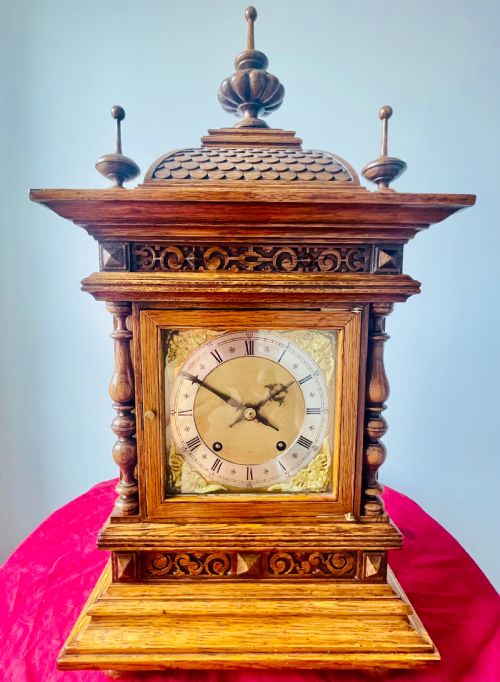

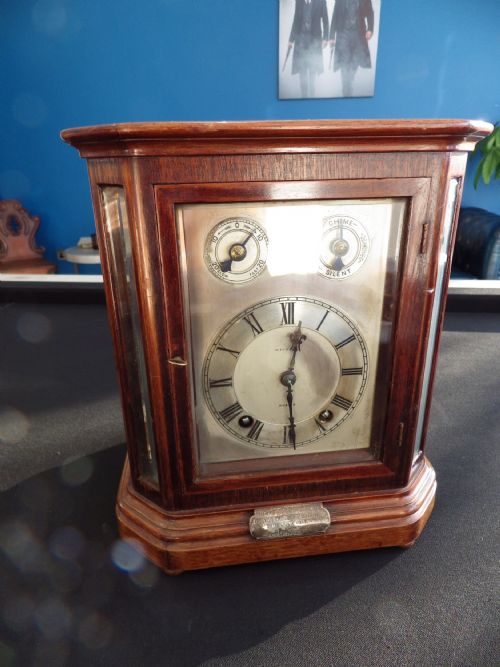


Winterhalder Mantel Clock
Winterhalder mantel clock pieces bring precise German mechanical craft into British homes, offering rich timber cases and complex chime movements.
Winterhalder Mantel Clock
When you search for a winterhalder mantel clock, you encounter substantial bracket and mantel timepieces housing movements by the celebrated German makers. These pieces span the Victorian and Edwardian eras, with dates clustering around the late nineteenth century.
The objects take various forms, from imposing boardroom clocks to small four-glass versions and pad-top designs. Oak, mahogany, and walnut dominate the structural choices, often complemented by brass and silvered metal dials.
You are most likely to meet mahogany or oak bracket clocks featuring quarter striking or ting-tang mechanisms. These pieces reflect both Victorian Gothic revival influences and the cleaner lines of later decades.
How they were made
Cabinet makers built the housing using dense hardwoods like mahogany, walnut, and golden oak, frequently carving the timber with considerable care. Ebonised finishes and inlaid details appear across several examples, giving the wooden cases distinct visual depth.
Internal mechanisms rely on brass and steel components, driven by fusee or multiple train systems that enabled complex quarter striking and musical chimes. Silvered brass dials provide a crisp contrast against the dark wood and polished glass panels that enclose the movements.
What varies in quality
The distinction between ordinary and exceptional pieces lies in the ambition of the case carpentry and the complexity of the movement. Heavily carved timber, intricate quarter-chiming trains, and four-glass cases separate standard mantel clocks from grander boardroom or bracket editions.
Proportion and material selection further dictate standing within the range. Smaller, finely proportioned mahogany housings demand particular joinery skill, while large musical movements demonstrate the height of Winterhalder and Hofmeier manufacturing.
Winterhalder & Hofmeier·Winterhalder and Hoffmeier
The Winterhalder Mantel Clock Glossary
- Bracket clock
- A portable table clock originally designed to sit on a wall bracket. These substantial pieces feature sturdy carrying handles and flat bases.
- Ting-tang
- A two-hammer striking mechanism that sounds two different notes on the quarters before striking the hour. It creates a distinctive melodic double tone.
- Fusee
- A conical pulley used in mechanical clocks to maintain even power as the mainspring unwinds. This device ensures consistent timekeeping across the run.
- Pad-top
- A style of clock case featuring a raised, domed upper section above the main body. This architectural shape often appears on Victorian bracket clocks.
- Quarter striking
- A movement mechanism that chimes every fifteen minutes to mark the passage of time. These systems frequently utilise multiple gongs or bells.
Winterhalder Mantel Clock: Frequently Asked Questions
Where should I place a bracket clock?
Position the piece on a sturdy, level surface away from direct sunlight and damp conditions. Heavy wooden cases require stable furniture to prevent vibrations affecting the movement.
Keep the clock clear of draughts and heat sources such as radiators to protect the delicate internal oils and polished timber casing.
What does a ting-tang movement do?
The mechanism strikes two distinct notes on alternating gongs every quarter hour. It provides an audible reminder of time without playing a full tune.
This specific German configuration remains a hallmark of quality nineteenth-century production. Collectors prize the crisp, alternating tone it produces.
How do I identify a Victorian example?
Look for dense mahogany or carved oak cases, often displaying Gothic revival influences or pad-top designs. Silvered brass dials and robust proportions are typical.
Maker signatures on the movement backplate confirm the origin. The presence of fusee or quarter-striking trains points firmly to this nineteenth-century period.