





Winter Snow Landscape
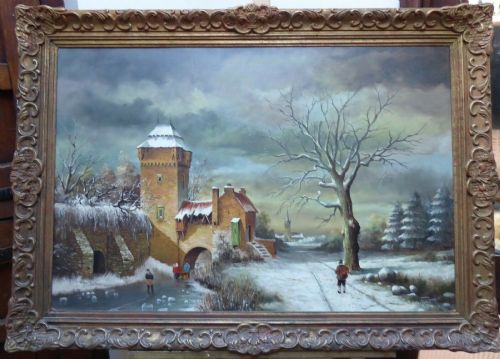
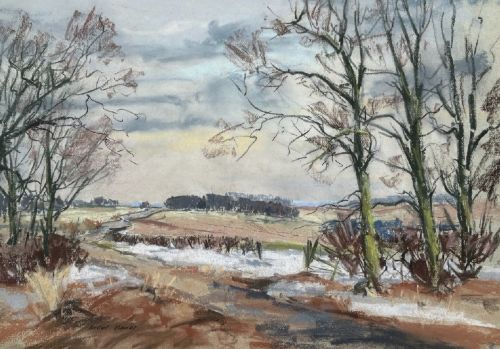
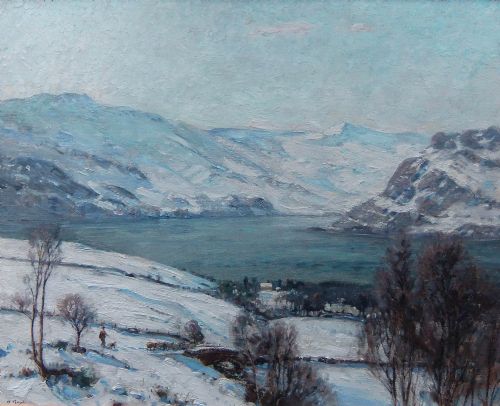
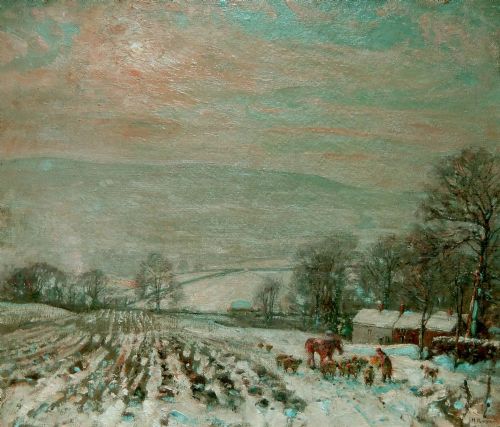
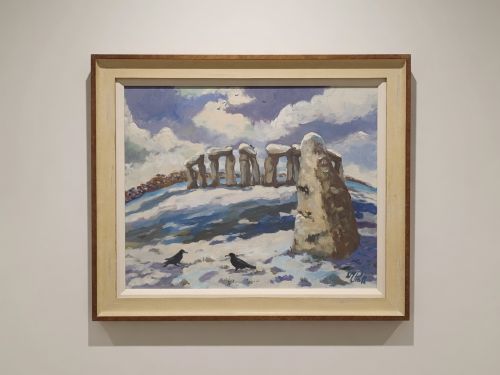
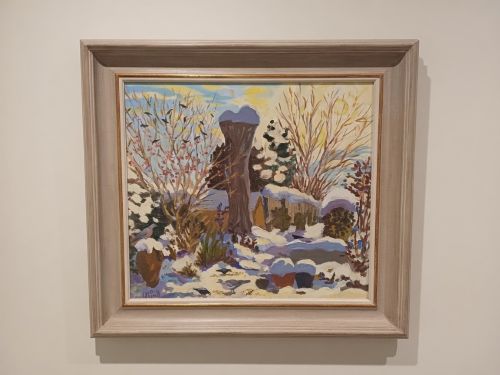
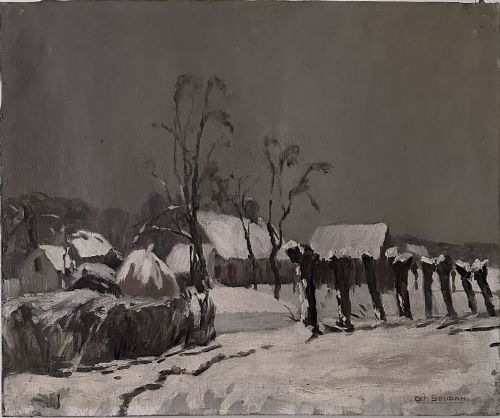
These winter snow landscape works capture the quiet chill of frosted fields, frozen rivers and snow-laden rural lanes across British and European art.
Winter Snow Landscape
A winter snow landscape captures the seasonal stillness of rural scenes, country villages, and frost-bound valleys rendered by artists working from the nineteenth century into the mid twentieth century. These paintings and watercolours record specific localities, from Yorkshire dales and Scottish highlands to Dutch winter views and French settings.
The version most commonly met on this page is the oil painting on canvas or board, alongside delicate watercolours on paper. Subjects frequently include figures collecting firewood, stagecoaches navigating snowstorms, and cattle or sheep grazing near farmsteads in cold weather.
The pieces span periods including Victorian, Edwardian, and British Impressionist movements, reflecting diverse regional interpretations of winter light and heavy snowfall.
Materials and technique
Artists relied primarily on oil paint applied to canvas or wood panels, and watercolour or gouache applied to paper, building up opaque white layers and muted greys to represent deep snow and overcast skies. Brushwork ranges from tight, realistic detail in coaching scenes to loose, atmospheric dabs characteristic of British Impressionism.
Supports vary from stretched canvas and heavy watercolour paper to wooden boards, each chosen to hold the dense pigments required to capture cold light and winter shadows.
Winter Snow Landscape Retail Price Guide 2026
Typical asking prices for winter snow landscape among the pieces listed under this phrase on Sellingantiques today, from the lower quarter to the upper quarter. They describe what is for sale here now, not the wider market.
What varies in quality
Quality rests upon the artist's ability to render the specific weight and temperature of winter light rather than relying on formulaic white paint. Stronger pieces demonstrate confident brush handling in the treatment of snowdrifts, frozen water, and atmospheric distance.
Compositional balance and the integration of figures, animals, or coaches into the frozen environment elevate certain works above standard topographical views.
Herbert Royle·John Charles Maggs·Ernest Higgins Rigg·Fred Lawson·Lucy Pratt
The Winter Snow Landscape Glossary
- Canvas
- A heavy woven fabric stretched across a wooden frame to serve as a support for oil paintings.
- Watercolour
- A paint consisting of pigment suspended in a water-soluble binder, typically applied to paper to achieve translucent washes.
- Gouache
- An opaque water-based medium similar to watercolour but mixed with a white pigment to create solid, flat areas of colour.
- Genre painting
- Artwork depicting scenes from everyday life, often featuring figures working or gathering in rural settings.
- Impressionism
- A style of painting that focuses on capturing the visual impression of a moment, especially regarding shifting light and weather.
Winter Snow Landscape: Frequently Asked Questions
What subjects appear in these paintings?
These works depict rural valleys, frozen rivers, coaching mishaps in snowdrifts, and figures gathering firewood or tending livestock during winter.
Settings range from specific Yorkshire dales and Scottish highlands to continental European villages and frost-covered fields.
How should I frame an antique watercolour?
Watercolours require mounting behind glass using acid-free materials to protect the paper and pigments from moisture and ultraviolet light.
Keep them away from direct sunlight to prevent fading of the delicate washes.
Are these works signed by the artists?
Many of the oil paintings and watercolours feature artist signatures, initials, or period attribution notes on the front or verso.
Signed pieces often connect directly to known regional painters of the Victorian and Edwardian eras.
How do I identify the period of a painting?
Dating relies on stylistic markers, the type of canvas or paper support, framing methods, and artist biographical records.
Victorian and Edwardian works often display specific handling of light and narrative detail distinct from later twentieth-century approaches.