






Winter Countryside Art
Winter countryside art captures cold fields, snow-laden dales and frost-bitten villages through the eyes of traditional and impressionist painters.
Winter Countryside Art
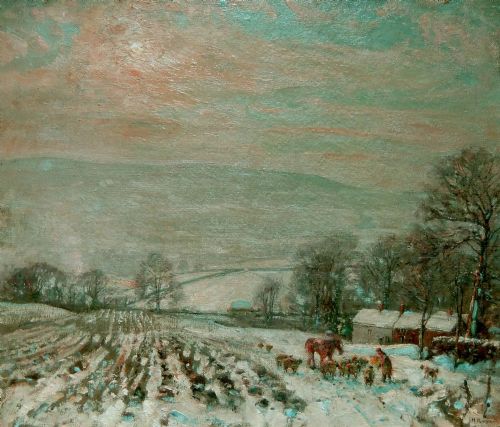
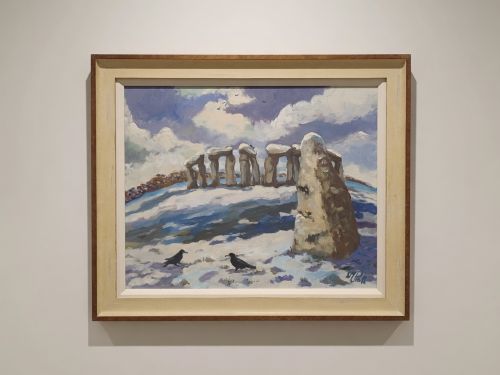
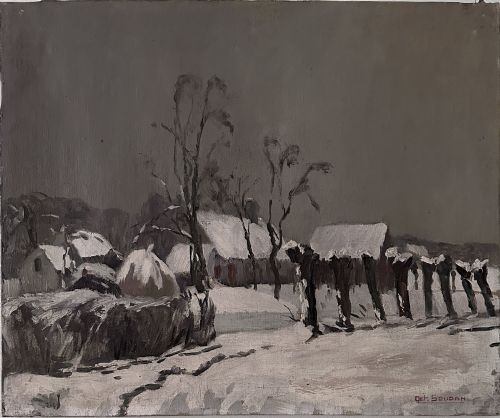
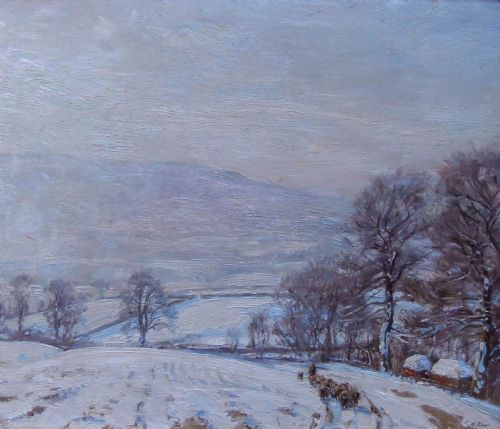
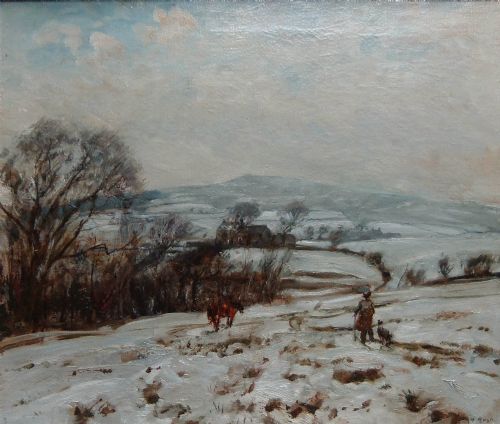
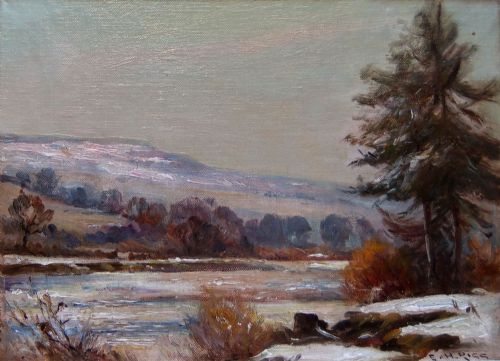
Winter countryside art spans works created across the nineteenth and twentieth centuries, capturing pastoral scenes in oil paint and watercolour. Buyers exploring winter countryside art frequently encounter rural landscapes depicting snow, bare trees and livestock in Yorkshire settings.
The pieces available lean heavily toward early twentieth-century British impressionism and traditional pastoral views. Rural valleys, snow-covered beacons and village lanes dominate the subjects recorded in these paintings.
Materials and methods
Artists relied primarily on oil paint applied to canvas or wood panels, alongside watercolours worked on paper. These mediums allowed painters to capture the stark contrast of white snow against dark stone walls and winter earth.
Framing typically involved wood frames designed to complement the palette of the pastoral scene. Brushwork varied from the smooth precision of traditional recording to the looser application seen in impressionist interpretations.
Listings feature works created using oil paint on canvas, oil on wood, and watercolour on paper.
Judging quality
Quality rests on the artist's ability to render the specific quality of winter light and atmospheric cold without slipping into generic formulas. Stronger works convey the chill of the air and the weight of snow through confident brushwork and tonal control.
Composition and provenance elevate certain pieces, particularly when a named painter documents a specific Yorkshire dale or landmark. Lesser examples rely on repetitive formulas for snowscapes that lack the precise observation found in works by established regional artists.
Herbert Royle·Lucy Pratt·Fred Lawson·William Greaves·John Richard Worsdale·Anthonij Anton Mauve·Ernest Higgins Rigg
The Winter Countryside Art Glossary
- British Impressionism
- A style of painting that developed in Britain, focusing on light and everyday subjects with looser brushwork. It emerged as artists absorbed French techniques while retaining local landscape traditions.
- Pastoral
- A genre of art depicting rural life and idealized country scenes. These works often feature shepherds, livestock and traditional farming environments.
- Watercolour
- A paint consisting of pigment suspended in a water-based solution, usually applied to paper. It allows for translucent washes that suit delicate winter skies.
- Canvas
- A closely woven fabric used as a surface for oil painting. It is stretched over a wooden frame before the artist begins.
Winter Countryside Art: Frequently Asked Questions
What periods do these winter paintings come from?
The selection spans the nineteenth century through the mid-twentieth century, with a strong concentration of works from the 1920s and 1930s. Early twentieth-century British painters feature prominently among the creators.
Buyers will also find nineteenth-century examples and mid-century pastoral scenes. Each era brings distinct framing choices and brushwork styles to the snow-covered subjects.
Where do these winter landscapes usually set their scenes?
Many of the works focus on northern English landscapes, particularly Yorkshire dales, Wharfedale and Swaledale. Local landmarks and rural villages appear repeatedly in the titles.
Artists often returned to familiar regional valleys to record the effects of snow on stone walls, farmhouses and grazing sheep.
Are these works painted in oil or watercolour?
Oil paint on canvas or wood panel forms the majority of the works on offer. This medium provided artists with the depth needed for heavy snow and dark winter skies.
A smaller selection comprises watercolours on paper, which offer a lighter touch for capturing crisp, pale winter daylight.
How should I care for an antique oil painting?
Keep paintings away from direct sunlight and fluctuating heat sources that can dry out canvas and wood. Gentle dusting with a dry, soft brush is usually sufficient for maintenance.
Avoid using water or cleaning solutions on the paint surface. Professional conservators should handle any deeper cleaning.