



Rural Landscape Watercolour Art
Rural landscape watercolour art captures the quiet life of fields, rivers and farmyards through the delicate touch of pigment upon paper.
Rural Landscape Watercolour Art
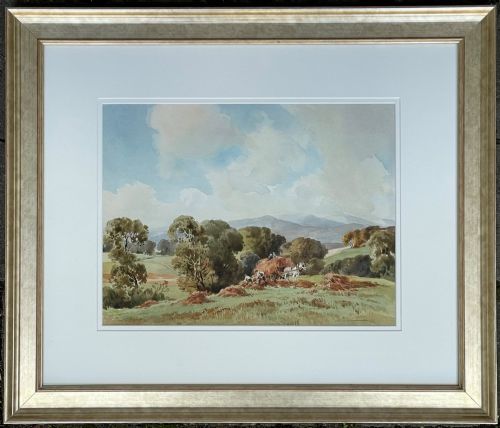
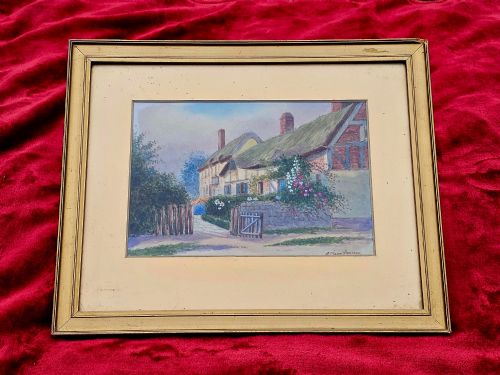
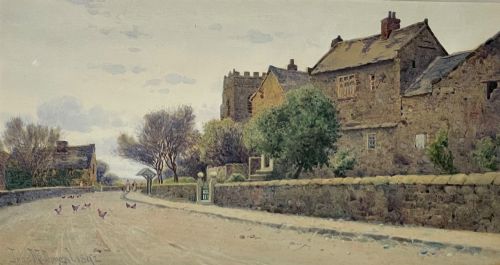
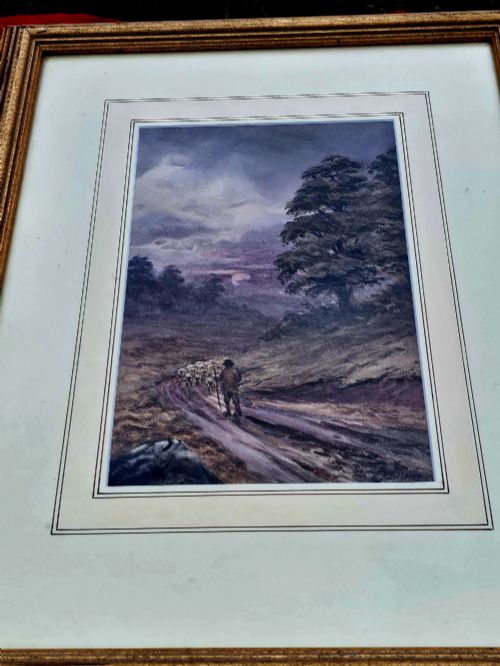
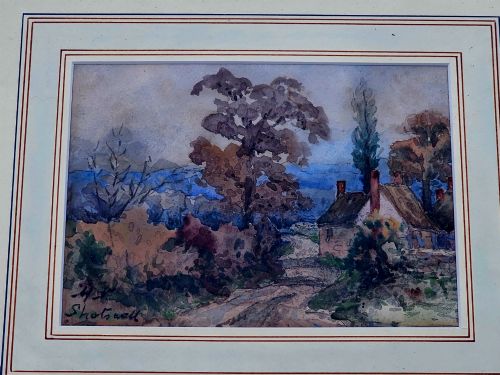
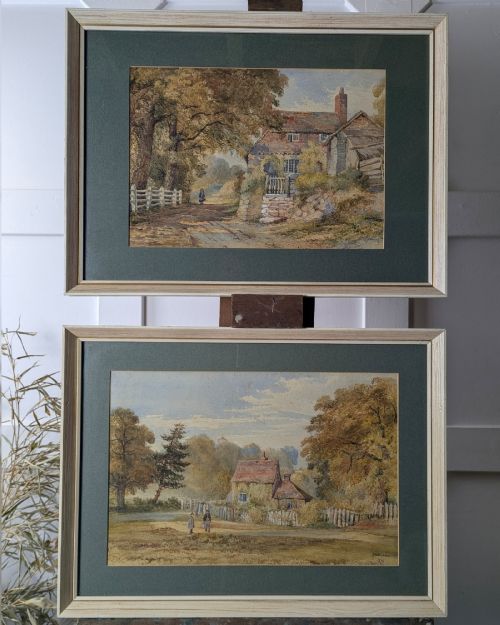
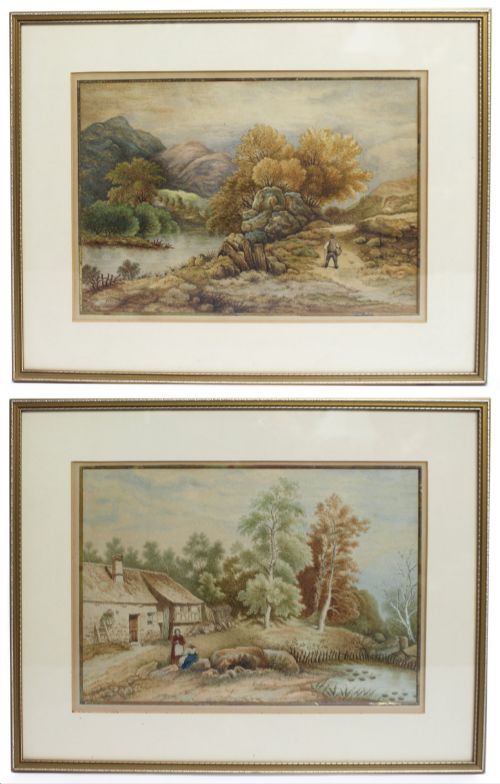
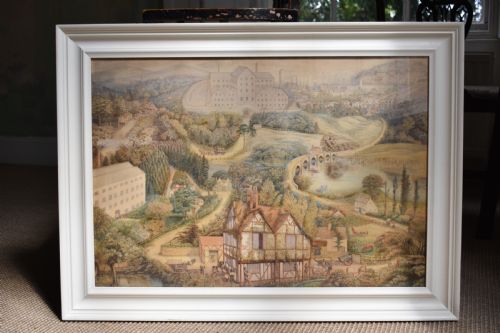
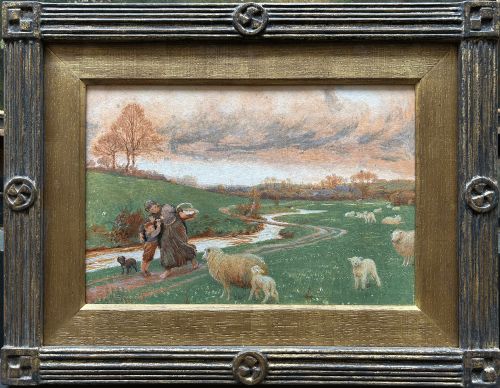
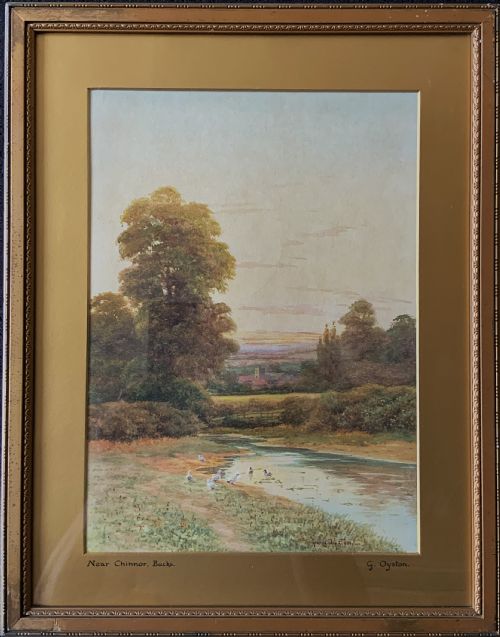
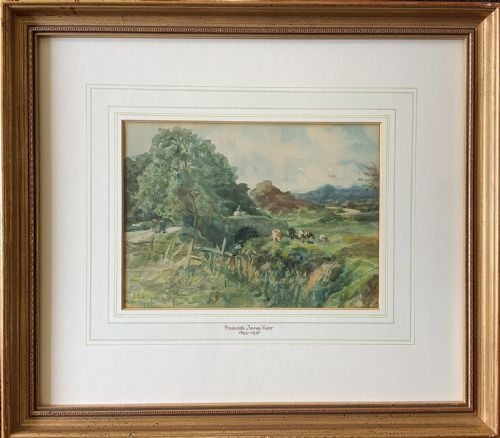
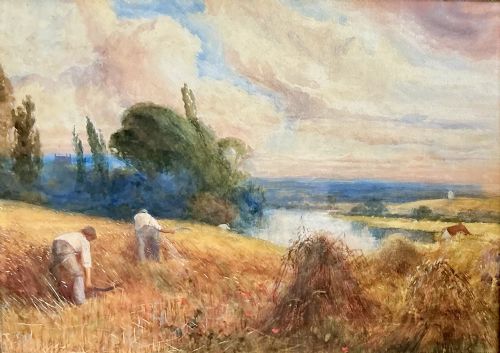
Rural landscape watercolour art brings together pastoral scenes, agricultural work and village views painted predominantly during the nineteenth and early twentieth centuries. Pieces range from intimate depictions of sheep herding and haymaking to expansive Edwardian watercolours depicting Yorkshire and southern English countryside. Collectors encounter framed works created by named British artists working within Victorian, Edwardian and Impressionist traditions.
The most common examples on this page date from the late Victorian and Edwardian periods, typically executed on paper and housed behind glass in timber frames. These works record rural industries, cattle ploughing, riverbanks and country lanes with notable local detail. Many bear the signatures of regional painters who recorded the changing British countryside before the First World War.
Materials and technique
Artists applied watercolour pigment suspended in water onto heavy paper surfaces, allowing the white of the paper to provide luminosity and highlights. Painters built up compositions using transparent washes for skies and distant hills, layering denser pigment for foreground details like foliage, livestock and figures. Many surviving examples retain their original gold leaf or gilt wood frames and protective glass.
The technique demanded precision because watercolour resists easy correction once applied to paper. Painters used fine sable brushes for intricate elements such as thatched cottages and figures, alongside broader washes to capture shifting atmospheric conditions across open fields and river valleys.
Listings feature works created across eight distinct decades, spanning from the Victorian era through the Edwardian period into the 1930s.
What separates the finest works
Quality rests upon the artist's ability to command transparency and control light across the paper. Superior watercolours display confident brushwork that defines form without heavy outlines, maintaining luminosity in the sky and water. Weaker examples rely on stiff composition and muddy pigment mixing that obscures the natural grain of the paper.
The handling of atmospheric perspective distinguishes accomplished regional painters from lesser amateurs. The best works capture specific topographical details and seasonal light convincingly, while ordinary pieces present formulaic pastoral scenes devoid of individual observation.
Percy Lancaster·A. Marie Parsons·John McDougal·EJ Letheren·Robert A Nottingham·Th Thibault·George Oyston·Frederick James Kerr·Herman S Melville·Frederick Hines·Edgar Woollatt·Oswald Garside·Henry Charles Fox·Fred Lawson·Cuthbert Crossley·James William Booth·William Hoggatt·Ernest Pile Bucknall·James Orrock·James Hardy Junior·John Atkinson·Colin H Greenwood·Henry Bailey·Linnie Watt·Robert Winchester Fraser
The Rural Landscape Watercolour Art Glossary
- Watercolour pigment
- Finely ground colour particles mixed with a binder for use on paper. This medium allows light to reflect through translucent washes from the paper beneath.
- Gilt wood
- Timber framing coated with a thin layer of gold leaf or metallic gilt. It provides traditional protection for antique works on paper.
- Pastoral
- A style or subject matter concerning rural life, shepherds and agricultural scenes. These works idealise or record the quiet rhythms of the countryside.
- Edwardian
- Pertaining to the reign of King Edward VII from 1901 to 1910. Art from this era often combines traditional British landscape subjects with brighter Impressionist palettes.
- Wash
- A thin, transparent layer of diluted watercolour pigment spread evenly across paper. Painters utilise washes to represent skies, water and distant hills.
Rural Landscape Watercolour Art: Frequently Asked Questions
How should I frame an antique watercolour?
Antique watercolours require professional framing behind glass with acid-free mounts to prevent the paper from touching the glazing. This protects the delicate pigments from atmospheric moisture and ultraviolet light.
Keep framed works away from direct sunlight and damp walls to preserve the integrity of the paper and the original gold leaf or gilt wood frame.
How do I identify Victorian watercolours?
Victorian watercolours often feature detailed rural narratives, traditional agricultural labour and naturalistic palettes characteristic of nineteenth-century British school painting. Signatures, dates and framing styles frequently offer clues to the exact decade of creation.
Paper quality and watermarks can also help confirm the period when examining unsigned or lesser-known works.
What subjects appear in these landscapes?
Artists typically recorded harvest scenes, riverbanks, sheep herding, gypsy caravans and farmyards across rural England and Wales. These compositions document traditional rural industries before mechanisation transformed the countryside.
Regional views from Yorkshire, Dorset, Nottinghamshire and the Home Counties appear frequently among these paintings.
Are these watercolours original paintings?
Every piece listed is an original hand-painted work on paper rather than a reproduction or print. Artists applied watercolour paint directly using brushes to create unique compositions.
Brush textures, pigment layering and pencil underdrawings confirm the hand-painted nature of each individual artwork.